







Definition and Meaning
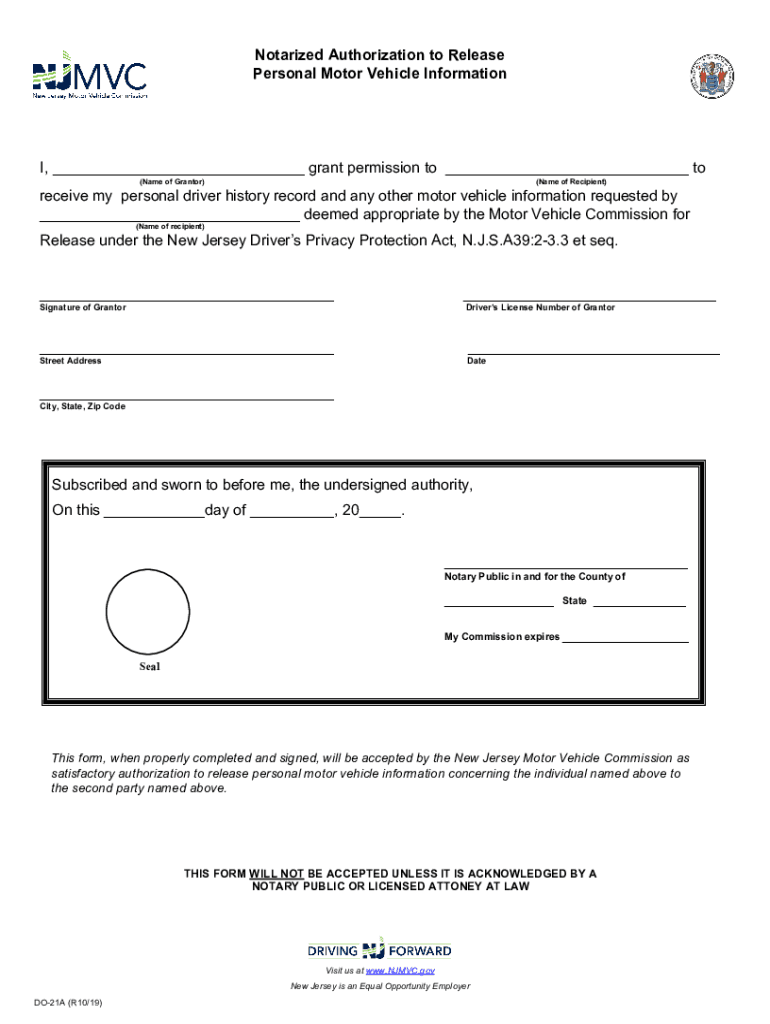
A notarized authorization to release personal motor vehicle information is a legal document that grants permission for a designated recipient to access an individual's personal motor vehicle details and driver history. The permission is extended by the grantor, who is the owner, to the recipient, who might be a legal entity, a business, or an individual. This document is especially crucial in the context of the New Jersey Driver’s Privacy Protection Act, which regulates the dissemination of personal driving records for privacy reasons. The authorization must be signed and notarized to be valid, serving as an official acknowledgment that the grantor consents to the release of their information.
Key Components:
- Grantor's Information: Includes the full name, address, and contact details of the person authorizing the release.
- Recipient's Information: Identifies who will receive the motor vehicle information, including their name and contact details.
- Purpose of Release: Specifies why the information is being shared, ensuring that it aligns with legal allowances.
- Notarization: A notary public must witness the grantor's signature, adding an official seal that verifies the document's authenticity.
How to Use the Notarized Authorization to Release Personal Motor Vehicle
The notarized authorization form is used by individuals to legally enable another party to access their motor vehicle information. This is typically done for purposes such as insurance claims, legal proceedings, or vehicle sales. The process involves completing the form, getting it notarized, and then providing it to the intended recipient.
Step-by-Step Usage:
- Complete the Form: Fill out all required sections with accurate personal and recipient details.
- Specify Permission Scope: Clearly state the type of information to be released and the reasons for access.
- Get Notarized: Visit a notary public to have your signature officially witnessed and the form notarized.
- Deliver to Recipient: Submit the completed and notarized form to the authorized party seeking access.
Steps to Complete the Notarized Authorization Form
Filling out the form correctly ensures the authorization is valid and effective. Several steps must be followed meticulously to avoid rejection or processing delays.
Detailed Instructions:
- Enter Personal Information: Provide your full legal name, address, and contact numbers in the designated fields.
- Fill Recipient Details: Include the names and contact information of the party authorized to receive the information.
- Outline Information Type: Clearly define the scope and limits of the data being released.
- State the Purpose: Describe the reason for releasing the information, ensuring it is permissible under legal guidelines.
- Sign the Document: Your signature is required to complete the authorization; do not sign until in the presence of a notary.
- Notarization: Have a licensed notary public witness your signature and apply their seal.
Key Elements of the Notarized Authorization Form
Understanding the essential elements of the form is crucial for ensuring its validity. Each part plays a specific role in defining the terms of the information release.
Essential Components:
- Full Legal Names: Both the grantor and recipient must be identified with precision.
- Data Description: Specify the type of personal motor vehicle information to be transferred.
- Purpose of Release: This should be stated clearly, including legal justifications if necessary.
- Validation Section: Includes spaces for notary signature, seal, and date, corroborating the document's authenticity.
Why You Should Notarize the Authorization Form
Notarization is a key step in validating the authorization to release personal vehicle information. It serves as a legal safeguard and confirms the document's legitimacy.
Importance of Notarization:
- Legal Protection: Prevents unauthorized access and misuse of personal information by verifying consent.
- Authenticity: The notary seal confirms the identity of the signatory, reducing the risk of fraud.
- Compliance: Meets statutory requirements under privacy protection acts ensuring full legal compliance.
Legal Use of the Authorization Document
The document's legal use is defined under state and federal privacy laws. It provides a structured framework to control the dissemination of sensitive information.
Compliance and Legal Framework:
- Driver’s Privacy Protection Acts: Ensures that the release of information is in accordance with permitted usages such as insurance processing or court orders.
- Permitted Purposes: Must align with the grantor’s stated reasons, like insurance updates or vehicle sales to comply with legal norms.
Who Typically Uses the Notarized Authorization Form
The form is utilized by various stakeholders who require access to another individual's vehicle information for specific reasons.


Common Users:
- Insurance Companies: To verify claims or authenticate policy details.
- Legal Professionals: For cases involving disputes or legal compliance monitoring.
- Auto Dealerships: During transactions where proof of vehicle and driver history is needed.

State-Specific Requirements for the Authorization Form
State laws may have variable requirements about what constitutes a valid authorization to release motor vehicle information.
Examples:
- New Jersey: Requires explicit consent under its Driver’s Privacy Protection Act, ensuring strict adherence to privacy aspects.
- Variability: Some states might necessitate additional documentation or specific form versions for acceptance.
Examples of Use-Cases
Real-world applications of the notarized authorization to release personal motor vehicle form vary depending on industry needs.
Practical Scenarios:
- Auto Repairs: Shops accessing vehicle history for service accuracy.
- Court Orders: Legal compulsion to produce driving records in litigation.
- Vehicle Financing: Lenders verifying loan applicant vehicle records for credit assessment.




