




01. Edit your medication aide skills checklist online
Type text, add images, blackout confidential details, add comments, highlights and more.

Type text, add images, blackout confidential details, add comments, highlights and more.

Draw your signature, type it, upload its image, or use your mobile device as a signature pad.

Send medication administration checklist pdf via email, link, or fax. You can also download it, export it or print it out.
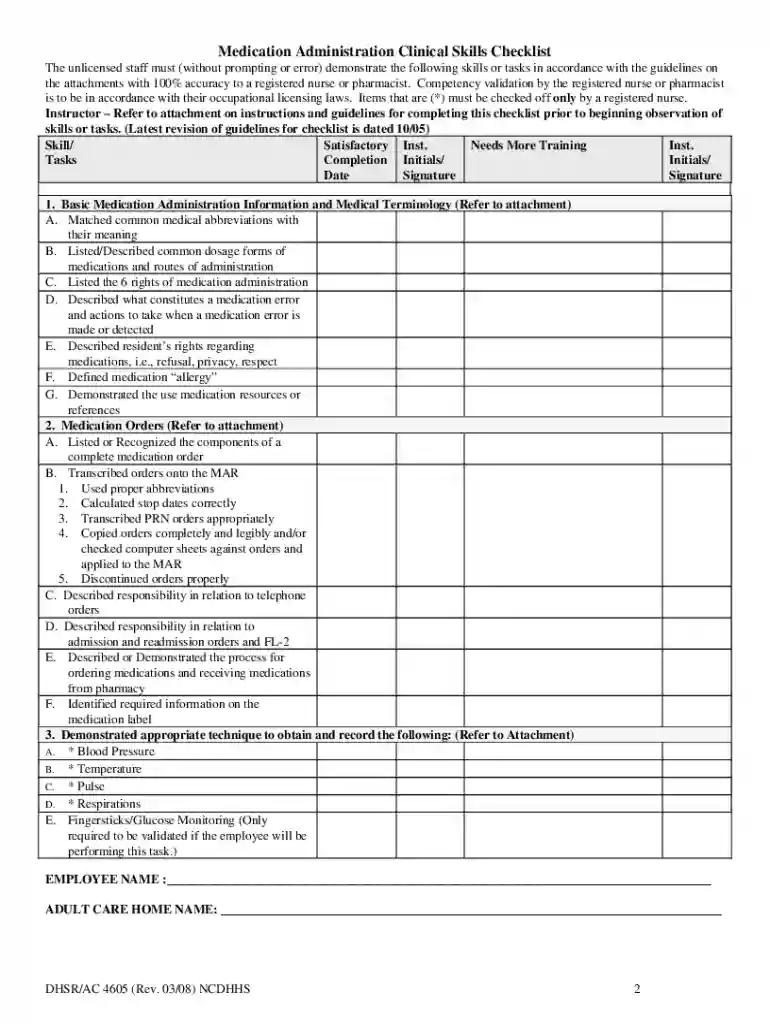
The medication aide skills checklist is a critical document designed to ensure that unlicensed staff can competently administer medications in adult care settings. This checklist serves as a standardized tool to validate the training and competency of individuals responsible for medication administration. By adhering to this checklist, organizations can demonstrate compliance with health regulations and maintain high standards of care.
The primary purpose of the medication aide skills checklist is to provide a clear framework for assessing the capabilities of medication aides. This ensures that staff members possess the necessary knowledge and skills to administer medications safely and effectively. Key components of the checklist include:
The medication aide skills checklist includes several categories that outline essential responsibilities and tasks. Important components include:
Preparation and Administration:
Documentation:
Communication Skills:
Proper completion of the medication aide skills checklist involves several steps to ensure consistency and thoroughness:
Compliance with health regulations is essential for the safety of patients receiving medications. Key reasons for adherence include:
Implementation of the medication aide skills checklist in various healthcare settings provides practical insights into its effectiveness:
Ongoing training is vital for medication aides to enhance their skills continuously. Organizations should:
Adopting a proactive approach to training and assessment using the medication aide skills checklist fosters a culture of safety and excellence in medication administration within healthcare settings.
We've got more versions of the medication aide skills checklist form. Select the right medication aide skills checklist version from the list and start editing it straight away!
At DocHub, your data security is our priority. We follow HIPAA, SOC2, GDPR, and other standards, so you can work on your documents with confidence.
Additional training and testing are required for unlicensed staff to continue with medication aide duties. Refer to N.C. G.S. 131D-4.5B for training, competencyRead more
The medication aide employee must have the ability to verbalize coherently and appropriately. Ability to converse with staff and patients on the correct time,Read more


