







Definition & Meaning
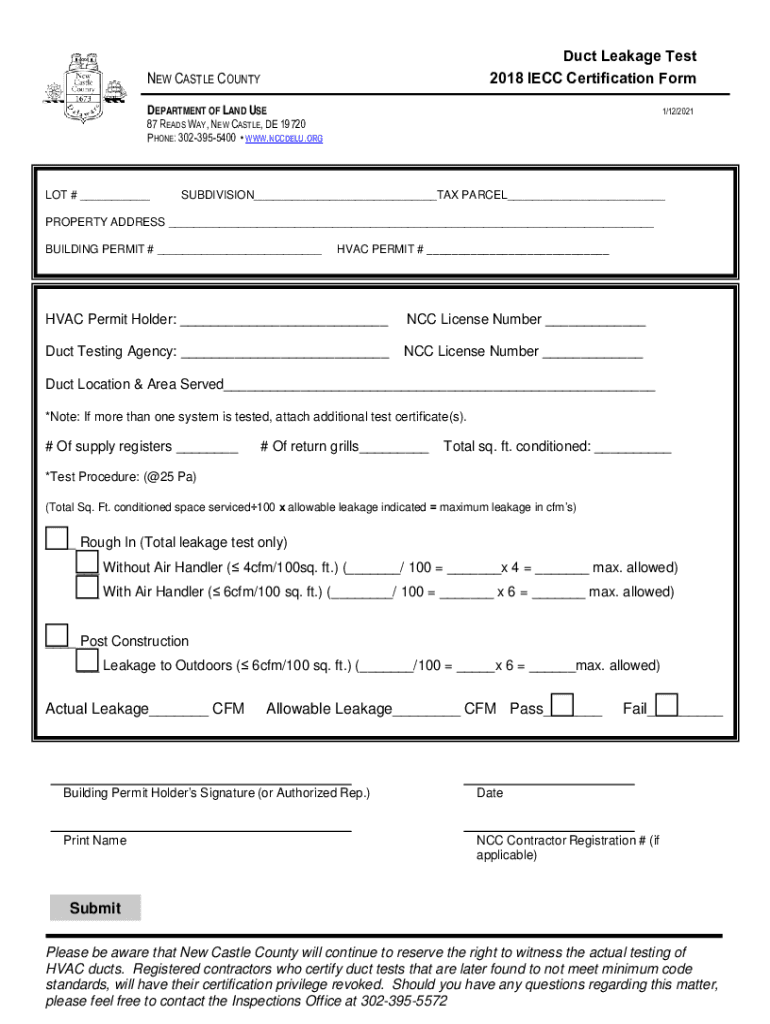
The Duct Leakage Certification Form for Nelson County, VA, is a critical document used to certify that HVAC duct systems have been tested and comply with specified standards, particularly those set forth in the 2018 International Energy Conservation Code (IECC). This certification ensures that ductwork maintains energy efficiency and reduces unnecessary air leakage, which can lead to higher energy consumption and costs. The completion of this form is mandatory for contractors and property owners when installing or maintaining HVAC systems in properties within Nelson County.
How to Obtain the Duct Leakage Certification Form for Nelson County, VA
To acquire the Duct Leakage Certification Form, individuals can visit the Nelson County government website or contact the county's building department directly. Some local HVAC contractors may also provide access to the form as part of their testing and certification services. It is crucial to ensure that you have the latest version of the form to meet current regulatory standards. If obtaining the form online, download and print the document for manual completion.
Steps to Complete the Duct Leakage Certification Form
-
Gather Necessary Information: Before filling out the form, collect all pertinent details, including property address, owner information, and HVAC system specifications.
-
Provide Property Details: Enter the property address and any identifying information required by Nelson County. This section verifies the location of the ductwork being tested.
-
Duct Testing Agency Information: Include the name, contact information, and certification details of the agency performing the duct leakage test. This ensures accountability and verifies that a qualified entity conducted the testing.
-
Detail the Testing Procedures: Outline the steps taken during the testing process. This section may require specifications of equipment used and the conditions under which the test was performed to ensure compliance with IECC standards.
-
Document Leakage Results: Record the results of the duct leakage test. Compare it against allowable limits to certify that the system meets regulatory thresholds.
-
Signatures: The final section requires the signature of the building permit holder and the certified testing agent to verify the accuracy and authenticity of the information provided.
Why You Should Use the Duct Leakage Certification Form
Utilizing this form is essential because it verifies that an HVAC system complies with energy efficiency standards conducive to environmental protection and cost savings. It also serves as a legal record, safeguarding contractors and property owners against potential litigation resulting from non-compliance. Moreover, completing this form can reveal deficiencies in duct systems, prompting necessary repairs that can improve air quality and system performance.
Who Typically Uses the Duct Leakage Certification Form
The primary users of this form include HVAC contractors and technicians performing ductwork testing, property developers, and owners in Nelson County. Building inspectors and property assessors may also review this form to confirm compliance during inspections. Additionally, real estate professionals may use it during property transactions to verify the energy efficiency of HVAC systems.


Key Elements of the Duct Leakage Certification Form
- Property Information: Identifies the location of the ductwork.
- Testing Agency: Documents the certified entity performing the test.
- Leakage Test Results: Shows compliance with IECC standards.
- Signatures: Validates the certification's authenticity.
These elements ensure a comprehensive record of the duct leakage testing process, providing clear evidence of compliance.
State-Specific Rules for the Duct Leakage Certification Form
Nelson County, VA, adheres to the 2018 IECC standards, which are part of Virginia's statewide building codes. These rules dictate the maximum allowable leakage levels and testing procedures that must be followed to ensure energy efficiency. Local amendments may apply, making it critical to stay informed of any Nelson County-specific requirements that could affect how the form is completed and submitted.
Examples of Using the Duct Leakage Certification Form
A practical example of using this form is during the installation of a new HVAC system in a residential building. After the installation, the contractor would perform a duct leakage test to ensure no air is escaping, leading to inefficiency. The test results are then certified in this form, which is submitted to the county as part of the building inspection process.
In another scenario, a real estate developer might use the form to certify that the systems in a new commercial building development meet energy efficiency codes before the property is sold or leased. This provides assurance to prospective buyers or tenants about the cost efficiency and environmental compliance of the building's HVAC systems.




