







Definition and Meaning of Clipper Youth Get
The Clipper Youth card is a transit pass designed to provide discounted fares for young transit riders within a specific age range, typically between five and eighteen years old. This card functions like a regular Clipper card but offers reduced rates, making public transportation more affordable for youth traveling for school, recreational activities, or other purposes. Utilizing this card can lead to significant savings on daily commutes and promotes public transit usage among younger demographics.
How to Use the Clipper Youth Card
Using the Clipper Youth card involves tapping the card at designated card readers both when boarding and exiting participating transit services. These services may include buses, trains, and ferries. It is essential for cardholders to ensure their card is sufficiently loaded with funds to cover their travel costs. Card balance can be managed through online accounts, at kiosks, or via mobile applications. The card is personalized, meaning the fare discounts are non-transferable and can only be used by the designated cardholder.
How to Obtain the Clipper Youth Card
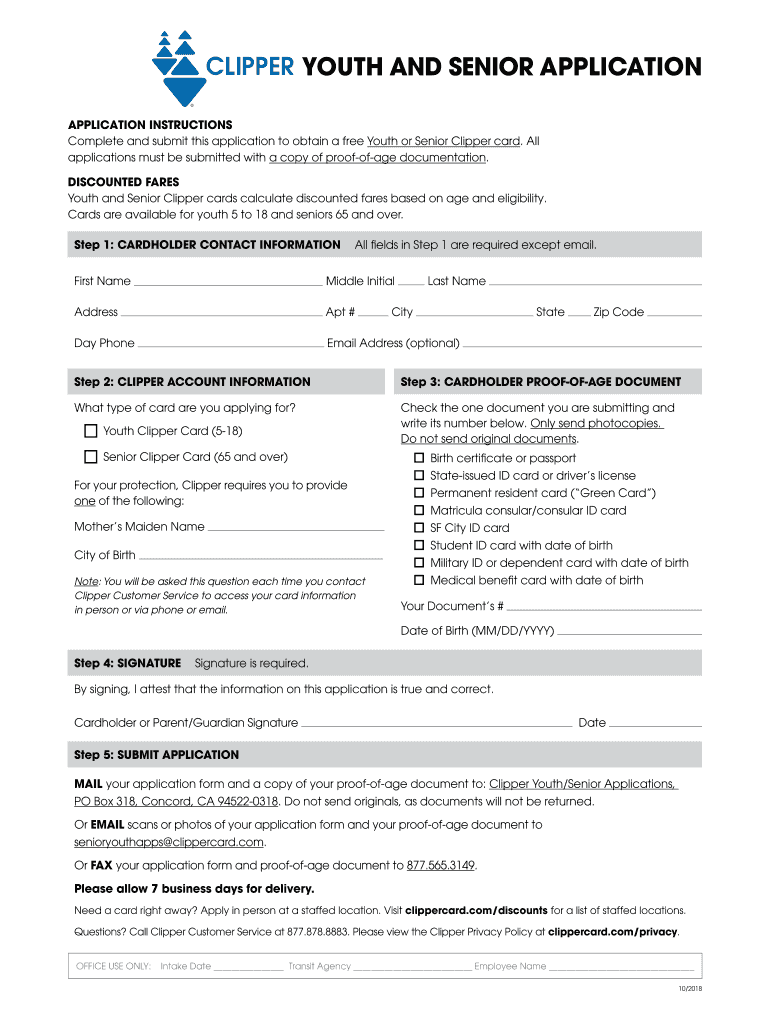
To obtain a Clipper Youth card, applicants typically need to provide proof of age, which could include a birth certificate, passport, or school ID. The application process can usually be completed online, via mail or in-person at designated transit agency locations. Individuals can expect to complete an application form, attach or upload the necessary documentation, and submit it for processing. Once approval is confirmed, the card is mailed to the applicant or available for pick-up.
Eligibility Criteria for Clipper Youth Card
Eligibility for the Clipper Youth card is generally contingent upon age requirements. Applicants need to be between the ages of five and eighteen to qualify. Additionally, proof of age documentation must be current and valid. The criteria may vary slightly based on jurisdiction, so applicants should verify the specific requirements applicable in their area. For families with multiple eligible children, each child must individually meet the criteria and submit a separate application.


Steps to Complete the Clipper Youth Card Application
- Prepare Required Documentation: Gather proof of age documents such as a birth certificate or school ID.
- Complete the Application Form: Fill out the form with the applicant's personal details accurately.
- Submit Supporting Documents: Attach or upload the necessary proof of age documentation.
- Choose Submission Method: Decide whether to apply online, by mail, or in person.
- Payment of Processing Fees: If applicable, provide payment for any required processing fees.
- Await Processing: Allow time for the application to be reviewed and approved.
- Receive the Card: Once processed, the card will be issued and delivered via mail or made available for pickup.
Important Terms Related to Clipper Youth Card
- Card Reader: A device where the cardholder taps the card to record entry and exit from the transit system.
- Balance Management: The process of adding funds to the card for travel use.
- Non-Transferable: The card usage and associated discounts cannot be transferred to another individual.
- Proof of Age Documentation: Official documents used to verify the age of the cardholder.
Form Submission Methods for Clipper Youth Card
The Clipper Youth card application can be submitted in multiple ways to ensure accessibility and convenience:
- Online Submission: Applicants can upload their documentation and submit their application via the official website.
- Mail Submission: Applications and copies of required documents can be sent through postal services to the designated address.
- In-Person Submission: Applicants can visit transit agency offices to submit their application and documents directly, which may expedite processing in some cases.
Examples of Using Clipper Youth Card
Consider a student commuting daily to school via public transit. With the Clipper Youth card, they benefit from lower fares, reducing daily transportation costs significantly. Similarly, a youth sports team can utilize the card for discounted travel to events across the city, demonstrating the card’s broad utility beyond daily commutes. These examples illustrate the card's practical application in real-world settings, highlighting substantial cost savings for frequent young travelers.




