



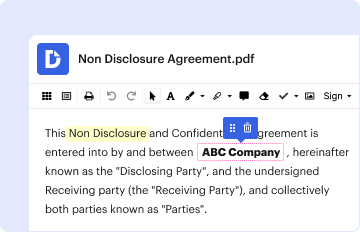
01. Edit your form online
Type text, add images, blackout confidential details, add comments, highlights and more.

Type text, add images, blackout confidential details, add comments, highlights and more.
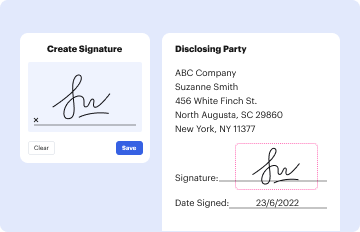
Draw your signature, type it, upload its image, or use your mobile device as a signature pad.

Send it via email, link, or fax. You can also download it, export it or print it out.
The Catapult Scavenger Hunt is an educational activity designed to deepen participants' understanding of catapult technology. It involves a series of tasks and questions that require participants to explore the history, types, and mechanics of catapults. By examining these elements, participants gain insights into how catapults were used in medieval warfare and their applications in modern times. This scavenger hunt is a fusion of learning and exploration, encouraging participants to delve into the science behind one of history's most iconic siege machines.
Gather Resources: Assemble materials such as books, articles, and online resources related to catapult history and technology.
Understand Requirements: Review the tasks and questions outlined in the scavenger hunt. Note any specific instructions regarding the types of catapults or historical periods to focus on.
Research: Dive into the resources you've gathered, focusing on extracting detailed information about catapult mechanics, variations, and historical significance.
Answer Questions: Use the researched information to answer the scavenger hunt questions. Ensure comprehensive responses that reflect a thorough understanding of the topics.
Review and Submit: Recheck all answers for accuracy and completeness before submitting them as per the provided guidelines.
Historical Insight: Understanding the origins and evolution of catapults from ancient to modern times.
Technical Knowledge: Learning about different types of catapults, such as trebuchets and ballistae, and their mechanical principles.
Application and Impact: Exploring how catapults were used in warfare and their relevance in contemporary settings.
Critical Thinking: Encouraging analytical skills through problem-solving questions that necessitate a deep dive into historical and technical contexts.
Educational Contexts: Teachers can integrate the scavenger hunt into history or physics curricula to engage students with hands-on learning.
Team-Building Activities: Organizations might use the scavenger hunt as an interactive team-building exercise to promote collaboration and critical thinking among participants.
Science and Tech Clubs: These groups can use the activity to inspire innovation and interest in engineering principles.
History Enthusiasts: Individuals interested in medieval history and military technology find the scavenger hunt enriching.
Educators: Teachers at varying educational levels use the scavenger hunt to complement their teaching materials.
Science and STEM Students: These students benefit from the scavenger hunt’s detailed exploration into mechanics and engineering concepts.


Traction Trebuchet: A type of catapult that uses manpower to swing the arm and project the payload.
Counterweight Trebuchet: Employs a counterweight to generate the force needed to launch the projectile.
Ballista: Resembles a large crossbow, used for propelling bolts or stones.
Mangonel: A type of catapult that uses torsion power to hurl projectiles.
Individual Study: Use the hunt as a self-guided exploration to enhance personal knowledge about catapults.
Group Engagement: Form teams to collaboratively tackle the scavenger hunt, fostering a shared learning experience.
Assessment Tool: Teachers can leverage the scavenger hunt as a formative assessment to gauge students' grasp of the subject matter.
Utilizing the Catapult Scavenger Hunt in educational settings aligns with fair use policies, especially when used for teaching purposes, research, or scholarship. Institutions must ensure they are adhering to copyright laws, particularly when reproducing materials for the hunt. The scavenger hunt can also be used in public programs or exhibitions, provided that all sources are credited appropriately, thus avoiding infringement of intellectual property rights. By maintaining these legal standards, users can ensure a respectful and lawful approach to integrating the scavenger hunt into various educational programs.
We've got more versions of the Catapult Scavenger Hunt form. Select the right Catapult Scavenger Hunt version from the list and start editing it straight away!
| Versions | Form popularity | Fillable & printable |
|---|---|---|
| 2018 | 4.2 Satisfied (29 Votes) |
At DocHub, your data security is our priority. We follow HIPAA, SOC2, GDPR, and other standards, so you can work on your documents with confidence.
May 15, 2025 The most dramatic event was the scavenger hunt. Teams raced through UNTs Physics building, solving physics problems to reveal the next room andRead more
Jan 1, 2025 To find them, look for pepper-sized specks in the snow at the base of trees. Snow fleas have spring-loaded tails that catapult them into the airRead more
Oct 25, 2017 This song kind of acts as an homage to both Tavros and the old Pokemon games. I tried to invoke the style of the battles in the classic Game Bro Boy versions.Read more


