







Definition & Meaning
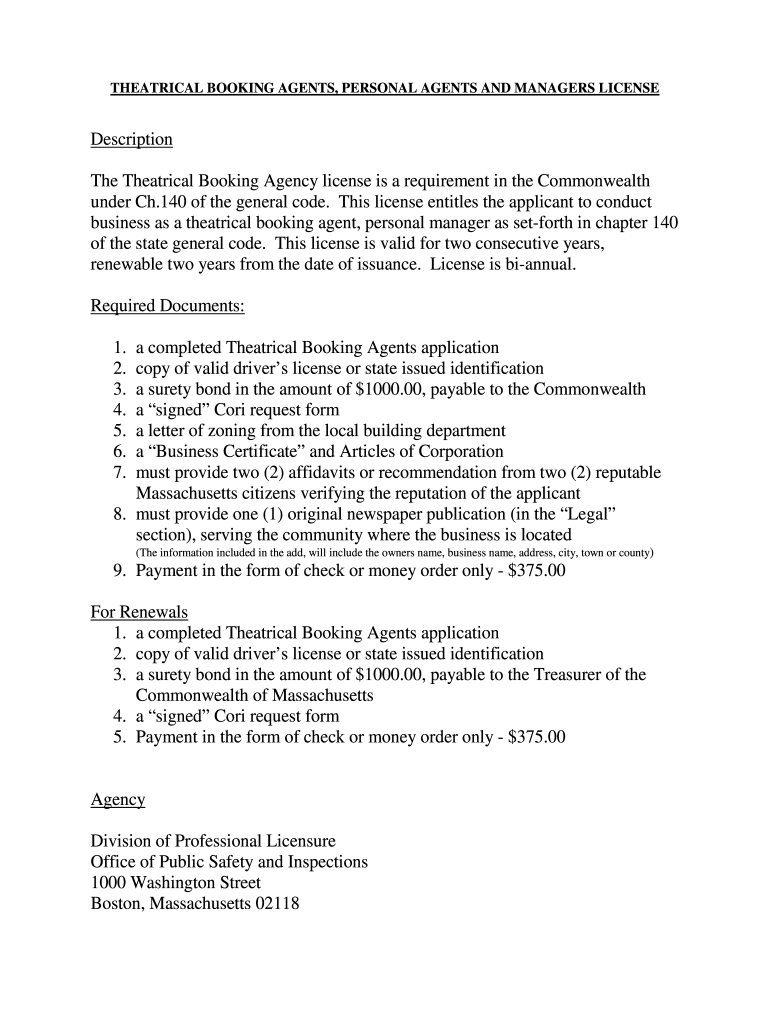
The Theatrical Booking Agency license is essential for anyone wishing to operate as a theatrical booking agent or personal manager under Massachusetts law. As mandated by Chapter 140 of the state's general code, this license serves as an official authorization, ensuring that agents operate legally and adhere to industry standards. Without this license, engaging in theatrical booking could lead to liability issues or legal penalties. Understanding the scope and purpose of this license is crucial for professionals in the entertainment industry.
How to Obtain the License
Obtaining a Theatrical Booking Agency license in Massachusetts involves several key steps to ensure compliance with state regulations. Applicants must submit a comprehensive application, along with necessary supporting documents, to the relevant state authority. Required documentation includes a surety bond and evidence of compliance with local zoning laws. Additionally, a criminal background check is performed as part of the process. The entire procedure is designed to verify the applicant's credibility and adherence to legal requirements before granting the license.
Important Terms Related to the License
Acquiring the Theatrical Booking Agency license requires familiarity with several important terms. One such term is the "surety bond," a financial guarantee that the agency will adhere to contractual obligations. Another key term is "zoning compliance," which involves ensuring that the agency's operations conform to local land use regulations. Understanding these terms and their implications is critical for navigating the licensing process successfully.
Legal Use of the License
The Theatrical Booking Agency license permits agents to represent performers, negotiate contracts, and facilitate bookings legally. This license acts as a safeguard, protecting both clients and agents by ensuring that all activities are conducted under the guidance of established legal frameworks. Licensed agents are required to adhere to ethical standards and contractual obligations, providing transparency and fostering trust within the entertainment industry.
Key Elements of the License
Several components form the foundation of the Theatrical Booking Agency license. These include:
- Application Form: The initial step involves filling out a detailed application, specifying personal and business information.
- Surety Bond: Provides financial security, ensuring adherence to contractual duties.
- Background Check: Evaluates the applicant's legal history to affirm eligibility.
- Zoning Compliance Proof: Confirms the agency's operational location aligns with local regulations.
- Fee Structure: A defined fee must be paid to process the application and maintain the license.
Understanding these elements assists agents in maintaining compliance and securing their ability to operate effectively.
State-Specific Rules
Massachusetts imposes unique requirements on those seeking the Theatrical Booking Agency license. The state's regulations demand that applicants meet specific criteria, including compliance with local zoning laws and proof of integrity through a surety bond. It's important to familiarize oneself with these state-specific regulations to ensure a smooth application process and prevent licensing issues.
Steps to Complete the License Application
Completing the application process for the Theatrical Booking Agency license involves a structured sequence of actions:
- Gather Required Documents: Collect all necessary documentation, including personal identification, a surety bond, and zoning compliance evidence.
- Complete the Application: Fill out the application form with accurate business and personal information.
- Submit the Application: Deliver the completed application and supporting documents to the designated state authority, either in person or via mail.
- Pay Fees: Ensure all applicable fees are paid to facilitate processing of the application.
- Undergo a Background Check: Allow time for a criminal background check to be conducted.
Each step is designed to validate the applicant’s qualifications and ensure conformity with Massachusetts law.
Examples of Using the License
The Theatrical Booking Agency license is instrumental for professionals in the entertainment sector. For instance, agents representing stage performers can utilize this license to secure engagements with theaters and venues. Additionally, personal managers can leverage the license to negotiate contracts on behalf of artists, ensuring compliance with legal stipulations and industry standards. Such examples underscore the license's importance in facilitating legitimate transactions and career advancement within the theatrical world.
Business Types That Benefit Most from the License
Several types of businesses significantly benefit from holding a Theatrical Booking Agency license. These include:
- Talent Agencies: Representing a range of performers and artists.
- Event Promoters: Coordinating and managing entertainment events.
- Personal Management Firms: Handling career planning and contract negotiations for individuals.
These businesses require the legal framework provided by the license to function effectively and protect their interests, as well as those of their clients.




