




01. Edit your form online
Type text, add images, blackout confidential details, add comments, highlights and more.

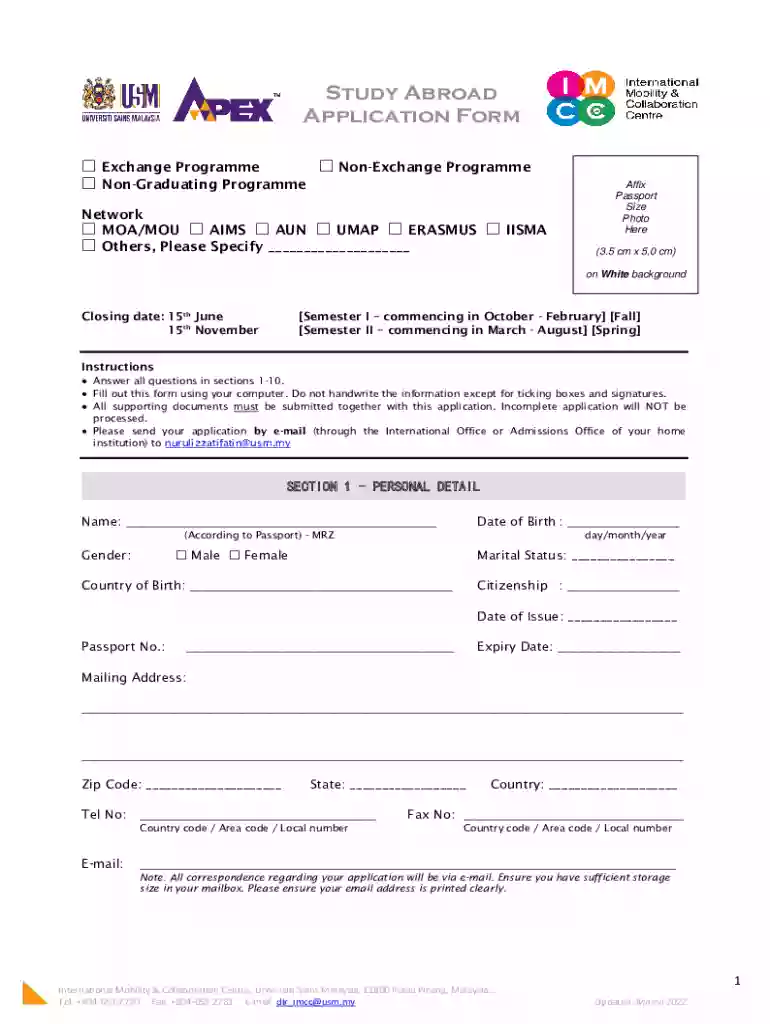
Type text, add images, blackout confidential details, add comments, highlights and more.

Draw your signature, type it, upload its image, or use your mobile device as a signature pad.

Send it via email, link, or fax. You can also download it, export it or print it out.
The Exchange Student Application/Study Abroad form is designed to facilitate the process for students wishing to participate in study abroad programs. It gathers all necessary information to assess a student's eligibility and readiness for such a program. This form often includes sections that cover personal information, academic history, proposed study plans, language proficiency, and other essential details to ensure compliance with the host institution's requirements.
Utilizing this form effectively involves carefully filling out each section with accurate and up-to-date information. Start by reading the instructions, if provided, to understand specific requirements or guidelines.
Completing the form requires attention to detail and adherence to any provided instructions or guidelines. The process may vary slightly depending on the institution or program.
Understanding what documents are required will ensure that the application is complete and meets all criteria set by the host institution.
The eligibility criteria for exchange students are determined by both the sending and receiving institutions and can include academic performance, language skills, and general qualifications.


Legally, this form serves as a formal application process, often subject to both domestic and international educational policies.
The submission methods for this form can vary between institutions, typically offering several options to accommodate students' needs.
The Exchange Student Application/Study Abroad form is generally issued by the international office or relevant department of the home educational institution.
We've got more versions of the Exchange Student ApplicationStudy Abroad form. Select the right Exchange Student ApplicationStudy Abroad version from the list and start editing it straight away!
At DocHub, your data security is our priority. We follow HIPAA, SOC2, GDPR, and other standards, so you can work on your documents with confidence.
Eligible Baruch College students may apply to study as an exchange student at any one of our partner universities for a semester.Read more
For participation in an approved exchange program. Overview How to Apply Fees Required Documentation Spouses and Children Visitor Visa B.Read more
Nov 28, 2023 apply for an exchange program. For exchange programs, you pay normal Pitt Tuition/some fees, and you pay for housing/living expenses abroad.Read more


