




01. Edit your dpsmv 1606 online
Type text, add images, blackout confidential details, add comments, highlights and more.

Type text, add images, blackout confidential details, add comments, highlights and more.

Draw your signature, type it, upload its image, or use your mobile device as a signature pad.

Send form dpsmv 1606 via email, link, or fax. You can also download it, export it or print it out.
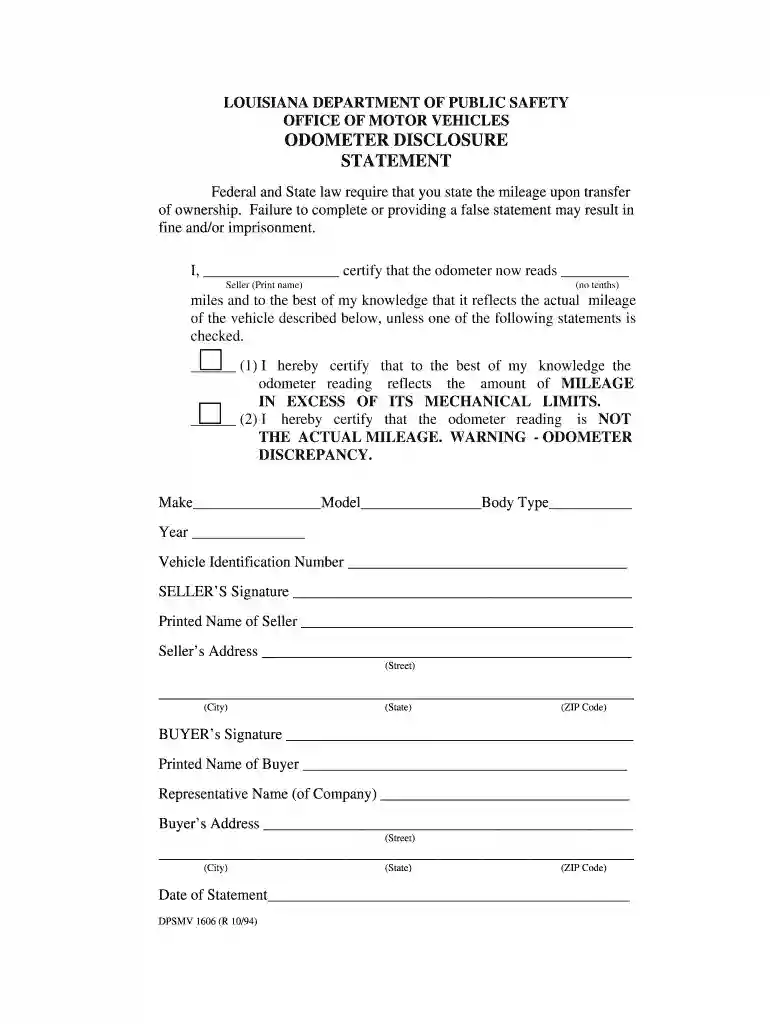
The Louisiana Odometer Disclosure form is a legal document required by the Louisiana Department of Public Safety, Office of Motor Vehicles. This form is used during the transfer of vehicle ownership to record and certify the vehicle’s mileage. The primary purpose is to prevent odometer fraud and to maintain an accurate history of the vehicle's mileage. Odometer discrepancies can affect the vehicle’s resale value and insurance claims. Therefore, this disclosure is a crucial step in vehicle transactions to ensure transparency and authenticity.
Several critical elements constitute the Louisiana Odometer Disclosure form. These include:
Completing the Louisiana Odometer Disclosure form requires attention to detail to avoid misstatements, which could lead to legal implications. Here is a step-by-step guide:
Failing to accurately complete the odometer disclosure can lead to severe legal consequences, including fines and potential civil litigation. Under U.S. federal law, odometer fraud is illegal, and falsifying mileage details on the disclosure form could result in criminal charges. Individuals engaged in vehicle transactions must ensure the form is filled out correctly to avoid issues arising from inaccurate disclosures.
The form can be obtained via multiple channels, ensuring flexibility and ease of access for sellers and buyers:
The form is primarily used by:


While federal law mandates odometer disclosures, Louisiana has particular regulations:
Non-compliance with odometer disclosure requirements can trigger significant penalties. In addition to fines, individuals found responsible for odometer fraud may face imprisonment. Civil liability cases may also arise, allowing buyers to seek financial restitution for damages incurred from fraudulent misstatements. Ensuring comprehensive and honest completion of the form is critical to avoiding these legal repercussions.
We've got more versions of the dpsmv 1606 form. Select the right dpsmv 1606 version from the list and start editing it straight away!
| Versions | Form popularity | Fillable & printable |
|---|---|---|
| 1994 | 4.8 Satisfied (79 Votes) |
At DocHub, your data security is our priority. We follow HIPAA, SOC2, GDPR, and other standards, so you can work on your documents with confidence.
If the vehicle is not exempt from odometer requirements and the back of the title does not contain an Odometer Disclosure Statement, a supplemental OdometerRead more
To register your departments vehicle, you will need the following items: Invoice/bill of sale (original). Odometer Disclosure Statement (original). CertificateRead more


