




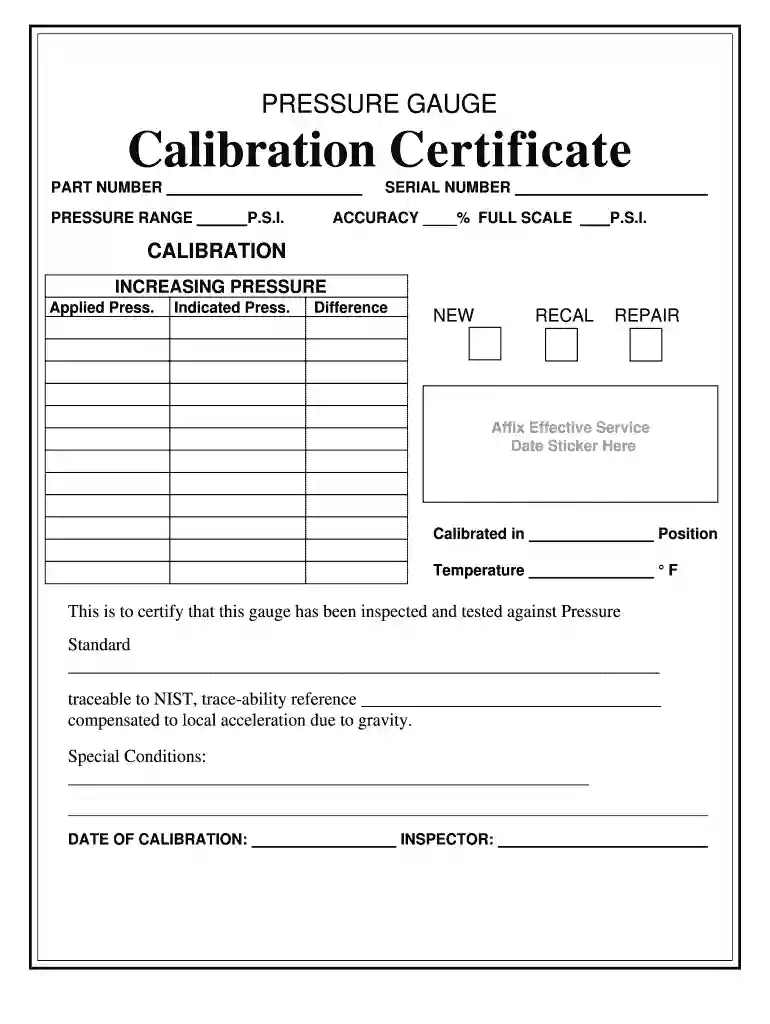
01. Edit your calibration certificate template online
Type text, add images, blackout confidential details, add comments, highlights and more.

Type text, add images, blackout confidential details, add comments, highlights and more.

Draw your signature, type it, upload its image, or use your mobile device as a signature pad.

Send calibration certificate format word via email, link, or fax. You can also download it, export it or print it out.
The FedEx door tag is an essential tool used by FedEx couriers to leave notification of a package delivery attempt when the recipient is unavailable. It serves a dual purpose: providing information about the attempted delivery and offering instructions for the recipient to reschedule delivery or pick up the package.
This system allows for streamlined communication between FedEx and the recipient, ensuring that packages are adequately tracked and managed.
Obtaining a FedEx door tag is a straightforward process that typically occurs when a delivery cannot be completed. Responsibilities fall on both the courier and the recipient to ensure that the tag is used correctly.
This process ensures that recipients are informed and can take necessary actions to retrieve their package if delivery attempts are unsuccessful.
Completing the FedEx door tag is vital for the recipient to manage their package delivery efficiently. Here’s a step-by-step guide to completing the door tag process:
Following these steps ensures recipients can quickly retrieve their packages while minimizing misunderstandings.
Understanding key terms related to the FedEx door tag can enhance user comprehension of the delivery and notification process. Here are some critical terms:
Familiarizing oneself with these terms can facilitate better communication with FedEx and aid in managing package deliveries effectively.
Legal considerations around the usage of a FedEx door tag are vital for understanding rights and responsibilities.
Understanding these legal nuances can help reduce conflicts and ensure compliance with delivery-related regulations.
Practical examples illustrate how recipients might interact with a FedEx door tag.
These scenarios provide real-world context to the usage of FedEx door tags and how they aid in package management.
Different states may have specific regulations regarding package delivery, and it is crucial to be aware of these variations.
Being informed about state-specific rules can help recipients navigate the delivery system efficiently and within legal parameters.
We've got more versions of the calibration certificate template form. Select the right calibration certificate template version from the list and start editing it straight away!
Managing your documentation with DocHub this way is very simple once you have downloaded its extension for Google Chrome. Go to the Chrome Web Store and install DocHub - Sign PDF from Gmail to obtain it. Give our tool access to your Google account, and then open an email with the calibration certificate template word attached and point to the file with your cursor - the DocHub extension button will automatically show up there. Click on it to open your form in our editor. Make any required modifications, fill out the blanks, and click Sign to create your legally-binding eSignature.
You can quickly fill out, modify, and even eSign your free calibration certificate template utilizing DocHub. Create a new account and begin your free trial. After that, you may upload the document with the form and simply make all the needed edits. No need to print on paper or use a third-party application to sign it, as you can put your electronic signature on your document faster via DocHub.
At DocHub, your data security is our priority. We follow HIPAA, SOC2, GDPR, and other standards, so you can work on your documents with confidence.


