




01. Edit your form online
Type text, add images, blackout confidential details, add comments, highlights and more.

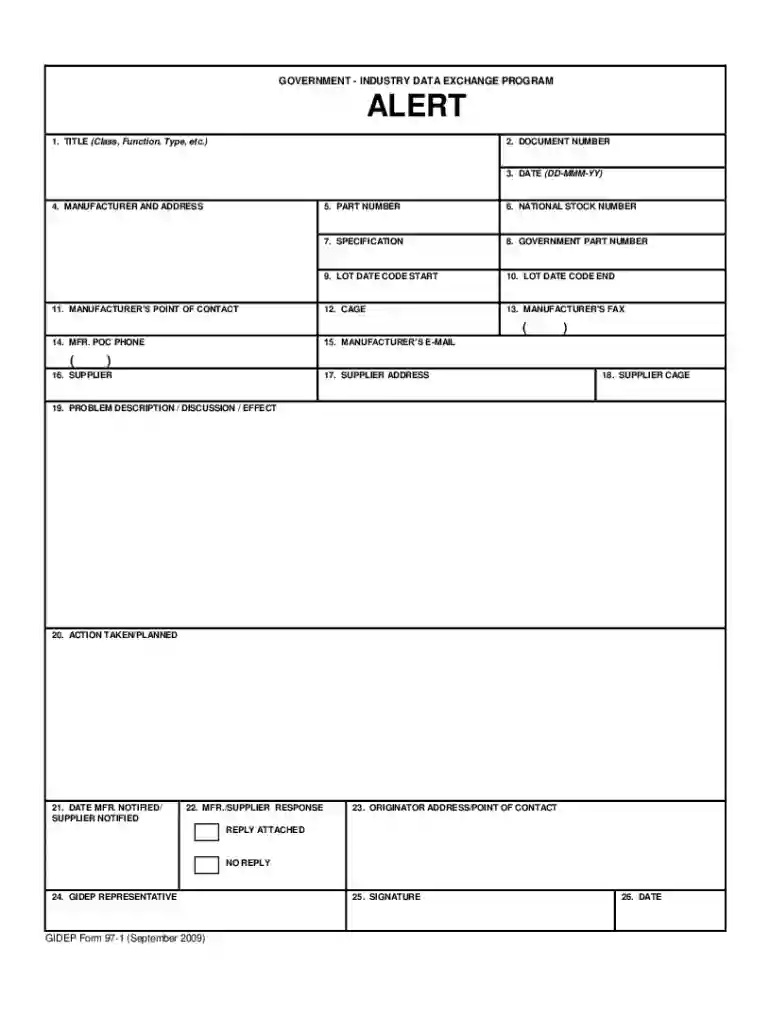
Type text, add images, blackout confidential details, add comments, highlights and more.

Draw your signature, type it, upload its image, or use your mobile device as a signature pad.

Send it via email, link, or fax. You can also download it, export it or print it out.
The "Benefit Value to the Air Force of the GIDEP - DTIC" refers to the contribution and advantages the Government-Industry Data Exchange Program (GIDEP) provides to the U.S. Air Force through the Defense Technical Information Center (DTIC). GIDEP fosters a collaborative environment between government and industry stakeholders. It facilitates the sharing of technical information, primarily focusing on reducing expenditures by mitigating waste of resources, improving reliability, enhancing operational efficiency, and preventing recurrence of issues related to equipment or parts.
Filing the Benefit Value to the Air Force of the GIDEP form requires meticulous attention to detail and adherence to prescribed steps to ensure completeness and accuracy.
Gather Required Information: Collect all necessary details such as the title of the document, document number, and manufacturer details. This foundational information sets the stage for submitting the form.
Describe the Applicable Benefits: Detail how the GIDEP information positively impacts Air Force operations, focusing on tangible benefits like cost savings and improvements in equipment reliability.
Document Part Numbers: Include specific part numbers and related information to clearly identify what components or materials are addressed.
Identify Issues: Clearly describe any identified problems with relevant products and the actions taken or recommendations made to resolve these issues.
Submit for Review: After filling out all necessary sections accurately, submit the completed form as directed, keeping a copy for your records.
When completing the Benefit Value to the Air Force of the GIDEP - DTIC form, understanding its critical elements is vital:
The primary users of the Benefit Value to the Air Force of the GIDEP - DTIC include:
Understanding the legal framework surrounding the GIDEP program ensures compliance and maximizes the form's utility.
Understanding key terms associated with the "Benefit Value to the Air Force of the GIDEP - DTIC" aids in precise form completion and utility.
By understanding these blocks, you can ensure that the workflow of compiling, submitting, and benefiting from the "Benefit Value to the Air Force of the GIDEP - DTIC" is a seamless and effective process.
We've got more versions of the Benefit Value to the Air Force of the GIDEP - DTIC form. Select the right Benefit Value to the Air Force of the GIDEP - DTIC version from the list and start editing it straight away!
If you frequently deal with documents stored in your Google Drive, DocHub is a superb solution for you to easily and quickly complete, modify, and sign them. This editor integrates properly with Google apps, so you can export your Benefit Value to the Air Force of the GIDEP - DTIC from your Google Drive to the editor without downloading and re-uploading it. Right-click on your document, choose Open With → DocHub PDF Sign and Edit. In our editor, add and assign Signature Fields for all people involved, then click on the Menu button above → Send → decide on how you want to share your paperwork.
As a comprehensive document editing platform, DocHub is accessible on smart phones. Open DocHub in your choice of mobile browser and employ our intelligent mobile-friendly toolset to fill out your Benefit Value to the Air Force of the GIDEP - DTIC.
At DocHub, your data security is our priority. We follow HIPAA, SOC2, GDPR, and other standards, so you can work on your documents with confidence.


