







Definition and Meaning
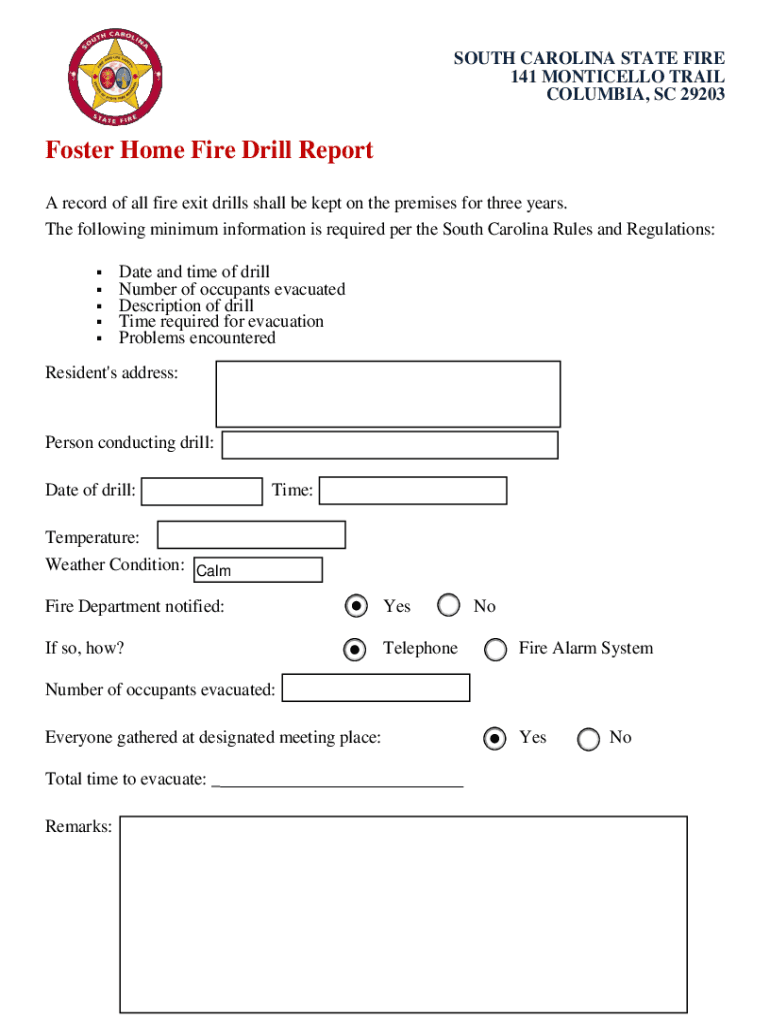
The Foster Home Fire Drill Report is a critical document used by foster homes to record and report details about fire drills conducted within their facilities. This report ensures compliance with safety regulations and provides a structured approach to documenting evacuation procedures. Essential information captured in this report includes the date and time of the fire drill, the number of individuals evacuated, a description of the drill, and any issues encountered during the exercise. Additionally, it records weather conditions and whether the fire department was notified, which helps in assessing the efficiency and effectiveness of the fire drill.
Key Elements of the Foster Home Fire Drill Report
The Foster Home Fire Drill Report comprises several crucial elements that enable comprehensive documentation of fire drills. These elements include:
- Date and Time of the Drill: Captures when the drill took place.
- Number of Occupants Evacuated: Details how many individuals participated.
- Evacuation Time: Records the time taken to complete the evacuation.
- Description of the Drill: Provides an overview of the procedures followed.
- Problems Encountered: Notes any issues faced during the drill.
- Weather Conditions: Describes the weather during the drill.
- Notification to Fire Department: Indicates if the authorities were informed.
These elements collectively contribute to assessing the effectiveness of fire safety procedures in foster care environments.
Steps to Complete the Foster Home Fire Drill Report
Ensuring accuracy and compliance while completing the Foster Home Fire Drill Report involves following a structured process:
- Conduct the Drill: Organize and execute the fire drill as planned.
- Record Basic Information: Fill in the date, time, and number of participants.
- Describe the Procedure: Document the specific steps and protocols followed during the drill.
- Monitor Evacuation Time: Use a stopwatch to record the time taken for complete evacuation.
- Identify and Note Problems: Observe and record any issues or deviations from the planned procedure.
- Document Weather Conditions: Note the weather at the time of the drill, as it can affect evacuation processes.
- Inform the Fire Department if Necessary: Determine whether notification was required and recorded accordingly.
Following these steps ensures compliance with regulatory requirements and helps identify areas for improvement.
Importance of the Foster Home Fire Drill Report
The importance of maintaining a Foster Home Fire Drill Report cannot be overstated. This report is vital for several reasons:
- Ensures Compliance: It helps institutions comply with state and federal safety regulations.
- Improves Safety Protocols: By documenting each drill, foster homes can improve their evacuation procedures.
- Protects Occupants: A thorough report helps in assessing risks and making necessary adjustments to protect the occupants.
- Audit Trail: Maintains a historical record of safety practices for review in case of an audit or inspection.
Maintaining accurate records assists in safeguarding residents and ensuring preparedness for actual emergency situations.
Who Typically Uses the Foster Home Fire Drill Report
The report is primarily used by foster home administrators and staff responsible for overseeing the safety of the facility. Key users include:
- Foster Home Managers: Responsible for ensuring compliance with safety regulations.
- Safety Officers: Tasked with monitoring and improving drill procedures.
- Regulatory Inspectors: Use the report to assess compliance during inspections.
- Emergency Response Teams: May reference reports during emergency situations to understand previous procedures.
Each of these users plays a significant role in maintaining a safe environment for foster home occupants.


State-Specific Rules for the Foster Home Fire Drill Report
Different states may have specific rules regarding the use and formatting of the Foster Home Fire Drill Report. For instance, in locations like South Carolina, the report must be retained for at least three years and might include additional state-specific compliance parameters. Users should consult their regional authorities to ensure the report meets local legal requirements, as regulations may vary significantly between jurisdictions.
Legal Use and Compliance of the Foster Home Fire Drill Report
The legal use of the Foster Home Fire Drill Report ensures that foster homes are prepared for emergencies and comply with fire safety laws. Regular fire drills and proper documentation as required in the report demonstrate adherence to safety standards, which is crucial for legal compliance and the protection of residents. Failure to maintain appropriate records could result in penalties during regulatory inspections.
Examples of Using the Foster Home Fire Drill Report
Real-world scenarios highlight the practical use of the Foster Home Fire Drill Report:
- Preparation for State Inspections: Regular updates to the report can facilitate smoother compliance checks.
- Evaluating Drill Effectiveness: By comparing drill results over time, foster homes can identify trends and areas needing improvement.
- Enhancing Training Sessions: Detailed reports help in tailoring training programs for staff, focusing on identified weaknesses.
These examples underscore the utility of maintaining comprehensive and accurate fire drill reports to improve safety and compliance in foster care settings.




