




01. Edit your salon consultation form online
Type text, add images, blackout confidential details, add comments, highlights and more.

Type text, add images, blackout confidential details, add comments, highlights and more.

Draw your signature, type it, upload its image, or use your mobile device as a signature pad.

Send hair consultation form pdf free download via email, link, or fax. You can also download it, export it or print it out.
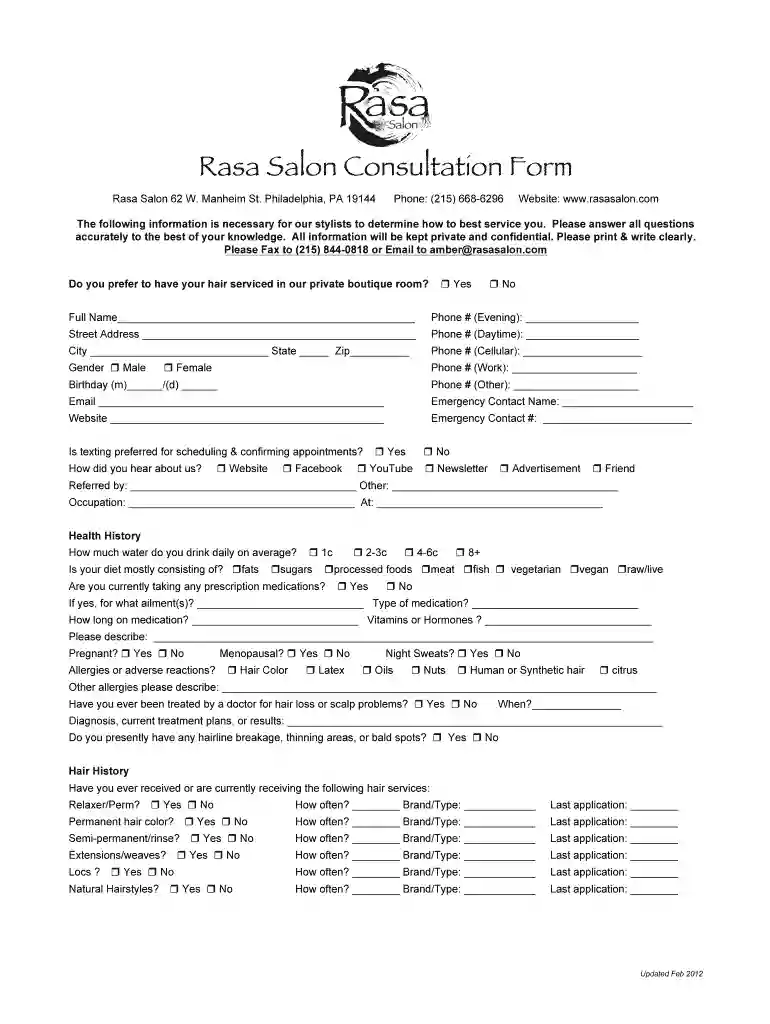
The salon consultation form is a vital document designed to collect essential information from clients before they receive hair services. This form ensures that stylists gather detailed insights into individual preferences, health history, and lifestyle habits, allowing them to provide tailored services that meet each client's needs. A well-prepared consultation form is crucial for creating a positive salon experience and ensuring client satisfaction.
Personal Information: This section collects the client's name, contact information, and preferred method of communication. Having accurate information helps maintain effective communication and can enhance the overall client experience.
Health History: Clients are asked about any medical conditions or allergies that may affect their hair treatment. This information is critical for ensuring the stylist can recommend safe products and avoid potential reactions. Common questions include inquiries about scalp conditions, recent surgeries, or ongoing skin treatments.
Hair History: This portion covers previous hair treatments and products used by the client. Past services such as coloring, perms, or chemical straightening are documented to provide context for the stylist. Understanding the client's hair history helps in assessing the current condition of the hair and determining suitable treatments.
Lifestyle Habits: Clients provide details about their daily routines, such as how much time they can dedicate to hair care, their typical styling habits, and their use of heat tools. This information allows stylists to recommend hairstyles and maintenance routines that align with the client's lifestyle, ensuring practicality and satisfaction.
Desired Outcomes: The form includes a section where clients can express their desired hairstyle or color preferences. This provides a reference point for the stylist and facilitates visual communication about the expected results. Stylistically, clients might attach inspiration images, making the consultation more effective.
Confidentiality is paramount in the salon consultation process. Clients need to feel safe disclosing their personal and medical information, knowing it will be treated with respect and stored securely. A section dedicated to explaining confidentiality practices can reassure clients about how their information is used and protected, fostering trust and encouraging open communication.
Salons may utilize templates for their consultation forms to maintain consistency. However, customization is essential to meet specific business needs or client demographics. For instance, salons specializing in color treatments might include additional questions related to hair dye allergies or previous color failures. Tailoring the consultation form ensures that it aligns with the services offered and the clientele served.
Utilizing digital platforms like DocHub can enhance the efficiency of salon consultation forms. Salons can create fillable forms that clients can complete online before their appointments. This method saves time during in-person visits and allows stylists to review information ahead of time, leading to better-prepared consultations. Digital forms also enable easy updates and customizable templates, accommodating the evolving needs of the business.
To maximize the utility of salon consultation forms, consider these best practices:
By adopting these practices, salons can enhance their service offerings and ensure a high level of customer satisfaction. The thoroughness of the salon consultation form significantly contributes to establishing a relationship of trust, allowing stylists to deliver exceptional services tailored to each client's unique needs.
We've got more versions of the salon consultation form form. Select the right salon consultation form version from the list and start editing it straight away!
| Versions | Form popularity | Fillable & printable |
|---|---|---|
| 2012 | 4.8 Satisfied (83 Votes) |
At DocHub, your data security is our priority. We follow HIPAA, SOC2, GDPR, and other standards, so you can work on your documents with confidence.
OSHA has issued an updated hazard alert on formaldehyde dangers to hair salon owners and workers after new agency finding and FDA warning letter.Read more
From consultations to aftercare, each step is handled with precision and care. Stylists use the latest techniques and tools to give you a look that suits your


