
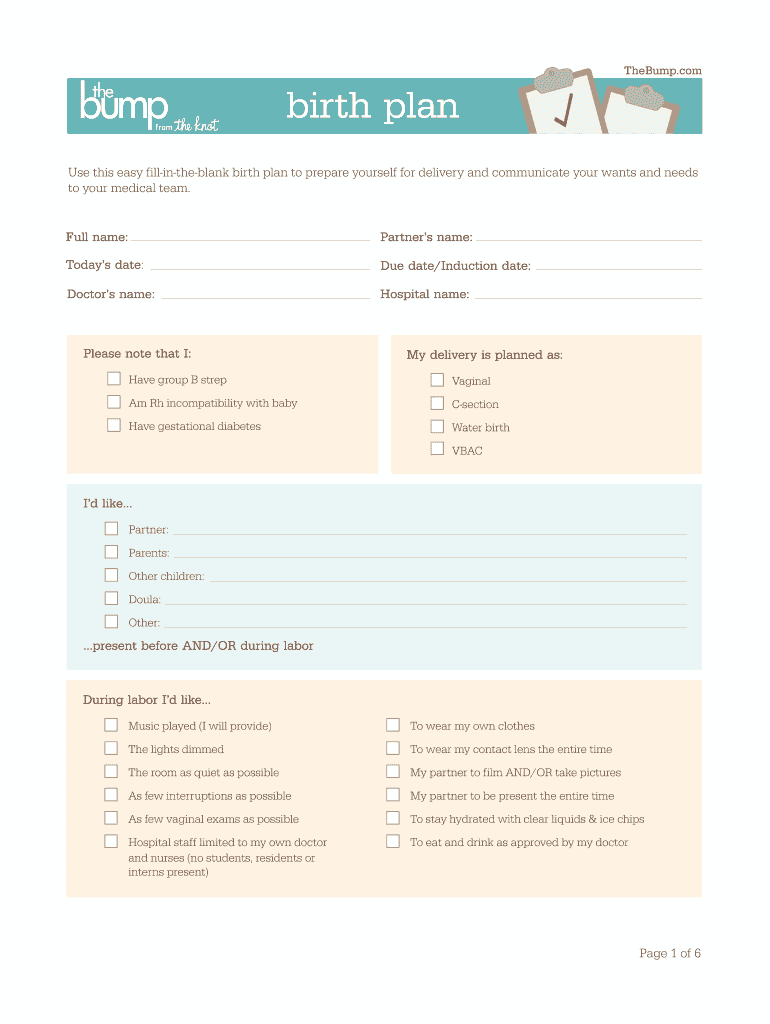







Definition and Purpose of a Birth Plan Template
A birth plan template is a structured document that allows expectant parents to outline their preferences and expectations for the labor and delivery process. This comprehensive guide serves as a communication tool between the birthing person and their healthcare team, ensuring that everyone involved is aware of the birthing person's desires and any specific instructions they may have. A well-crafted birth plan can cover a variety of topics, such as preferred medical interventions, pain relief options, delivery positions, and newborn care preferences.
Importance of Personalization
Personalizing a birth plan is essential to ensure it aligns with the birthing person's values, beliefs, and unique medical needs. Every labor and delivery experience is different, and the birth plan should reflect individual choices that resonate with the expectant parent's vision of childbirth. Personalization may include specifying the desired atmosphere in the delivery room, choosing music or lighting to create a calming environment, or deciding who will be present during labor. By customizing the template, parents can feel more prepared and empowered as they approach this significant life event.
How to Use the Birth Plan Template
Using the birth plan template involves several key steps to ensure it is effectively completed and communicated. Understanding how to navigate these steps can help in creating a comprehensive and practical plan that addresses all necessary aspects of the childbirth experience.
-
Reviewing Available Options: Begin by familiarizing yourself with the standard options available in the template, such as medication choices, delivery positions, and immediate postpartum care preferences.
-
Consulting Healthcare Providers: Discuss your plan with your healthcare provider to understand any medical factors that may influence your choices. This consultation helps in making informed decisions that are medically sound and realistic.
-
Filling Out the Template: Complete the template with specific details. Highlight essential preferences and indicate any absolute requirements or flexible areas. The aim is to provide clear and actionable information for the medical team.
Steps to Complete the Birth Plan Template
Filling out a birth plan template involves a systematic approach to ensure that all aspects of labor and delivery are adequately covered. Follow these steps for a comprehensive plan:
-
Gather Necessary Information: Before beginning, collect information on hospital policies, potential interventions, and available resources. This knowledge provides a basis for making informed decisions.
-
Identify Key Preferences: Focus on major decisions first, such as whether you prefer a natural delivery or require certain medical interventions. List any non-negotiables.
-
Detail Secondary Preferences: Once key preferences are established, elaborate on additional details, such as environment settings or post-delivery care instructions for the newborn.
-
Seek Feedback: Share your draft with your healthcare provider for feedback. They can offer insights and answer any questions you may have, ensuring your plan is practical and clear.
Importance of Clarity
When drafting your birth plan, clarity is paramount. Use straightforward language without medical jargon to ensure that anyone reading the plan, including non-medical family members, understands your wishes.
Key Elements of a Birth Plan Template
A well-structured birth plan template includes several core components that outline the expectant parent's preferences and requirements clearly:
-
Personal Information: Basic details such as name, contact information, and emergency contacts.
-
Labor Preferences: Choices regarding labor inductions, pain management methods, and mobility options during labor.
-
Delivery Preferences: Desired birthing positions and any specific delivery support methods or individuals involved.
-
Post-Delivery Care: Plans for immediate skin-to-skin contact, breastfeeding initiation, and newborn procedures.
-
Emergency Scenarios: Contingency plans in case of complications or unexpected changes, ensuring swift decision-making.
Legal Use and Validity of a Birth Plan Template
While a birth plan is a vital communication tool between parents and healthcare providers, it is not a legally binding document. Its purpose is to express preferences, not enforce legal rights. Healthcare providers will strive to honor the plan as much as possible, but clinical judgment prevails where medical safety is concerned.
Role of Healthcare Providers
Healthcare professionals will consider the birth plan during the childbirth process but may need to deviate from it for medical reasons. Open discussions with your provider can ensure mutual understanding and set realistic expectations for the delivery day.
Examples of Using the Birth Plan Template
Past experiences from those who have used birth plan templates can offer valuable insights. Here are a few scenarios:
-
Natural Birth Enthusiast: A couple desiring a natural, unmedicated birth highlighted this throughout their birth plan. They specified minimal intervention and included preferences for labor positions and environment settings like dim lighting and soothing music.
-
Medical Intervention Plan: An individual opting for scheduled interventions included precise timelines and consent for specific medications or procedures, ensuring swift coordination with the medical team.
-
Post-Delivery Focus: A parent prioritizing immediate postpartum care included detailed instructions on skin-to-skin contact and breastfeeding practices, coordinating these plans with hospital staff beforehand to ensure they were prioritized post-birth.
State-Specific Rules for Birth Plans
In the United States, state laws can impact certain aspects of the childbirth process, and awareness of these variations can enhance the practicality of a birth plan.
State Guidelines and Regulations
-
Maternity Leave Policies: Understanding local maternity leave regulations can influence postpartum plans and timelines in the birth plan.
-
Newborn Screening Protocols: Some states have specific mandatory screenings for newborns; awareness of these can foster better preparation and consent procedures.
-
Hospital Practices: Research state-specific practices regarding epidural usage, C-section rates, or breastfeeding support to align with feasible expectations.
Variations and Alternatives to the Birth Plan Template
Sometimes, a standard birth plan template does not fit all needs, and exploring alternatives or variations can be beneficial:
Alternative Options
-
Visual Birth Plan: Some individuals prefer visual aids or mind maps that outline labor preferences, capturing complex ideas succinctly.
-
Digital Birth Plan Apps: These platforms allow for easy updates and sharing with healthcare teams or family members, offering flexibility for last-minute changes.
Benefits of Exploring Options
Exploring different versions of a birth plan can reveal insights you might have overlooked in the initial template. It offers opportunities to refine choices and present them in a manner that best suits individual communication styles.




