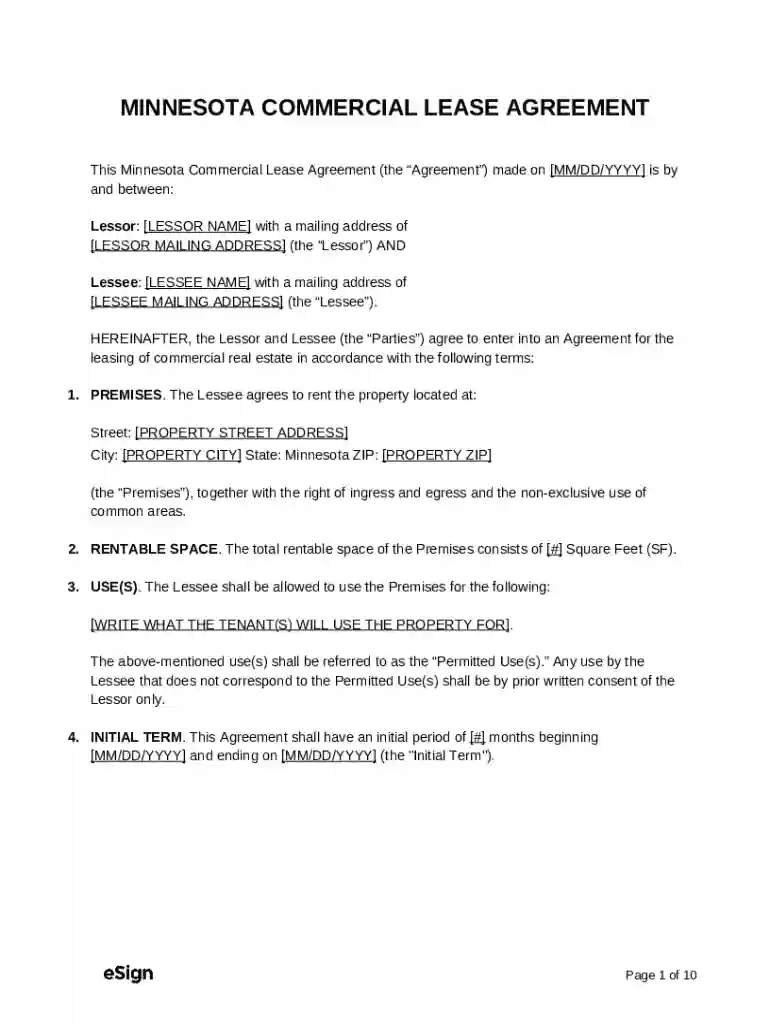
This Minnesota Commercial Lease Agreement (the "Agreement") made on MM DD YYYY is by and between: 2026

Get Form
This Minnesota Commercial Lease Agreement (the "Agreement") made on MM DD YYYY is by and between: Preview on Page 1

Here's how it works

01. Edit your form online
Type text, add images, blackout confidential details, add comments, highlights and more.

02. Sign it in a few clicks
Draw your signature, type it, upload its image, or use your mobile device as a signature pad.

03. Share your form with others
Send it via email, link, or fax. You can also download it, export it or print it out.

Definition & Meaning

A Minnesota Commercial Lease Agreement is a legally binding document that outlines the terms and conditions for leasing commercial property within the state of Minnesota. It establishes a contractual relationship between the Lessor, the property owner, and the Lessee, the individual or business entity leasing the property. This agreement covers various aspects, including the rental amount, lease term, maintenance responsibilities, and provisions for termination. By clearly defining the roles and obligations of both parties, it helps prevent disputes and misunderstandings during the lease period.

  • Lease Term: Specifies the duration for which the Lessee will occupy the premises, including start and end dates.
  • Rental Amount: Details the monetary amount to be paid by the Lessee, including frequency and due dates.
  • Maintenance Responsibilities: Outlines who is responsible for maintaining and repairing the premises.

Key Elements of the Agreement

Essential components of the Minnesota Commercial Lease Agreement ensure its effectiveness and enforceability. These elements form the backbone of the contract and provide clarity for both parties involved.

  • Premises Description: A detailed description of the property being leased, including address and any included facilities.
  • Security Deposit: Specifies the amount deposited by the Lessee to cover potential damage or unpaid rent.
  • Insurance Requirements: Outlines the insurance policies required for the Lessee to protect both the property and their business operations.

How to Use the Agreement

Utilizing the Minnesota Commercial Lease Agreement involves a series of steps that both parties must carefully follow to ensure compliance and mutual understanding.

  1. Review Terms: Both parties should thoroughly review the document to understand all obligations and rights.
  2. Negotiate Terms: If necessary, negotiate specific terms that may need adjustment to suit the needs of both the Lessor and Lessee.
  3. Execute the Agreement: Both parties should sign the document, with signatures recorded and witnessed as required.

Steps to Complete the Agreement

Completing the Minnesota Commercial Lease Agreement involves several detailed actions, ensuring accuracy and completeness before both parties finalize the contract.

  1. Insert Property Details: Fill in all relevant details regarding the commercial property, including its condition.
  2. Document Financials: Clearly state all financial obligations, including rent, security deposits, and any additional fees.
  3. Clarify Responsibilities: Define the responsibilities pertaining to maintenance, repairs, and insurance coverage.
  4. Legal Review: Optionally, have the agreement reviewed by a legal professional to ensure compliance with Minnesota state laws.

Legal Use of the Agreement

The Minnesota Commercial Lease Agreement provides legal protection and leverage for both the Lessor and Lessee. It is essential to ensure that all clauses within the agreement comply with current Minnesota statutes and regulations.

  • Default Provisions: Address the steps that will be taken if the Lessee fails to fulfill their contractual obligations.
  • Termination Clauses: Outline the conditions under which either party can legally terminate the lease prior to its expiration.

State-Specific Rules for Minnesota

Minnesota state laws influence the content and enforcement of commercial lease agreements, requiring attention to specific regulations.

  • Tenant Rights: Ensure that the Lessee's rights, as defined by Minnesota law, are upheld within the agreement.
  • Zoning Laws: Confirm that the intended use of the leased premises complies with Minnesota's zoning regulations.

Who Typically Uses the Agreement

This type of lease agreement is commonly used by various entities and individuals seeking to establish a commercial presence in Minnesota.


  • Small Businesses: Entrepreneurs and small business owners looking for retail or office space.
  • Franchisees: Individuals or entities opening franchise locations.
  • Property Managers: Professionals managing properties on behalf of owners and requiring standardized lease agreements.
decoration image ratings of Dochub

Important Terms Related to the Agreement

Understanding key terms within the Minnesota Commercial Lease Agreement is crucial for both parties involved.

  • Gross Lease: A lease agreement where the Lessor covers all costs related to property maintenance and taxes.
  • Net Lease: A scenario where the Lessee is responsible for property-related expenses such as taxes, maintenance, and insurance.
  • Sublease: Allows the Lessee to lease the premises to a third party, usually subject to Lessor's consent.

Software Compatibility (TurboTax, QuickBooks, etc.)

For businesses utilizing accounting and management software, ensuring compatibility with the lease agreement can streamline operations.

  • QuickBooks: Used for managing financial aspects of the lease such as rent tracking.
  • Document Management Software: Platforms like DocHub help create, edit, and manage agreements digitally for efficient workflow.

Penalties for Non-Compliance

Non-compliance with the Minnesota Commercial Lease Agreement can lead to penalties and legal consequences for either party.

  • Lease Termination: The Lessor may have the right to terminate the lease if the Lessee breaches significant terms.
  • Financial Penalties: Additional charges may apply for late payments or unauthorized property modifications.

By meticulously adhering to the defined terms and following proper procedures, both parties can benefit from a harmonious and legally compliant leasing relationship.

be ready to get more

Complete this form in 5 minutes or less

Get form

Got questions?

We have answers to the most popular questions from our customers. If you can't find an answer to your question, please contact us.
Contact us
Key Elements of a Commercial Lease Property Description. A clear and precise description of the property is fundamental. Lease Term. Rent and Payment Terms. Use of Property. Maintenance and Repairs. Alterations and Improvements. Insurance Requirements. Subleasing and Assignment.
The tenancy agreement is a contract between you and your landlord. It may be written or verbal. The tenancy agreement gives certain rights to both you and your landlord. For example, your right to occupy the accommodation and your landlords right to receive rent for letting the accommodation.
Lease Agreements are contracts entered into between two parties (the landlord and the tenant) for the rental of a property.
A lease agreement is an arrangement between two parties lessor and lessee, by which the lessor allows the lessee the right to use a property owned or managed by the lessor for a specified period of time, in exchange for periodic payment of rentals. The agreement does not provide ownership rights to the lessee.
How to write a simple lease agreement Description. Landlords and tenants names. Property description. Tenancy term. Every occupants name. Monthly rent. Security deposit. Subleases or assignments.

Security and compliance

At DocHub, your data security is our priority. We follow HIPAA, SOC2, GDPR, and other standards, so you can work on your documents with confidence.

Learn more
ccpa2
pci-dss
gdpr-compliance
hipaa
soc-compliance
be ready to get more

Complete this form in 5 minutes or less

Get form

People also ask

After you sign A lease is a binding contract between the landlord and the tenant once it has been signed, and changes made by either party could have a negative impact. However, an addition could be added that would be signed by the landlord and the tenant if both parties agree that changes are needed.
A commercial lease addendum is a document that adds to the terms of an existing commercial lease. Its generally used when the landlord and tenant want to introduce additional rental conditions without terminating the original agreement.

Related links