
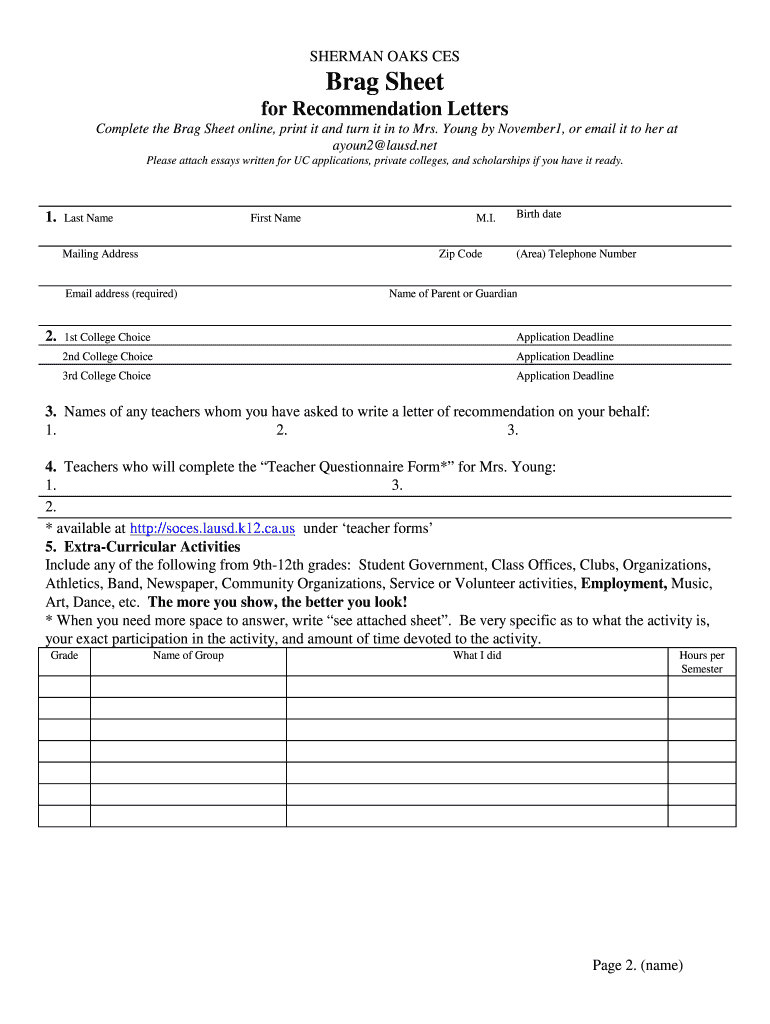







Understanding the Brag Sheet for College Applications
The brag sheet is a crucial document for students, particularly when seeking recommendations for college applications. It serves as a comprehensive summary of a student’s achievements, extracurricular activities, and personal reflections, ultimately assisting teachers and counselors in crafting tailored and impactful recommendation letters.
Components of a Brag Sheet
Several key sections should be included in a brag sheet, each providing vital information that highlights a student’s strengths and accomplishments.
-
Personal Information:
- Full name, date of birth, and contact details.
- Relevant family background can be included, such as siblings and their schools or colleges, which can help provide context and establish a narrative of support and academic environment.
-
Academic Achievements:
- A detailed list of courses taken, GPA, class rank, and significant academic awards or honors received. This includes recognition in subjects like math, science, or humanities, showcasing the student’s strengths and areas of interest.
-
Extracurricular Involvement:
- Highlighting clubs, sports teams, or volunteer organizations permits a holistic view of the student’s interests and commitments. Students should include leadership roles or significant contributions to these activities as evidence of their character and work ethic.
-
College Preferences:
- Clearly articulate preferred colleges, desired majors, and career aspirations, enabling recommenders to align their letters with the student’s future goals and chosen fields of study.
-
Personal Reflections:
- A section for students to express their personal strengths and weaknesses, along with unique attributes that set them apart, can provide insight for recommenders into the student’s personality and self-awareness.
Filling Out the Brag Sheet
Completing a brag sheet involves specific steps to ensure that the document effectively communicates the student’s achievements.
-
Gather Information:
- Collect all academic transcripts, awards, and records of extracurricular participation. Having this data readily available will facilitate a more complete and organized brag sheet.
-
Reflect on Experiences:
- Spend time reflecting on experiences and accomplishments that showcase personal growth. This may include challenges faced and how they shaped the student’s perspective.
-
Draft Thoughtfully:
- Write clearly and concisely, using specific examples for each listed achievement or attribute. When detailing accomplishments, quantifying them (e.g., “led a team of ten” or “increased membership by twenty percent”) can add credibility.
-
Seek Feedback:
- Consider asking a trusted teacher, counselor, or family member to review the brag sheet for clarity and completeness. Their perspective can help refine the document and ensure it effectively communicates the intended message.
Importance of a Brag Sheet
A well-crafted brag sheet not only assists teachers in writing recommendations but also enables students to self-advocate during the college admission process. It acts as a tool for self-reflection, helping students recognize their strengths and the unique qualities they bring to a college community.
Final Considerations for the Brag Sheet
When preparing a brag sheet, it is essential to consider:
-
Formatting and Clarity:
- Clear headings and organized sections improve readability and ease of use for recommenders.
-
Timeliness:
- Ensure the brag sheet is submitted well ahead of any deadlines to give recommenders ample time to write thoughtful letters.
-
Confidentiality:
- While brag sheets are informative, students should be aware of any sensitive information shared and maintain privacy where necessary.
Engaging deeply with the brag sheet process not only enhances the quality of recommendation letters but also fosters personal growth and readiness for future academic pursuits.




