




01. Edit your usacc form 156 4 online
Type text, add images, blackout confidential details, add comments, highlights and more.

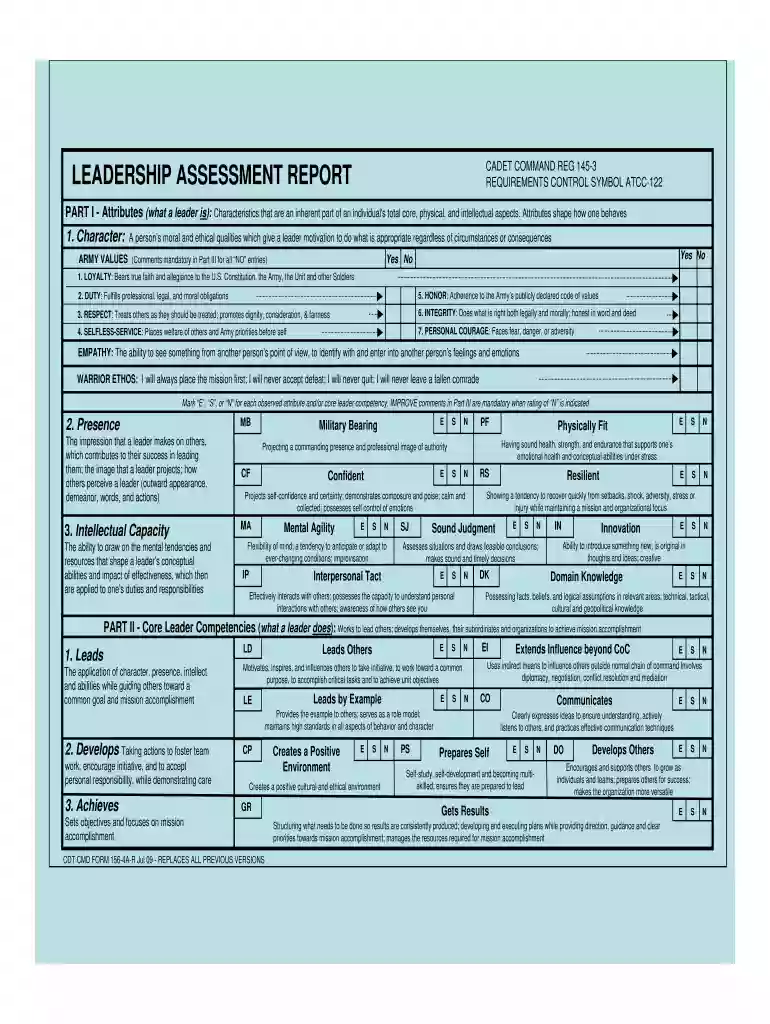
Type text, add images, blackout confidential details, add comments, highlights and more.

Draw your signature, type it, upload its image, or use your mobile device as a signature pad.

Send rotc blue card pdf via email, link, or fax. You can also download it, export it or print it out.
USACC Form 156-4, also referred to as the ROTC Blue Card, serves as a critical document in the Army ROTC program. This form evaluates cadet leadership assessments and is an essential part of cadet development within the program. The insights gathered through this form help to shape the training and educational journey of future leaders.
The primary function of USACC Form 156-4 is to record evaluations that assess the leadership competencies and attributes of ROTC cadets. It includes various sections where instructors can comment on cadets' performance in several key areas, such as:
The completed form is instrumental for instructors in providing cadets with meaningful feedback, which is crucial for personal and professional growth.
USACC Form 156-4 is structured to facilitate a thorough evaluation. Each section demands specific insights, allowing for a comprehensive assessment:
By dividing evaluations into distinct criteria, the form ensures that cadets receive detailed and actionable feedback that can enhance their military training.
Filling out USACC Form 156-4 requires diligence and clarity. The following steps outline the process:
Accurate completion of the form is vital as it directly impacts cadets' development and eligibility for advancement within the program.
Typically, instructors and cadre members involved in the ROTC program utilize USACC Form 156-4 to evaluate cadets. This includes:
Comprehensive evaluations encourage a feedback loop that enhances both individual and team performances.
Understanding key terms associated with USACC Form 156-4 is crucial for effective completion and utilization of the form:
Familiarity with these terms ensures that both evaluators and cadets can navigate the form with a clear understanding of its expectations.
When using USACC Form 156-4, it is essential to adhere to established guidelines set forth by the U.S. Army Cadet Command. This includes maintaining confidentiality and ensuring that evaluations are fair and based on merit.
Compliance with these principles reinforces the credibility of the evaluation process and ensures that cadets receive fair assessments.
Using USACC Form 156-4 effectively helps demonstrate various scenarios where the evaluations can lead to significant outcomes:
These examples highlight the integral role of USACC Form 156-4 in nurturing the next generation of military leaders.
USACC Form 156-4 plays a vital role in the ROTC program by providing a structured mechanism for assessing and developing leadership skills. The thoroughness of evaluations not only aids in personal growth but also contributes to the overall effectiveness of military training. By fostering constructive feedback and maintaining accountability, the form ensures a high standard of leadership development within the program.
We've got more versions of the usacc form 156 4 form. Select the right usacc form 156 4 version from the list and start editing it straight away!
| Versions | Form popularity | Fillable & printable |
|---|---|---|
| 2009 | 4.9 Satisfied (45 Votes) |
Microsoft Word doesn’t have signing tools to generate legitimate electronic signatures and enforceable documents. Fortunately, DocHub is an online eSignature-compliant editor that works with various document formats, including .doc files. Log in to your account and add the Word edition of your army blue card from your device and cloud, or URL - our editor will automatically transform it into an editable PDF. Make all necessary changes in your form and click Sign to generate your own legally-binding electronic signature. You will find four signing methods from which to choose.
It is a no-brainer on a computer or via a mobile device to complete a cdt cmd form 156 with DocHub. All you need to do is open any installed web browser on your smartphone and proceed to the DocHub website. Once authenticated, add your document and open it in editing mode. Use our toolbar to make your edits and save changes. Optionally, keep your file in your files or send it to a recipient on the spot.
At DocHub, your data security is our priority. We follow HIPAA, SOC2, GDPR, and other standards, so you can work on your documents with confidence.
VARs are good for a one-year time period and renewal VARs need to be sent in one month prior to expiration. All information should correspond to the informationRead more
Presence. The impression that a leader makes on others, which contributes to their success in leading them; the image that a leader projects; how.Read more


