
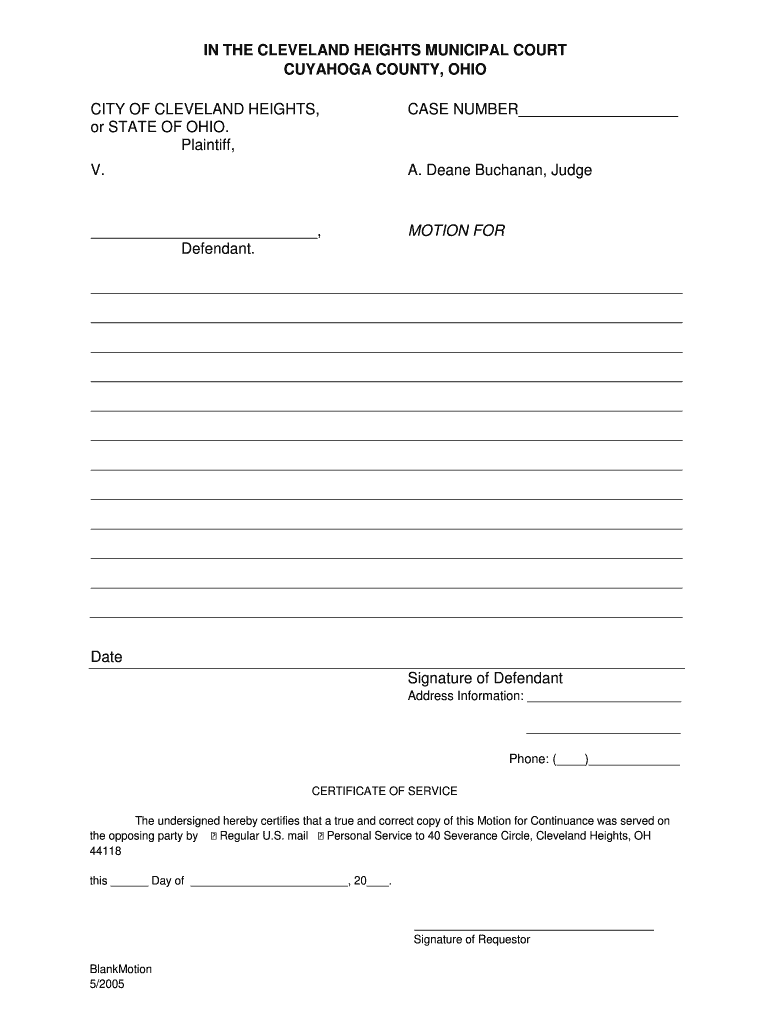







Definition and Meaning of Blank Court Motion Forms
Blank court motion forms are standardized legal documents used to request a specific ruling or action from a court. These forms serve as a template, allowing individuals to formally articulate their requests to a judge. Typically, they include essential sections for case information, the nature of the motion, and relevant legal arguments. Utilizing such a template ensures that parties follow proper court procedures and meet applicable legal standards across various jurisdictions.
-
Purpose of Blank Court Motion Forms:
- To request a change in the status of a case.
- To seek an extension of time for court deadlines.
- To request various types of legal relief, such as dismissals or alterations to court orders.
-
Common Usages:
- Motions for continuance.
- Motions to compel discovery.
- Motions to dismiss.
How to Use the Blank Court Motion Forms
Using blank court motion forms involves several straightforward steps that ensure your request is properly documented and compliant with legal standards.
-
Select the Appropriate Form:
- Identify the specific motion needed for your case. Common types include a motion for summary judgment or a motion for a new trial.
-
Complete the Form Sections:
- Fill in necessary details, including case number, parties involved, and a clear description of the motion's purpose.
- Most forms include sections for legal arguments; provide concise yet comprehensive arguments supporting your request.
-
Review and Finalize:
- Double-check the form for accuracy and completeness. Ensure all required signatures are present, if applicable.
-
Serve the Form:
- Provide copies of the completed form to all parties in the case, typically through mail or electronic filing as allowed by the court.
-
File the Motion:
- Submit the completed form to the appropriate court. Familiarize yourself with local filing rules to adhere to specific guidelines, such as additional documentation or filing fees.
Steps to Complete the Blank Court Motion Forms
Completing a blank court motion form effectively involves a clear understanding of its structure and required content. Follow these steps for successful completion:
Gather Information
- Case Details: Obtain case number, names of all involved parties, and court name.
- Motion Purpose: Identify the specific request you are making and relevant legal grounds for this motion.
Fill in the Form
-
Top Section:
- Enter case information, including court name and jurisdiction.
-
Middle Section:
- Clearly state the motion title.
- Articulate the basis for the motion along with supporting facts.
-
Bottom Section:
- Include a signature line for the person submitting the motion.
- If necessary, add a certificate of service, indicating when and how other parties received the motion.
Review for Accuracy
- Inspect the form for typos, unclear language, or missing information. Confirm that legal arguments are well-supported with facts and citations where necessary.
Who Typically Uses Blank Court Motion Forms?
Blank court motion forms are utilized by a diverse range of individuals and entities involved in the legal process, such as:
- Self-represented Litigants: Individuals without legal representation often use these forms to navigate court procedures independently.
- Attorneys: Legal professionals employ these forms to streamline their motions in various cases, ensuring they meet compliance requirements.
- Corporations and Businesses: Organizations involved in litigation might submit motion forms to request dismissals or extensions specific to business cases.
Understanding who uses these forms can help tailor the language and content to meet the needs of diverse users.
Important Terms Related to Blank Court Motion Forms
Familiarity with specific legal terminology can enhance understanding and effective use of blank court motion forms. Some key terms include:
- Defendant: The individual or entity against whom the motion is filed.
- Plaintiff: The person or entity that initiates a legal action.
- Affidavit: A written statement confirmed by oath or affirmation, used as evidence in many legal proceedings.
- Ex Parte: A legal proceeding or motion in which one party appears without the other present.
Grasping these terms facilitates better communication with the court and other legal entities when using these forms.
State-Specific Rules for Blank Court Motion Forms
Legal procedures can vary significantly by state, which is critical when using blank court motion forms. Each jurisdiction may have its own requirements concerning:
-
Format and Content:
- Certain states may mandate specific language or additional sections in the forms.
-
Filing Procedures:
- States may differ in terms of filing methods (online, by mail, or in-person) and associated fees.
-
Legal Standards:
- Different jurisdictions may have unique standards for evidence or legal precedent, which can influence the success of a motion.
Understanding these nuances helps ensure compliance and increases the likelihood of a favorable court ruling.




