




01. Edit your lost and found template word online
Type text, add images, blackout confidential details, add comments, highlights and more.

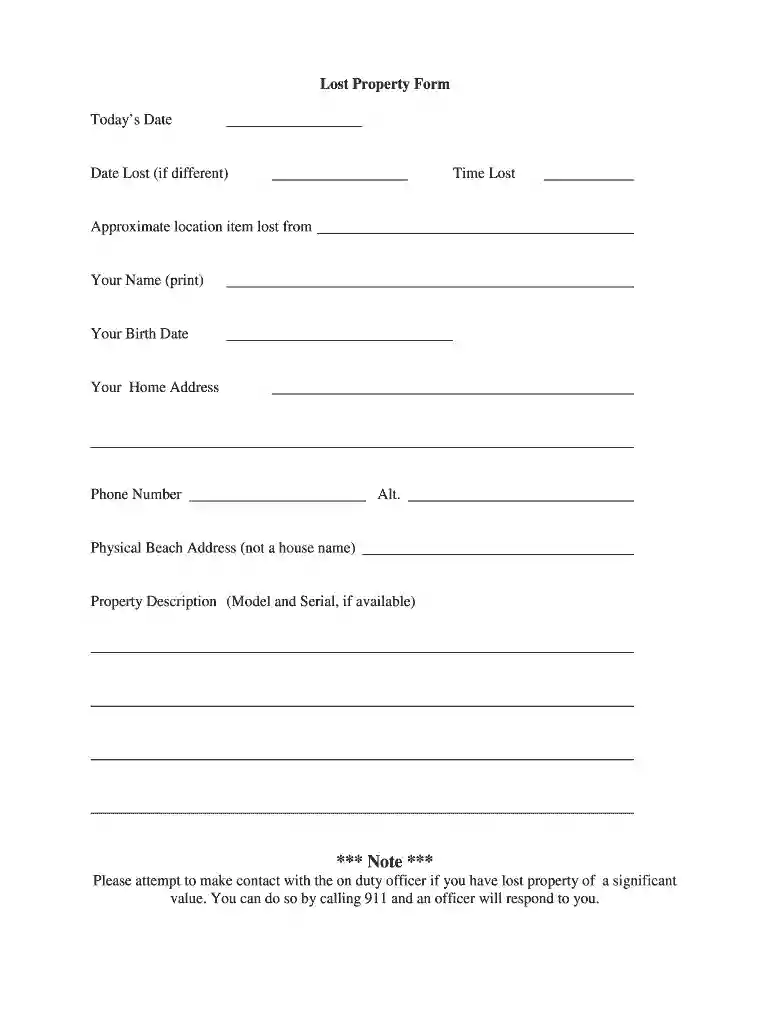
Type text, add images, blackout confidential details, add comments, highlights and more.

Draw your signature, type it, upload its image, or use your mobile device as a signature pad.

Send north carolina lost property via email, link, or fax. You can also download it, export it or print it out.
A lost and found policy template outlines the procedures and responsibilities associated with the management of lost property in various settings, such as businesses, schools, hotels, and public organizations. This document serves multiple purposes, including:
Implementing a lost and found policy is essential for fostering trust and maintaining order within an organization. Whether in a hotel, workplace, or educational environment, clear guidelines assist in resolving disputes efficiently, thereby enhancing customer satisfaction and employee morale.
A comprehensive lost and found policy template consists of several key components that ensure clarity and effectiveness:
Reporting process: A step-by-step procedure detailing how lost items should be reported, including any forms that need to be filled out.
Documentation: Information about how to document lost and found items, including record-keeping methods, item descriptions, and unique identifiers like serial numbers or photos.
Timeframe for holding items: Policies may include regulations on how long lost items will be retained before being disposed of or donated, often specified by state or local laws.
Notification procedures: Guidance on how and when to communicate with individuals who report lost items, including notification if an item is found.
Security measures: policies regarding who can access the lost and found items and how they are secured until claimed.
These elements provide a structured approach to lost and found management, ensuring consistency and reliability in handling reported items.
Creating a lost and found policy template involves several critical steps:
Identify Stakeholders: Gather input from key stakeholders, including staff members, security personnel, and representatives from relevant departments that manage lost items.
Draft the Policy: Utilize a lost and found policy template to draft a document that includes all the key elements. Ensure that the language is clear and user-friendly.
Review Legal Requirements: Research state-specific rules and regulations regarding lost property to ensure compliance. Each state may have different requirements regarding the handling of lost items.
Solicit Feedback: Share the draft policy with stakeholders for feedback. This allows for adjustments based on practical considerations and ensures that all perspectives are included.
Finalization: Make necessary revisions based on feedback and finalize the document. Ensure that it is easily accessible to all employees and that they are trained on its contents.
Implementation: Roll out the policy across the organization. Inform staff of the changes, and provide training if necessary to ensure compliance.
Regular Review: Establish a timetable for regular reviews of the policy to adapt to any changes in operations, legal regulations, or organizational needs.
Following these steps ensures that the lost and found policy is effective, compliant, and tailored to the specific needs of the organization.
Various organizations utilize lost and found policy templates, including:
Hospitals: To manage personal belongings left by patients and visitors, ensuring items are returned appropriately.
Hotels and Resorts: To track lost items left behind by guests, providing a systematic approach to claim and return.
Schools and Universities: To help administrators manage lost property effectively for students and staff.
Event Venues: To maintain organization during events where lost items can accumulate rapidly.
Each of these entities benefits from a structured approach to lost property, enhancing service delivery and increasing accountability.
Legal considerations play a crucial role in lost and found policies. Organizations must adhere to state-specific regulations regarding the handling of lost items, including:
Retention Periods: Many states have laws dictating how long items must be held before being deemed abandoned, typically varying from 30 to 90 days.
Notification Requirements: Organizations may be required to notify individuals who file a lost item report once a matching item is found.
Liability Issues: Understand the potential liability for lost items and the legal obligations to safeguard property until claimed.
Having a legally compliant lost and found policy protects organizations from liability and ensures that they are acting within the law when dealing with lost property.
We've got more versions of the lost and found template word form. Select the right lost and found template word version from the list and start editing it straight away!
| Versions | Form popularity | Fillable & printable |
|---|---|---|
| 2011 | 4.5 Satisfied (30 Votes) |
At DocHub, your data security is our priority. We follow HIPAA, SOC2, GDPR, and other standards, so you can work on your documents with confidence.
The purpose of this directive is to establish procedures for the receipt, handling, security and disposition of property and/or evidence in the custody of theRead more
Aug 30, 2021 The purpose of this memorandum is to provide the level of negligence assigned to [insert name of employee] for the asset or assets described in the attachedRead more
May 20, 2016 Policy, templates, and training information are now available online. Reference USPS Blue, click Inside USPS, then National PreparednessRead more


