
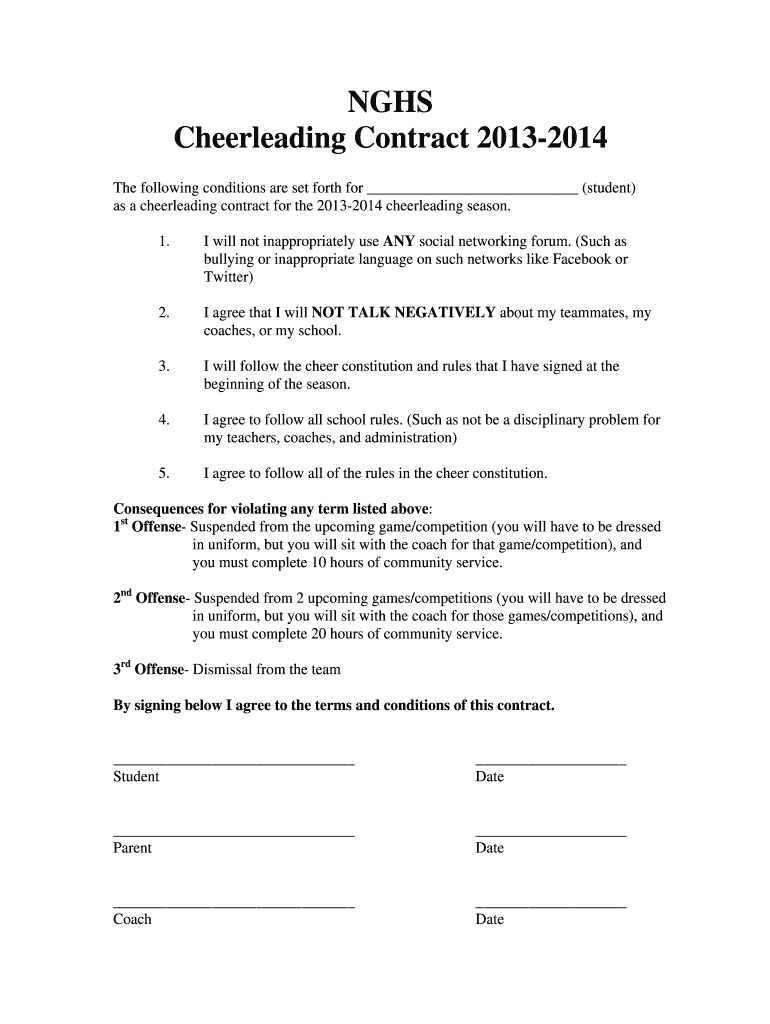







Definition and Meaning of the Cheerleader Contract
A cheerleader contract is a formal agreement outlining the expectations and obligations of cheerleaders participating in a cheerleading program. It serves as a mutual understanding between the cheerleaders, their coaches, and the organizing body, ensuring everyone is aware of their roles and responsibilities.
Purpose of the Cheerleader Contract
The primary purpose of this contract is to establish a clear set of behavioral and performance expectations for student participants in a cheerleading squad. It may cover topics such as commitment to practice schedules, requirements for attending games, and adherence to school and squad rules. This document not only safeguards the integrity of the cheerleading program but also promotes a positive team environment.
Key Components of a Cheerleader Contract
Several critical elements are typically included in a cheerleading contract:
- Behavioral Expectations: Guidelines on conduct during practices, games, and events. This often includes a commitment to positive interactions on social media, respect towards teammates and coaches, and adherence to the cheerleading constitution.
- Attendance Requirements: Explicit stipulations regarding attendance at practices, games, and other team events.
- Consequences for Violations: Details about the repercussions for failing to meet the outlined expectations, such as suspensions from games or additional community service.
- Signing Process: Requirements for all parties (cheerleaders, coaches, and sometimes parents) to sign the contract, which signifies agreement and understanding.
How to Use the Cheerleader Contract
The cheerleader contract functions as both a management tool and a reference point for all involved parties. Here's how it can be effectively utilized:
Implementation Steps
- Distribute the Contract: Provide copies of the contract to all intended participants, including cheerleaders, coaches, and parents, if applicable. This can be done in printed form during a team meeting or shared digitally.
- Review the Content: Conduct a meeting or informative session where the key points of the contract are reviewed. This ensures all individuals involved understand their responsibilities and the overall expectations.
- Facilitate Discussion: Allow cheerleaders and their parents to ask questions or seek clarifications on any section of the contract. Open dialogue promotes transparency and buy-in.
- Signing the Contract: After discussions, have each party sign the contract, acknowledging their agreement. It is crucial to keep signed copies for record-keeping.
- Enforce the Guidelines: Use the contract as a reference point throughout the cheerleading season. Address any violations promptly and consult the agreed-upon consequences as stated in the contract.
Monitoring and Compliance
Ongoing monitoring of behavior and attendance is necessary. Regular check-ins can help maintain engagement and adherence to the contract’s stipulations.
Steps to Complete the Cheerleader Contract
Completing a cheerleader contract involves multiple steps to ensure accuracy and compliance. Below is a structured approach:
Step-by-Step Process
- Gather Required Information: Collect all necessary details from participants, such as names, contact information, and any relevant medical information.
- Customize the Template: Use a cheer contract template tailored specifically for the cheerleading program, filling in unique details such as the team name, season dates, and school policies.
- Outline Expectations: Clearly define the behavioral expectations and attendance requirements. It’s essential to use precise language to avoid any misunderstandings.
- Include Consequences for Violations: Clearly outline the consequences for failing to adhere to the contract’s stipulations. This may include disciplinary actions, such as temporary or permanent removal from the team.
- Review and Finalize: Share the draft with coaching staff or legal advisors to ensure that all provisions are compliant with school policies and legal standards.
- Presentation and Signing: Present the contract during a team meeting and allow time for discussion. Once all questions are addressed, distribute the signing copies.
- File the Signed Contracts: After all relevant parties have signed, compile and store these contracts securely for the season as a point of reference for any disputes or questions that arise.
Who Typically Uses the Cheerleader Contract
The cheerleader contract is primarily utilized by various stakeholders involved in the cheerleading program. Here are the main users:


Key Users of the Contract
- Cheerleaders: Student participants rely on the contract to understand their role and responsibilities within the cheer squad.
- Coaches: Coaches use the contract to set expectations, manage behavior, and enforce disciplinary actions.
- Parents or Guardians: In youth cheerleading programs, parents review and sign the contract to ensure their children's understanding of team expectations.
- School Administrators: Administrators may mandate the contract as part of the school's compliance with safety and behavioral guidelines.
Additional Beneficiaries
- Team Managers: They may use the contract to facilitate communication and maintain records of participant commitments.
- School Boards: Boards may implement such contracts as a formalized approach to ensure that student activities align with the school’s educational mission and values.
Legal Use of the Cheerleader Contract
The legalities surrounding a cheerleader contract are crucial for its enforcement and compliance. Understanding these aspects helps safeguard all participants involved.
Legal Considerations
- Age of Consent: Ensure that participants are of an age where they can legally enter into contracts, or have parental consent when necessary.
- Compliance with Laws: The contract must adhere to applicable local, state, and federal laws regarding youth participation in school activities.
- Recording Agreements: Signed contracts serve as official documents that can be referenced in cases of disputes or misunderstandings.
- Liability Waivers: Some contracts may include liability waivers to protect the school and coaches from legal repercussions due to injuries that may occur during practices or events.
Importance of Legal Framework
The inclusion of legal elements in a cheerleader contract reinforces the seriousness of the agreement and fosters accountability. This legal backing is particularly essential in high school cheerleading, where the safety and well-being of minors are at stake.
Key Elements of the Cheerleader Contract
Several vital components create a well-structured cheerleader contract. These ensure clarity and compliance for all parties involved.
Essential Contract Components
- Identifying Information: Names, contact details, and relevant dates should be clearly stated.
- Expectations and Behavior Policies: Specific guidelines about conduct, teamwork, and school policies must be articulated for clarity.
- Attendance and Commitment: Clearly outline the required attendance for practices, games, and workshops, specifying any penalties for non-compliance.
- Consequences for Breach: Define disciplinary actions for violations of the contract, providing a sense of accountability.
- Signatures for Agreement: Ensure all involved parties sign the contract to signify their acceptance of the outlined terms.
Additional Considerations
- Review Period: Establish a timeframe for reviewing the contract to ensure it remains relevant throughout the cheer season.
- Amendments Clause: Include provisions for making amendments to the contract as needed, upon mutual consent of involved parties.
Using these structured elements allows for a clear mutual understanding among cheerleaders, coaches, and parents, ultimately contributing to a successful and cooperative season.




