
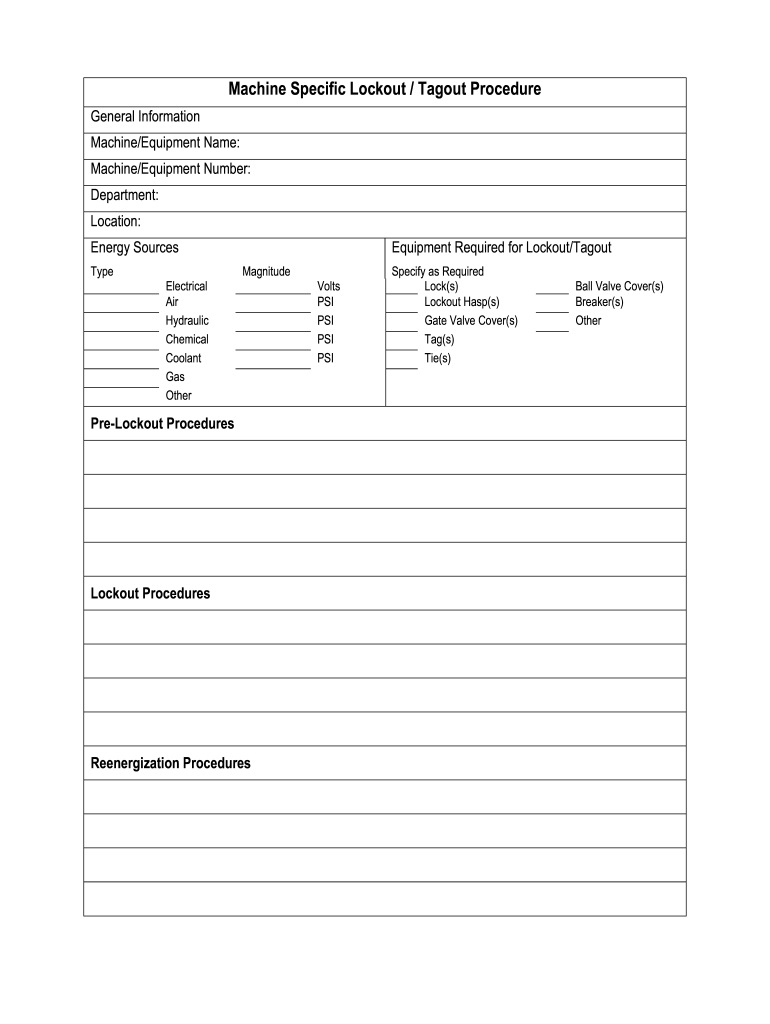







Definition and Meaning of the Printable Lockout Tagout Template Excel
The printable lockout tagout template excel serves as a formal tool used to implement lockout/tagout (LOTO) procedures, ensuring that machinery and equipment are properly shut down and unable to be started up again before maintenance or servicing. This template provides a standardized format that outlines critical safety measures and procedures that workers must follow to prevent accidental machine startup or release of hazardous energies.
Lockout/tagout refers to specific practices and procedures to safeguard workers from hazardous energy during maintenance work. The printed template typically includes sections to document machine specifics, energy sources, lockout procedures, and required safety measures needed to facilitate ongoing compliance with workplace safety regulations. By providing an organized method to track lockout procedures, the template helps mitigate risks associated with equipment maintenance.
How to Use the Printable Lockout Tagout Template Excel
Using the printable lockout tagout template excel involves a few straightforward steps that ensure compliance and safety during equipment maintenance.
-
Download or Access the Template:
- Obtain the template in Excel format, either through a company's safety department or from online resources.
-
Fill in Machine Information:
- Input general information about the machinery, including the name, type, and serial number.
-
Document Energy Sources:
- Specify all relevant energy sources (e.g., electrical, hydraulic, pneumatic) that must be controlled.
-
Establish Lockout Procedures:
- Clearly outline the steps to lock out and tag out the equipment properly. This may involve turning off switches, removing fuses, or disconnecting power sources.
-
Identify Personnel Responsibilities:
- Assign and record who is responsible for implementing the lockout/tagout procedures. This can include personnel performing the work and those overseeing the safety processes.
-
Provide Safety Checks:
- Include verification steps to ensure that the equipment is properly locked out before any maintenance work begins.
-
Maintain Records:
- After completing the maintenance, keep a record of completed forms, which can assist in audits and inspections.
Steps to Complete the Printable Lockout Tagout Template Excel
Following a structured approach when completing the printable lockout tagout template excel is essential to maintain safety and compliance. The specific steps for completing the template may include:
-
Identify the Equipment:
- Start with the equipment name and reference number to ensure clarity regarding the asset being serviced.
-
List the Energy Sources:
- Document all forms of energy that affect the equipment, indicating their type and source. Checklists can aid in ensuring all potential hazards are identified.
-
Detail Lockout Procedures:
- Outline clear and concise procedures on how to lock out the equipment, with bullet points stating each action needed, such as:
- Disconnect power supply
- Apply lock and tag
- Verify isolation.
-
Designate Authorized Personnel:
- Identify and list the individuals authorized to implement the lockout procedures. This can help establish accountability and ensure trained personnel are involved.
-
Include Verification Steps:
- After completion, include steps to verify that the lockout has been properly executed, such as conducting a safety assessment before work begins.
-
Avoid Common Mistakes:
- Manage errors by checking for completeness and accuracy in the form. Double-checking energy sources and procedures can prevent risks.
Why Use the Printable Lockout Tagout Template Excel
Using a printable lockout tagout template excel is essential for several reasons:
-
Compliance with Safety Standards: Adhering to OSHA (Occupational Safety and Health Administration) guidelines and standards requires documented procedures. The template ensures that all safety protocols are followed.
-
Streamlined Documentation: The standardized format of the template allows for easy updates, clear records, and consistency in completing lockout/tagout processes across an organization.
-
Enhanced Safety Awareness: The act of using a template promotes safety consciousness among employees, ensuring they are aware of the potential hazards associated with machinery.
-
Facilitates Training: A clearly defined template aids in training new employees on safety and lockout/tagout processes, thereby integrating best practices into the workplace culture.
Key Elements of the Printable Lockout Tagout Template Excel
Significant elements of the printable lockout tagout template excel should include:
-
Machine Information:
- Name of the equipment
- Model and serial numbers
- Location of the equipment
-
Energy Source Identification:
- Types of energies associated (electric, hydraulic, etc.)
- Location of energy control devices
-
Lockout Procedures:
- Step-by-step process for locking out and tagging the equipment
- Instructions for verifying successful lockout
-
Signatures and Dates:
- Space for authorized personnel’s signatures
- Dates of lockout and tagout actions
-
Training Documentation:
- Sections to document training for employees regarding LOTO safety procedures.
These elements are crucial for efficient and effective implementation of lockout/tagout procedures, helping ensure a safe work environment.
Examples of Using the Printable Lockout Tagout Template Excel
Using the printable lockout tagout template excel can be illustrated through various workplace scenarios:
-
Preventive Maintenance on Manufacturing Equipment: Before conducting routine maintenance on a hydraulic press, an operator fills out the template, detailing energy sources and lockout procedures, ensuring no energy is released inadvertently.
-
Repair of Electrical Systems: An electrician using the template identifies multiple energy sources in a control panel, documents the necessary lockout procedures, and secures proper notifications before carrying out repairs.
-
Training Scenario: During safety training, employees can study completed templates from past scenarios, allowing them to understand practical applications and safety measures comprehensively.
Engaging with these examples highlights the template's importance as a tool to reinforce safety practices and support compliance in various industry environments.




