
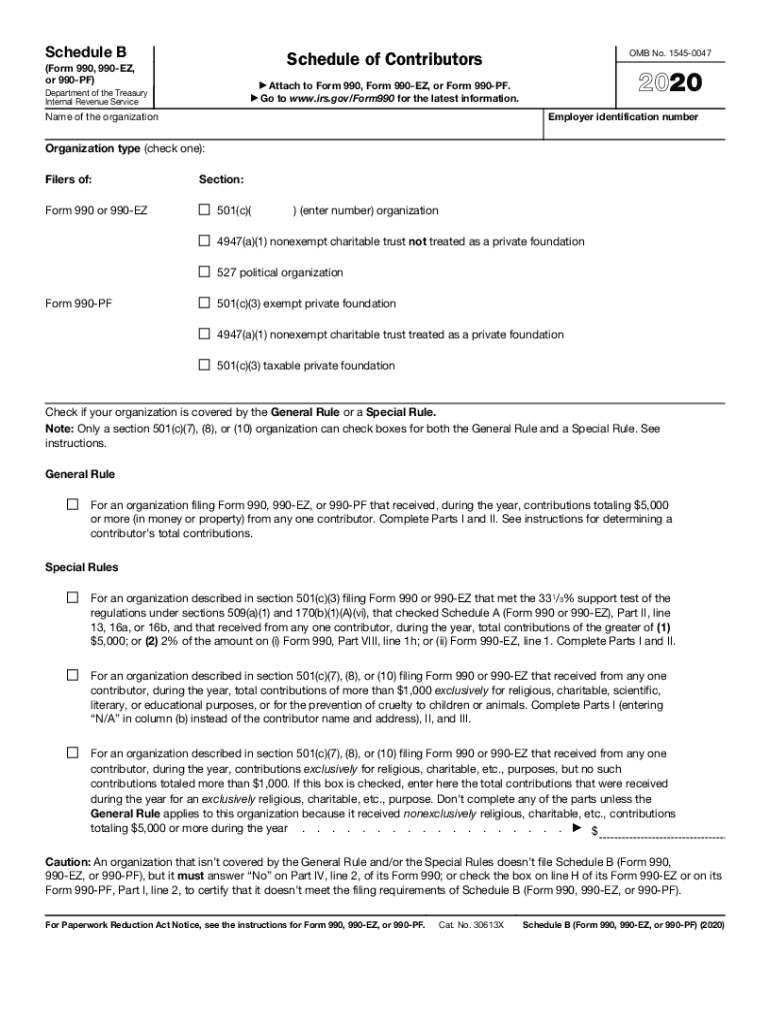







Definition & Purpose of Form 990-EZ
Form 990-EZ is a short form version of the Form 990, specifically designed for certain tax-exempt organizations. Its primary purpose is to serve as an annual information return for organizations with smaller gross receipts and total assets, making it simpler to report their financial activities to the Internal Revenue Service (IRS). This form is required primarily for entities like small nonprofits and charities to maintain transparency in their income and expenditure, thus ensuring compliance with federal tax obligations.
Key Organizations Eligible to File Form 990-EZ
Organizations eligible to use Form 990-EZ usually include tax-exempt organizations whose gross receipts are less than $200,000 and total assets are less than $500,000 at the end of the year. Common examples include small nonprofit organizations, social clubs, religious groups, and educational institutions. Understanding whether an organization qualifies for Form 990, 990-EZ, or even the simpler Form 990-N is crucial, as filing the incorrect form can lead to compliance issues.
How to Obtain Form 990-EZ
Form 990-EZ can be acquired directly from the IRS website, providing a readily accessible method for nonprofit organizations to obtain official forms. Additionally, organizations may use certified tax software, which often includes access to such forms. It is essential for organizations to ensure that they are using the most current version of the form to avoid discrepancies or rejections in their filings.
Common Platforms for Form Access
Numerous tax preparation software like TurboTax and QuickBooks offer Form 990-EZ access, streamlining the process of gathering data and completing the form. Using such tools can help organize financial data in a manner conducive to IRS requirements and ensure accurate submissions.
Steps to Complete the Form 990-EZ
Completion of Form 990-EZ requires organizations to follow specific steps, starting with gathering all necessary documents related to financial and operational activities throughout the year. Here's a step-by-step guide:
-
Gather Financial Documents: This includes records of gross receipts, income, expenses, and asset evaluations.
-
Fill in Basic Information: Provide essential details such as the organization's name, address, Employer Identification Number (EIN), and principal officer information.
-
Complete Financial Sections: Input financial data into relevant sections concerning revenue, expenses, net assets, and fund balances.
-
Attach Required Schedules: Certain schedules must accompany Form 990-EZ, such as Schedule A for public charity status and public support.
-
Review and Sign the Form: Ensure accuracy and completeness before the principal officer signs the document, confirming the validity.
IRS Guidelines for Filing Form 990-EZ
Adhering to IRS guidelines is critical when filing Form 990-EZ. The IRS provides extensive instructions specifying what information needs to be disclosed and how to report it correctly. Ensuring the inclusion of all necessary schedules, such as public support tests or lobbying activities, is imperative for compliance.
Importance of Accurate Filing
Incorrect or incomplete submissions may result in penalties or questioning from the IRS. Thus, having a well-organized process and perhaps a professional review of the form can assist in achieving compliance.
Filing Deadlines & Important Dates
Form 990-EZ has specific filing deadlines based on the organization's fiscal year. Typically, it must be filed on the 15th day of the fifth month after the end of the fiscal year. Extensions may be available but must be applied for before the actual deadline.
Consequences of Late Filing
Organizations should be aware that late submissions may incur penalties. Furthermore, failure to file for three consecutive years results in the automatic revocation of tax-exempt status, highlighting the importance of timely compliance.
Submission Methods for Form 990-EZ
The IRS allows several submission methods for Form 990-EZ, including electronic and paper filing. Electronic filing is strongly encouraged as it reduces errors and expedites processing. Organizations using electronic filing systems often benefit from integrated checks for potential issues before final submission.
Comparison Between Electronic and Paper Filing
Paper filing may still be used; however, it tends to be slower and may lack the error-checking capabilities of electronic software. Organizations should weigh these factors when deciding their preferred submission method.
Penalties for Non-Compliance
Failure to accurately complete and submit Form 990-EZ can lead to penalties, impacting the organization financially and legally. Penalty amounts can vary based on the extent of non-compliance and the organization's size.
Addressing Compliance Issues
Organizations facing penalties should promptly address them, potentially contacting legal or financial advisors for assistance. Proper documentation and corrective filings may help resolve issues efficiently and mitigate further consequences.
Key Elements of Form 990-EZ
Understanding the critical components of Form 990-EZ is vital for accurate completion. The form includes sections for reporting organizational accomplishments, revenue details, expenses, and net assets, among other financial activities.
Breakdown of Essential Sections
- Revenue and Expense Reporting: This section captures all earned income and operational costs, providing insights into financial health.
- Net Assets: Organizations must report on net assets and fund balances at the beginning and end of the fiscal year.
- Program Services: Details about the organization’s primary programs and service impacts must be reported, offering a transparent view of operational focus.
Software Compatibility with Form 990-EZ
Form 990-EZ is supported by various tax software packages, making filing more user-friendly and accurate. Compatibility with software such as QuickBooks can facilitate financial record maintenance in formats that align with IRS requirements, boosting efficiency.
Benefits of Software-Based Filing
Using compatible software for Form 990-EZ filing reduces the manual workload and helps catch common errors through automated checks. This not only simplifies the process but also increases the likelihood of maintaining compliance.
Example Scenarios of Using Form 990-EZ
Many organizations opt for Form 990-EZ to report their annual tax-exempt financial activities, including small community nonprofits, cultural organizations, and educational groups. These entities often rely on this form due to its simplicity compared to the more detailed Form 990.
Case Study: Small Nonprofit
Consider a local animal rescue organization with income primarily from donations and grants. The form enables easy reporting of their financial activities without the complexities involved in Form 990, ensuring straightforward compliance with tax regulations.
Conclusion
The Form 990-EZ serves a critical purpose in maintaining the transparency and accountability of smaller tax-exempt organizations. Understanding its regulations, deadlines, and filing procedures is vital for organizational compliance and operational success.


