



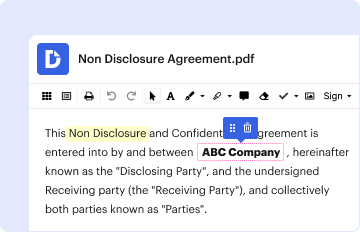
01. Edit your 2022 form schedule b online
Type text, add images, blackout confidential details, add comments, highlights and more.

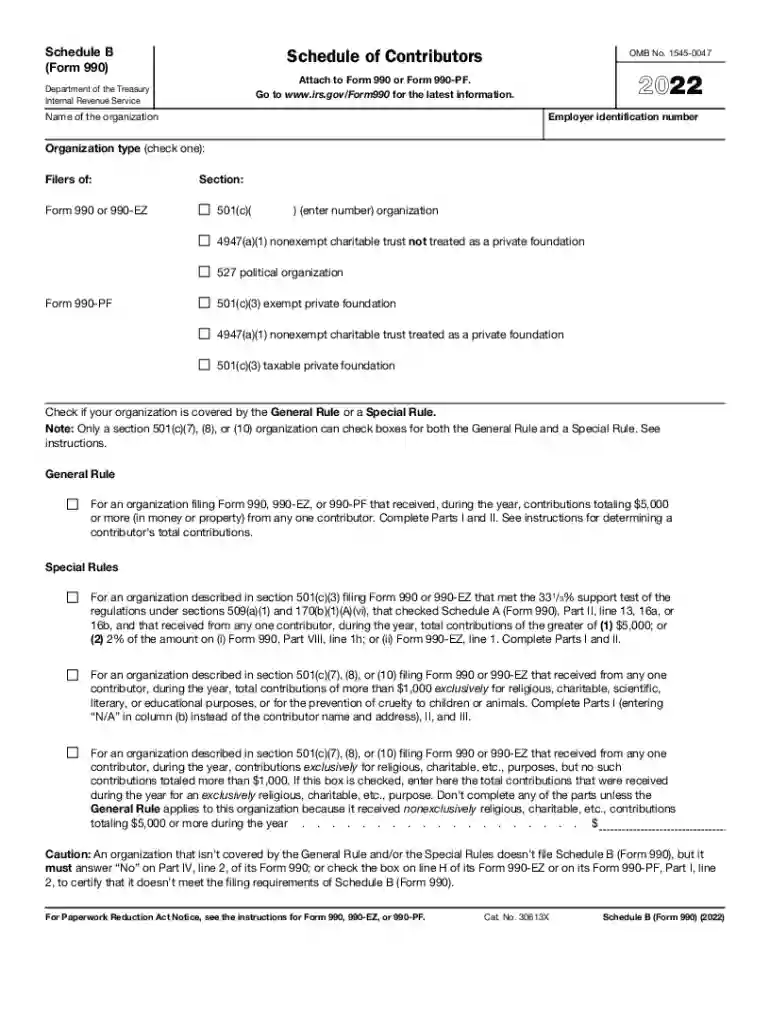
Type text, add images, blackout confidential details, add comments, highlights and more.
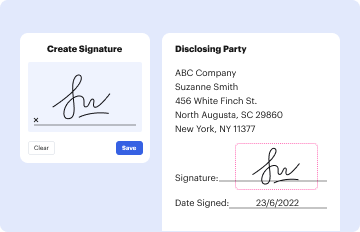
Draw your signature, type it, upload its image, or use your mobile device as a signature pad.
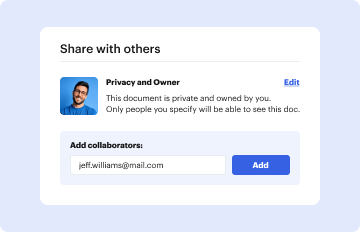
Send 2022 form 990 schedule b via email, link, or fax. You can also download it, export it or print it out.
Schedule B (Form 990) is a critical document required by the IRS for certain tax-exempt organizations to report contributions received within a fiscal year. This form ensures that donors and contributions are disclosed according to established IRS guidelines, thereby enhancing transparency and compliance. The form includes sections detailing monetary and non-cash contributions and providing information about gifts for religious or charitable purposes. Understanding the structure and purpose of Schedule B is essential for consistent reporting and avoiding potential penalties.
Utilizing Schedule B effectively requires a comprehensive approach to document management and donor reporting. Organizations should gather accurate data on contributions received, ensuring all monetary and qualifying noncash contributions are documented. This requires assigning responsible individuals or assigning tasks for data collection and entry. By organizing information according to IRS requirements, organizations can streamline their reporting process. Utilizing platforms like DocHub can assist in managing these documents online, further simplifying the process.
Gather Contribution Data: Collect detailed records of donations received during the fiscal year, including donor names and contribution values.
Categorize Contributions: Differentiate between monetary donations and noncash contributions. Each type requires specific disclosures.
Complete Donor Information: Accurately input donor details, adhering to privacy guidelines.
Review Final Information: Ensure all entries conform to IRS disclosure thresholds and guidelines.
File with IRS: Once completed and reviewed, file Schedule B along with Form 990. This can be done electronically or through mail.
The IRS mandates specific guidelines that detail which tax-exempt organizations must file Schedule B, based on thresholds and the nature of contributions. Organizations must follow these guidelines diligently to avoid non-compliance. The IRS may adjust these thresholds periodically, making it crucial for entities to stay updated with current policies.
The filing deadline for Form 990, including Schedule B, typically falls on the 15th day of the 5th month following the end of the organization's taxable year. Extensions may be available, but timely filing is critical to avoid penalties.
To complete Schedule B accurately, organizations need detailed donor records, including:
Non-compliance with IRS filing requirements for Schedule B can result in financial penalties and legal action. Organizations can face immediate penalties for late submissions or inaccurate reporting. Maintaining accurate records and meeting deadlines are crucial to avoid these repercussions.
The IRS allows Schedule B to be filed electronically or via paper submission. However, electronic filing is often encouraged due to its efficiency and reduced risk of errors. Tools like DocHub enable organizations to complete and submit forms digitally, ensuring easy access and management of documents.
We've got more versions of the 2022 form schedule b form. Select the right 2022 form schedule b version from the list and start editing it straight away!
| Versions | Form popularity | Fillable & printable |
|---|---|---|
| 2024 | 4.5 Satisfied (23 Votes) | |
| 2023 | 4.7 Satisfied (51 Votes) | |
| 2022 | 4.7 Satisfied (34 Votes) | |
| 2021 | 4.8 Satisfied (140 Votes) | |
| 2020 | 4.3 Satisfied (48 Votes) | |
| 2019 | 4.4 Satisfied (102 Votes) | |
| 2018 | 4.1 Satisfied (85 Votes) | |
| 2017 | 4.2 Satisfied (58 Votes) | |
| 2016 | 4.3 Satisfied (186 Votes) | |
| 2015 | 4 Satisfied (43 Votes) | |
| 2014 | 4.4 Satisfied (53 Votes) | |
| 2013 | 4 Satisfied (49 Votes) | |
| 2012 | 4.2 Satisfied (39 Votes) | |
| 2011 | 4 Satisfied (36 Votes) |
At DocHub, your data security is our priority. We follow HIPAA, SOC2, GDPR, and other standards, so you can work on your documents with confidence.
Get the up-to-date gettingattention.orgform-990-schedule-b-donorForm 990 Schedule B amp;amp; Donor Disclosures: Whats Required? 2023 now. Get Form.
Get the up-to-date gettingattention.orgform-990-schedule-b-donorForm 990 Schedule B amp;amp; Donor Disclosures: Whats Required? 2023 now. Get Form.
Get the up-to-date gettingattention.orgform-990-schedule-b-donorForm 990 Schedule B amp;amp; Donor Disclosures: Whats Required? 2023 now. Get Form.


