
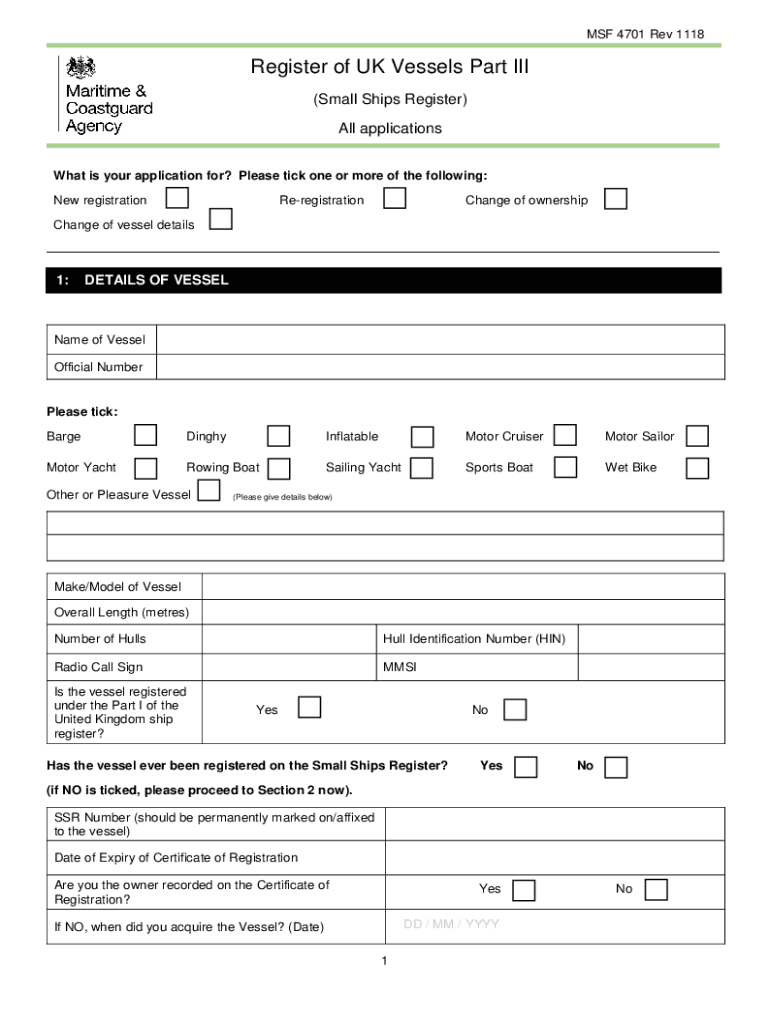







Definition and Meaning of the Small Ships Register
The Small Ships Register is an essential tool for vessel owners who need a streamlined method of registering their small ships in compliance with regulations. This registration process involves documenting essential details about the vessel and its owner, ensuring legal recognition and eligibility to navigate certain waters. It is important for owners of small vessels who want an accessible and straightforward means to comply with maritime laws. This register is crucial for maintaining accurate records of ownership and facilitating ease of identification and tracking in maritime operations. By completing the Small Ships Register, vessel owners attest to specific information, ensuring vessel legitimacy and adherence to applicable criteria.
How to Use the Small Ships Register: Fill Online, Printable, Fillable, Blank
The process of using the Small Ships Register form involves several straightforward steps. By visiting platforms like DocHub, users can access the form online, allowing them to fill it out digitally for convenience. Here is a basic guide to navigate this process:
-
Accessing the Form Online: Log into platforms like DocHub where the form is available in fillable and printable formats.
-
Filling Out the Form: Use the fillable fields to input required details such as vessel information, owner details, and any declarations.
-
Review and Edit: Double-check all entered information for accuracy. Use annotation tools to highlight or comment on any areas needing attention.
-
Submitting the Form: Once completed, the form can be submitted online, printed for mailing, or saved for personal records.
This method maximizes efficiency and accuracy as all necessary data can be saved and retrieved digitally.
Steps to Complete the Small Ships Register Form
Completing the Small Ships Register requires attention to detail in capturing both vessel and owner information. Here is a detailed sequence of steps:
-
Gather Required Information: Before you start, gather all relevant vessel documentation, identification numbers, and proof of ownership.
-
Access and Understand the Form: Enter DocHub and locate the form, ensuring you understand each section.
-
Fill in Vessel Details: Input vessel specifics such as type, length, and other identifying markers.
-
Provide Owner Information: Enter ownership details, including names, addresses, and any co-owners.
-
Declaration of Eligibility: Confirm compliance with eligibility criteria as outlined in the form.
-
Review and Correct: Go through all sections to ensure information is correct and complete.
-
Sign and Submit: Use DocHub’s electronic signature capabilities for authorizing the document.
This approach highlights the importance of precision and attention to each section, ensuring a legally compliant registration.
Who Typically Uses the Small Ships Register
The Small Ships Register is predominantly used by individuals and small business entities owning small seafaring vessels. This includes:
- Individual Owners: Personal yacht or boat owners seeking legal recognition and regulation compliance.
- Small Maritime Businesses: Small companies owning fleets need to maintain uniform compliance records.
- Leisure Vessel Operators: Clubs or organizations that manage recreational vessels.
These users benefit from a structured system that supports legal recognition and simplifies the documentation of vessel activities.


Eligibility Criteria for the Small Ships Register
Eligibility for registering a vessel with the Small Ships Register typically involves meeting specific criteria to maintain legal compliance. Key considerations include:
- Vessel Size and Type: The form often specifies size and type of vessels eligible for registration.
- Ownership Requirements: Proof of ownership, including personal identification for individuals or business credentials for organizations.
- Legal Residency: Owners may need to demonstrate residency or legal presence within the jurisdiction hosting the register.
Adhering to these criteria ensures that vessels are registered appropriately, mitigating risks of legal discrepancies or operational impediments.

Key Elements of the Small Ships Register Form
Understanding the core components of the Small Ships Register form is crucial for correct and complete submission. Important sections include:
-
Vessel Information: Descriptive data such as name, type, engine details, and dimensions.
-
Owner Details: Comprehensive identification data, contact information, and co-owner details if any.
-
Declaration and Compliance: An affirmation of eligibility and acknowledgment of legal conditions set forth in the form.
These elements ensure the documentation is thorough and supports a legitimate registration process, facilitating a straightforward and rapid response from the registry authority.
Digital vs. Paper Version of the Small Ships Register
The Small Ships Register can be managed in both digital and paper formats, each offering unique advantages:
-
Digital Format: Allows for direct online access, saving, and submission through platforms like DocHub, with increased accuracy through fillable fields and electronic signatures.
-
Paper Format: Offers a tactile approach for users preferring handwritten completion and physical mailing for record-keeping.
Choosing between digital and paper hinges on user preference and convenience, with digital formats often providing enhanced speed and clarity.
State-Specific Rules for the Small Ships Register
While the core function of the register remains consistent, variations may occur based on state-specific maritime laws and regulations. Key considerations include:
-
State Registration Requirements: Each state may impose additional registration stipulations or paperwork.
-
Fee Structures: Registration fees can vary widely from state to state, affecting the overall cost of registration.
-
Compliance and Inspection Standards: States may have unique safety and environmental standards that vessels must adhere to.
Understanding these nuances is essential for achieving compliant registration tailored to regional requirements.




