





Definition and Purpose of the Declaration of Dative Tutorship
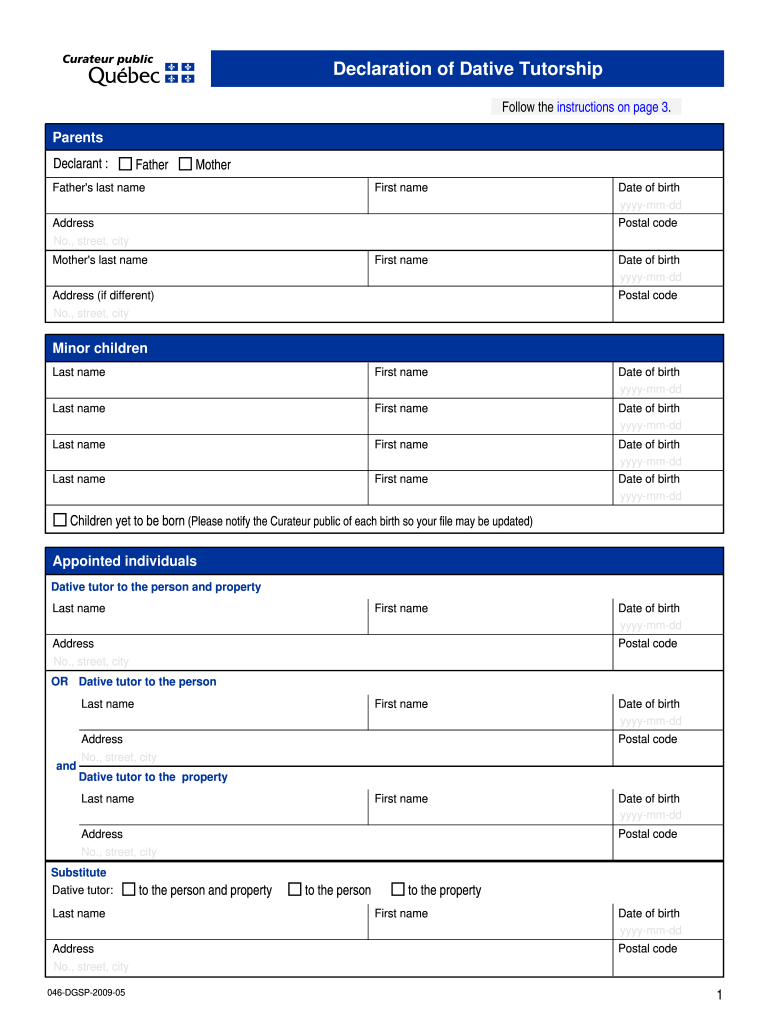
The Declaration of Dative Tutorship is a legal document allowing parents to designate a tutor for their minor children in the event of their death or incapacity. This form ensures that the appointed individual is legally authorized to care for and make decisions on behalf of the children, providing a clear plan for their welfare and guardianship.
Key Features
- Parental Designation: This document allows parents to specify who will act as the guardian for their children.
- No Notarization Required: The form does not require notarization, streamlining the process.
- Immediate Effectiveness: It becomes effective upon the event of death or incapacity, helping avoid court intervention.
How to Obtain the Declaration of Dative Tutorship
Obtaining the Declaration of Dative Tutorship can be done through various channels, emphasizing accessibility and convenience for parents wishing to secure their children's futures.
Steps to Obtain the Form
- Contact Le Curateur public du Québec: Reach out directly via email or phone to request the form.
- Download from Official Websites: Check local legal or governmental websites offering legal forms.
- Visit Legal Assistance Centers: Obtain the form through office visits to the relevant legal offices or public curators.
Steps to Complete the Declaration of Dative Tutorship
Filling out the Declaration of Dative Tutorship involves precise steps to ensure clarity and validity.
Completion Process
- Provide Parental Information: Include names, contact details, and their status (i.e., living or deceased).
- Detail Minor Children's Information: Names, date of birth, and other relevant identifiers for each child.
- Appoint Tutors: Clearly list the individuals chosen as tutors and their relationship to the children.
- Specify Conditions: Indicate any specific conditions or limitations related to the tutorship.
Key Elements of the Declaration of Dative Tutorship
The document's structure includes several critical components essential to its validity and clarity.
Essential Elements
- Parent Details: Must include comprehensive details of the parents making the declaration.
- Children's Information: Accurate data for each minor involved in the declaration.
- Chosen Tutors: Information about the tutors selected to assume responsibility.
- Conditions and Limitations: Defined terms and any special instructions related to the guardianship.
Who Typically Uses the Declaration of Dative Tutorship
This form is primarily utilized by parents and guardians concerned with the future legal safeguarding of their minor children.

Common Users
- Parents: Those wishing to ensure a stable and clear guardianship path for their children.
- Guardians: Extended family or close friends named as potential guardians.
- Legal Advisors: Assisting parents in planning for potential incapacities or unforeseen circumstances.

Legal Use of the Declaration of Dative Tutorship
While the Declaration of Dative Tutorship is legally binding, it is crucial to understand its judicial context and implications.
Jurisdictional Validity
- Avoids Court Intervention: Ensures smoother transitions without needing court approval.
- Documentation Requirements: Ensure all required signatures and details are present to validate the form.
- State-Specific Compliance: Confirm adherence to both local and broader regulations governing such declarations.
Important Terms Related to Declaration of Dative Tutorship
Understanding specific terminologies can aid in comprehending the application and implications of this form.
Key Terms
- Dative Tutorship: A form of guardianship created through a legal declaration.
- Tutor: The individual appointed to oversee the welfare of minor children.
- Incapacity: A state where a parent is physically or mentally unable to care for their children.
State-Specific Rules for the Declaration of Dative Tutorship
Different states may have varying requirements and allowances regarding these declarations, making geographical considerations essential.
Local Variations
- State Regulations: Ensure that the declaration complies with state-specific laws and norms.
- Legal Assistance: Consult with local legal experts to verify the adherence to all applicable state guidelines.