







Definition and Meaning of the Hawaii Waiver Form
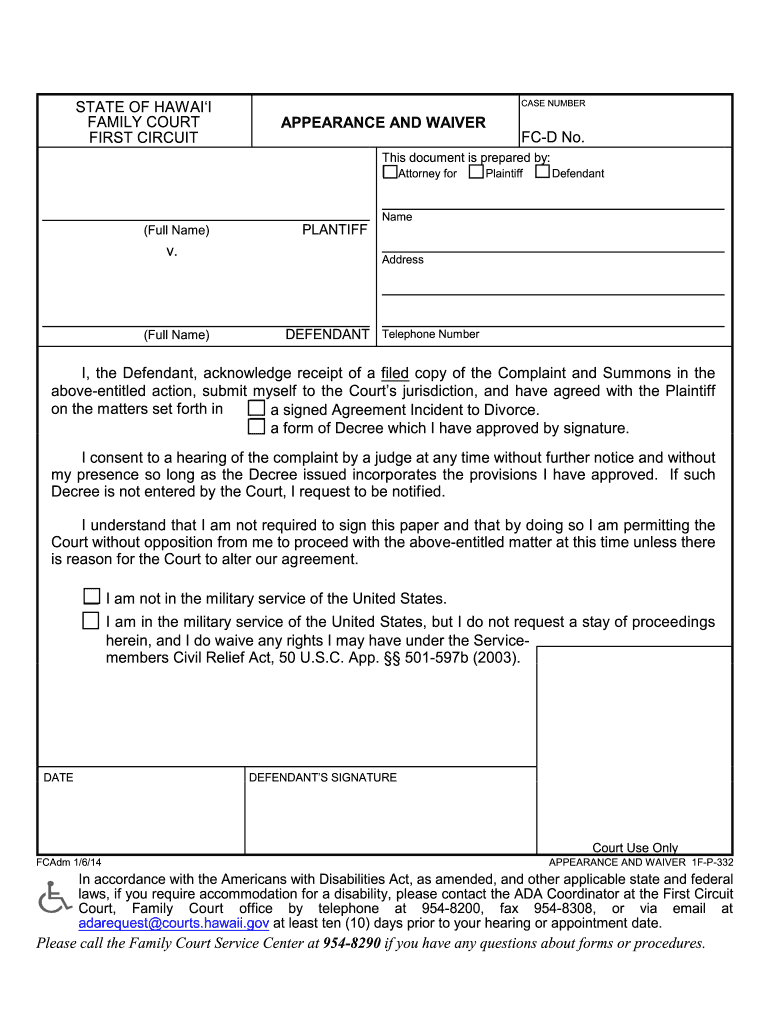
The Hawaii Waiver Form is a legal document created for use in Hawaii’s legal system. This form allows a Defendant to officially acknowledge the receipt of a Complaint and Summons, consenting to the court's jurisdiction over a case—often in relation to divorce proceedings. It formalizes the understanding that the Defendant agrees with the terms outlined by the Plaintiff without needing additional notice or hearing. The form can also highlight certain rights, such as those afforded under military service laws, influencing how the case is handled. Additionally, it may include sections for requesting disability accommodations and provide guidance for contacting the court about procedural inquiries.
How to Use the Hawaii Waiver Form
Using the Hawaii Waiver Form involves a series of straightforward steps designed to ensure the document is completed accurately and comprehensively. First, individuals must download the form from the appropriate legal source or court's website to ensure it's the correct version. Completing the form requires entering accurate personal information, the details of the complaint, and acknowledgment of each stated condition and right. The Defendant must then sign the form to verify agreement, which may be done electronically if permitted. Before submission, reviewing the form is crucial to verify all information is correct and comprehensive. Once finalized, the form must be submitted to the relevant court, often alongside other necessary documents related to the case.
Key Elements of the Hawaii Waiver Form
The Hawaii Waiver Form contains several essential sections. Key elements include personal information fields such as the names and contact details of the Plaintiff and Defendant. The complaint acknowledgment section outlines the specific issues at hand, prompting the Defendant to certify they understand these matters. Consent to jurisdiction allows the court to proceed with decisions, while fields related to rights under military service and disability accommodations cater to unique individual circumstances. Each section requires full attention to ensure no part of the form remains incomplete, as any missing fields could affect the form's validity.
Steps to Complete the Hawaii Waiver Form
- Download and Review the Form: Access the form from an authorized legal source to ensure it's up-to-date.
- Complete Personal Information: Fill in all fields with accurate names, addresses, and contact numbers for both parties involved.
- Acknowledge the Complaint and Summons: Carefully read and clearly endorse each point outlined in the complaint.
- Consent to Court’s Jurisdiction: Explicitly agree to allow the court to manage the proceedings without further notification requirements.
- Address Military and Disability Provisions: If these apply, ensure the relevant sections are accurately filled and documented.
- Sign the Form: Provide a signature within designated areas, either manually or electronically as permitted.
- Submit the Completed Form: Submit the document to the proper court authority for processing.
Legal Use of the Hawaii Waiver Form
Legal usage of the Hawaii Waiver Form is designed to expedite the process of court proceedings by simplifying the acknowledgment of the Defendant's consent to the court’s jurisdiction. This mechanism eliminates the need for additional hearings unless required under specific cases. Completing and submitting this form functions as a formal agreement, binding the Defendant to the Plaintiff's stated terms unless contested otherwise. It is critical to ensure proper understanding of each clause to ensure informed consent and compliance with legal obligations.
Important Terms Related to the Hawaii Waiver Form
- Defendant: The individual who acknowledges receipt of the Complaint and Summons.
- Plaintiff: The party presenting the complaint against the Defendant.
- Jurisdiction: The court's authority to make legal decisions and judgments.
- Complaint and Summons: The document initiating the legal proceedings, detailing the claims.
- Military Service Law Rights: Protections afforded to military service members under law.
- Disability Accommodations: Adjustments or considerations for disabled parties involved in court proceedings.
Examples of Using the Hawaii Waiver Form
Case scenarios illustrating the use of the Hawaii Waiver Form include a typical divorce proceeding where a spouse receives a Complaint for Divorce. By using the form, they agree to the outlined conditions such as property division or custody without contest. Another example is when an active military member is named as a Defendant and utilizes the form to expedite proceedings, while asserting rights unique to their status. In both scenarios, the form's purpose is to streamline court interactions, ensuring clarity and agreement on legal proceedings with minimal friction.
Penalties for Non-Compliance
Failing to submit a completed Hawaii Waiver Form when required can result in significant legal complications. Common penalties include being subjected to default judgments where the court rules in favor of the Plaintiff by default due to the Defendant's inaction. Non-compliance may also extend proceedings, requiring additional court notices and potentially more severe legal consequences, emphasizing the importance of timely and accurate form submission by the intended deadlines.




