



01. Edit your larry basford state attorney online
Type text, add images, blackout confidential details, add comments, highlights and more.

Type text, add images, blackout confidential details, add comments, highlights and more.
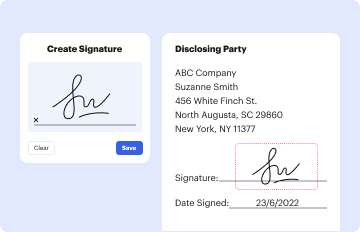
Draw your signature, type it, upload its image, or use your mobile device as a signature pad.
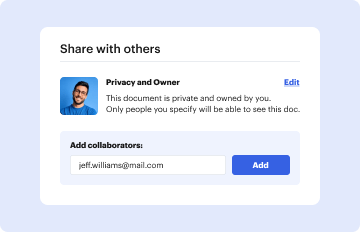
Send it via email, link, or fax. You can also download it, export it or print it out.
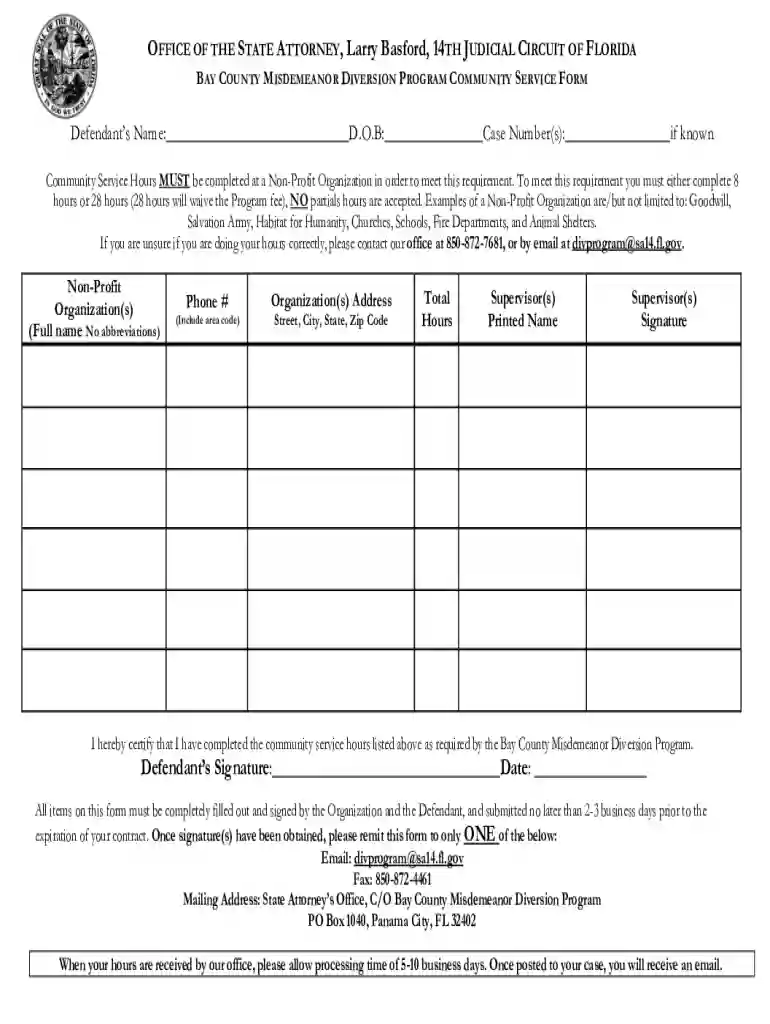
The "OFFICE OF THE STATE ATTORNEY, Larry Basford, 14TH JUDICIAL CIRCUIT OF FLORIDA" form serves as a crucial legal document within the jurisdiction of the 14th Judicial Circuit in Florida, particularly in Bay County and its surroundings. This form is generally utilized for legal processes related to the state attorney's office, playing an essential role in community outreach and legal formalities. It is often associated with programs such as the Bay County Misdemeanor Diversion Program, where defendants must complete court-ordered community service hours. Understanding its definition and purpose is vital for anyone involved in legal proceedings within this jurisdiction.
The form contains a variety of sections that grant access to or initiate legal processes under the state attorney's supervision. Key elements include:
Each element plays a distinct role in ensuring that the legal processes adhere to the stipulated requirements of the state judicial system.
Utilizing the "OFFICE OF THE STATE ATTORNEY, Larry Basford, 14TH JUDICIAL CIRCUIT OF FLORIDA" form requires careful attention to detail. Here's a step-by-step guide on effectively using the form:
Using the form correctly ensures that legal processes are carried out efficiently and in accordance with Florida's legal system.
Completing the form accurately is essential for a smooth legal process. Here is a detailed breakdown of the steps involved:
Following these steps helps mitigate risks associated with incomplete or inaccurate submissions.
The significance of the "OFFICE OF THE STATE ATTORNEY, Larry Basford, 14TH JUDICIAL CIRCUIT OF FLORIDA" form lies in its role within the legal system, particularly in fulfilling legal obligations or availing legal aids like diversion programs. Compliance through this form helps individuals align with legal mandates, potentially reducing legal penalties or facilitating legal aid. Its importance extends beyond mere paperwork; it acts as a conduit for legal compliance and assistance.
Understanding the legal use and compliance aspects linked to this form is pivotal. Legal use entails submitting accurate information, adhering to court rules, and meeting program guidelines. Compliance ensures that the user aligns with legal obligations, thereby avoiding penalties. The form supports actions like legal diversions and ensures that participants meet all criteria laid out by the state's judicial authorities.
Eligibility for using the form is primarily determined by the legal requirements of the 14th Judicial Circuit. Here are some general eligibility points to consider:
By confirming eligibility, individuals can engage in the form process confidently, knowing they meet the necessary criteria.


Familiarizing yourself with key terms related to this form eases the process of completion. Common important terms include:
Understanding these terms facilitates clearer communication during the application or form process with legal authorities.
Operating within the confines of the state-specific rules of Florida is crucial when dealing with this form. Here are essential guidelines:
Acknowledging and complying with these state-specific regulations ensures a smooth legal process and prevents potential setbacks.
We've got more versions of the larry basford state attorney form. Select the right larry basford state attorney version from the list and start editing it straight away!
At DocHub, your data security is our priority. We follow HIPAA, SOC2, GDPR, and other standards, so you can work on your documents with confidence.
jason.rodriguez@myfloridalegal.com. Larry Basford, State Attorney larry.basford@sa14.fl.gov bay.county@sa14.fl.gov. Florida Supreme Court warrant@flcourts.org.
Larry Basford served the citizens of the 14th Judicial Circuit for over 34 years as an Assistant State Attorney before being elected State Attorney.Read more


