
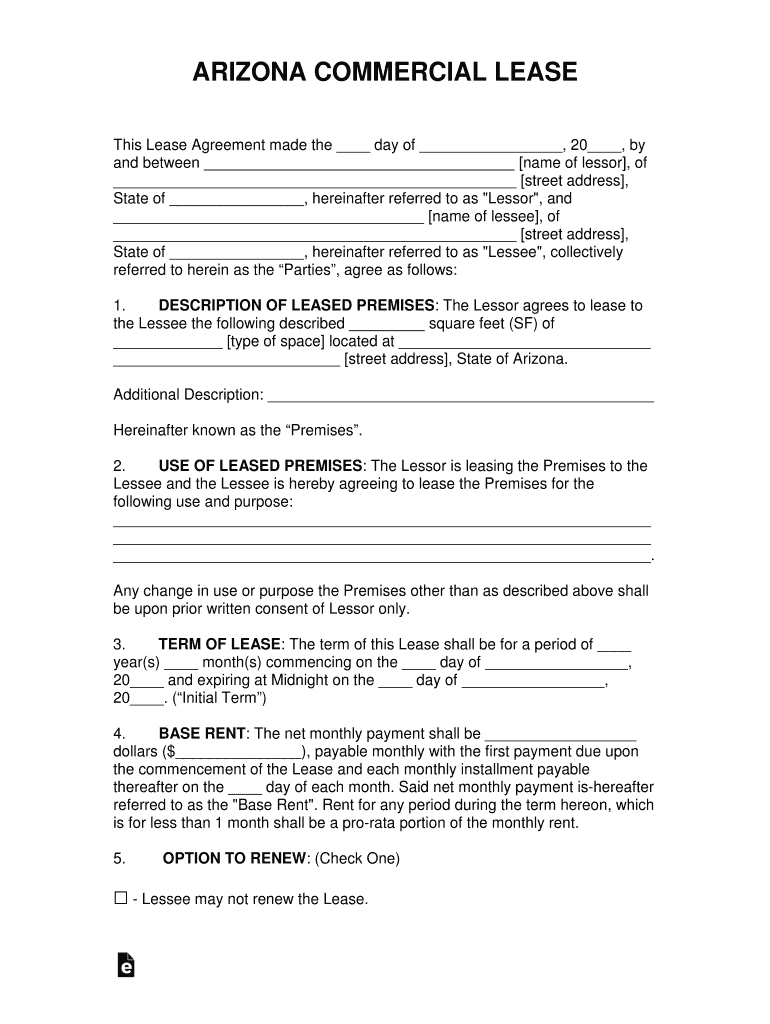







Definition & Meaning of the Arizona Commercial Lease Agreement
The Arizona Commercial Lease Agreement is a legal document establishing a binding arrangement between a Lessor (landlord) and a Lessee (tenant) for the rental of commercial property within the state of Arizona. This agreement outlines significant aspects such as the description of the premises, the term of the lease, and financial obligations. By formally delineating the responsibilities and rights of each party, this agreement serves as a vital reference to manage and resolve potential conflicts or disputes throughout the duration of the rental period.
Key Elements of the Arizona Commercial Lease Agreement
The Arizona Commercial Lease Agreement includes essential provisions that govern the leasing arrangement:
- Premises Description: Specifies the location and the physical boundaries of the rental property.
- Lease Term: Defines the length of time the lease is in effect, including options for renewal or termination.
- Base Rent: Details the amount payable by the Lessee, the frequency of payments, and any conditions for increases.
- Security Deposit: Outline the amount held by the Lessor as insurance against damages or unpaid rent.
- Maintenance and Repairs: Clarifies responsibilities for property upkeep and repairs to prevent misunderstandings.
- Insurance Requirements: Specifies necessary insurance coverages, such as liability and property insurance, required of the Lessee.
Steps to Complete the Arizona Commercial Lease Agreement - eForms
- Gather Necessary Information: Collect details about the property, including its legal description and any additional clauses.
- Detail Parties Involved: Clearly identify the Lessor and Lessee with full names and contact information.
- Specify Lease Terms: Define the start and end dates, along with rent computations and applicable renewal options.
- Finalize Terms and Conditions: Discuss and agree on terms regarding maintenance responsibilities, permitted uses, and insurance requirements.
- Sign and Notarize: Both parties must sign the document in the presence of a notary to ensure legal enforceability.
Legal Use of the Arizona Commercial Lease Agreement
This agreement operates in accordance with Arizona state law, providing equal protection to the Lessor and Lessee. It includes legal obligations such as:
- Compliance with Laws: Both parties must ensure that all activities within the rental premises comply with local, state, and federal laws.
- Indemnification Clause: Protects the Lessor from damages arising from the Lessee’s use of the property.
- Subletting Provisions: Specifies if and how the Lessee may rent the premises to a third party, ensuring the Lessor’s rights and property value are safeguarded.
Important Terms Related to the Arizona Commercial Lease Agreement
Understanding specific terminology within the lease agreement is crucial for both parties:
- Lessor: The property owner who leases the premises to the Lessee.
- Lessee: The individual or business entity that leases the property from the Lessor.
- Gross vs. Net Lease: Terms influencing how operating costs are divided between Lessor and Lessee.
- Force Majeure: Conditions under which parties are excused from performing contractual obligations due to uncontrollable events.
State-Specific Rules for the Arizona Commercial Lease Agreement
Arizona state regulations influence the drafting and enforcement of commercial lease agreements. For example, the Arizona Revised Statutes (Title 33) govern the landlord-tenant relationship, specifying the legal requirements for notices, disclosures, and handling security deposits. The agreement must adhere to these local laws to ensure its validity and effectiveness in upholding the parties' rights and obligations.
Examples of Using the Arizona Commercial Lease Agreement - eForms
- Retail Spaces: Used when leasing commercial units in malls or standalone retail spaces, detailing specific use restrictions and modifications.
- Office Buildings: Office leases often include provisions for building access, shared amenities, and specific office equipment stipulations.
- Industrial Leases: Typically involve additional considerations, such as zoning laws and environmental regulations, due to the nature of operations in such properties.
Business Types That Benefit Most from the Arizona Commercial Lease Agreement - eForms
This lease agreement is particularly advantageous for different business entities operating across diverse sectors:
- Small Business Owners: Need clear terms for occupying commercial spaces without the burdens of property ownership.
- Franchise Concepts: Require standardized premises agreements across various locations, maintaining consistency in leasing policies.
- Large Corporations: Often lease multiple types of spaces and need flexible agreements to accommodate evolving organizational needs.




