
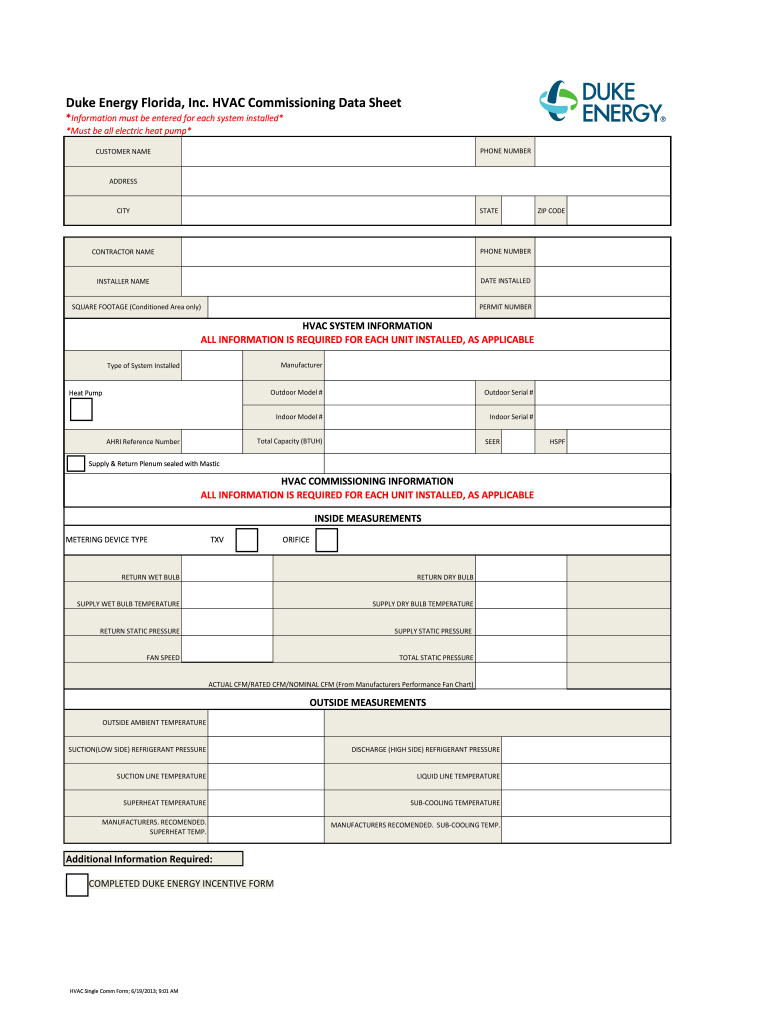







Overview of HVAC Start Up Report Template
An HVAC start up report template is a structured document utilized by HVAC technicians and contractors to document the initial setup and testing of heating, ventilation, and air conditioning systems. This report encompasses vital information regarding the operational status of the system, ensuring that it meets manufacturer specifications and local regulations. The clarity and accuracy of this documentation play a critical role in maintaining performance standards and supporting warranty claims.
Key Components of an HVAC Start Up Report
The HVAC start up report template typically includes the following elements, which are essential for comprehensive assessments and documentation of system performance.
-
Contact Information
The template should capture key contact details of the customer, contractor, and installation date. This section helps establish responsibility and facilitates follow-up communication. -
System Specifications
Documentation of the specific equipment installed, including model numbers, capacities, and serial numbers, is crucial. This information assists in identifying the system for warranty claims and future maintenance. -
Installation Conditions
This includes detailed reports of the installation environment, such as indoor and outdoor temperatures, humidity levels, and any specific site challenges encountered. Accurate recording of these variables helps assess system performance post-installation. -
Performance Testing Results
The report should include results from various performance tests. These may cover air flow measurements, refrigerant charge levels, and electrical component functionality. Monitoring these parameters ensures the system operates within design specifications. -
Codes and Compliance Checks
Documenting any compliance with local building codes, safety standards, and manufacturer installation guidelines is vital for legal and operational transparency. This section often includes references to relevant regulations.
Importance of Detailed Performance Metrics
Incorporating robust performance metrics in the HVAC start up report enhances its utility both for immediate troubleshooting and for long-term efficiency evaluation.
-
Airflow Measurements
- Documenting airflow rates helps ensure that the system distributes conditioned air properly. Measurements may include supply and return airflows, which need to fall within manufacturer-specified ranges.
-
Refrigerant Levels
- Accurate recording of refrigerant charge ensures optimal system performance. Both overcharging and undercharging can lead to inefficient operation and increased energy consumption.
-
Electrical System Checks
- All electrical components, including capacitors and contactors, should be tested and reported. Documenting voltage and resistance readings can help identify potential future issues.
-
Ductwork Inspection
- Inspecting and documenting the integrity of ductwork can prevent air leaks that compromise system efficiency. Observations about duct insulation, sealant quality, and overall design should be included.
Step-by-Step Instructions for Completing the HVAC Start Up Report
The completion of an HVAC start up report should follow a systematic approach to ensure no detail is overlooked:
-
Gather Necessary Documentation
Collect all relevant installation manuals, equipment specifications, and previous maintenance records. -
Conduct Initial System Checks
Power on the system and verify that all components are functioning as intended. This includes both mechanical and electronic systems. -
Implement Performance Testing
Execute all necessary tests, documenting results for airflow, refrigerant levels, and electrical checks. -
Complete the Report Form
Input all gathered data into the HVAC start up report template, ensuring all fields are filled as required. -
Review and Sign Off
Have a qualified technician review the report. A dual-sign-off can enhance accountability and accuracy.
Real-World Applications and Scenarios
Using an HVAC start up report template is beneficial across various scenarios, including:
-
New Installations
When a new HVAC system is installed, a detailed report ensures that the customer receives a fully operational and compliant unit. -
System Replacements
In cases of replacing old systems, the template documents changes in performance and assists in resolving any warranty issues. -
Routine Maintenance
For regular service checks, utilizing the template helps in keeping a thorough history of the system’s performance, assisting in future diagnostic tasks.
Variations and Customizations of the Template
While a standard HVAC start up report template provides essential information, customization may be needed based on specific requirements:
-
Commercial vs. Residential
The template may be adjusted to reflect the differences in system types and complexities between commercial and residential installations. -
Specific Equipment Types
Incorporating equipment-specific sections can aid technicians in recording data pertinent to varied HVAC units or accessories such as humidifiers or air purifiers. -
State Compliance
Different states may have unique regulatory requirements which should be reflected in the template for compliance assurance.
The detailed documentation provided by an HVAC start up report template not only fosters system reliability but also enhances customer trust and satisfaction through transparent reporting of HVAC system performance.




