




01. Edit your rhode island boating accident online
Type text, add images, blackout confidential details, add comments, highlights and more.

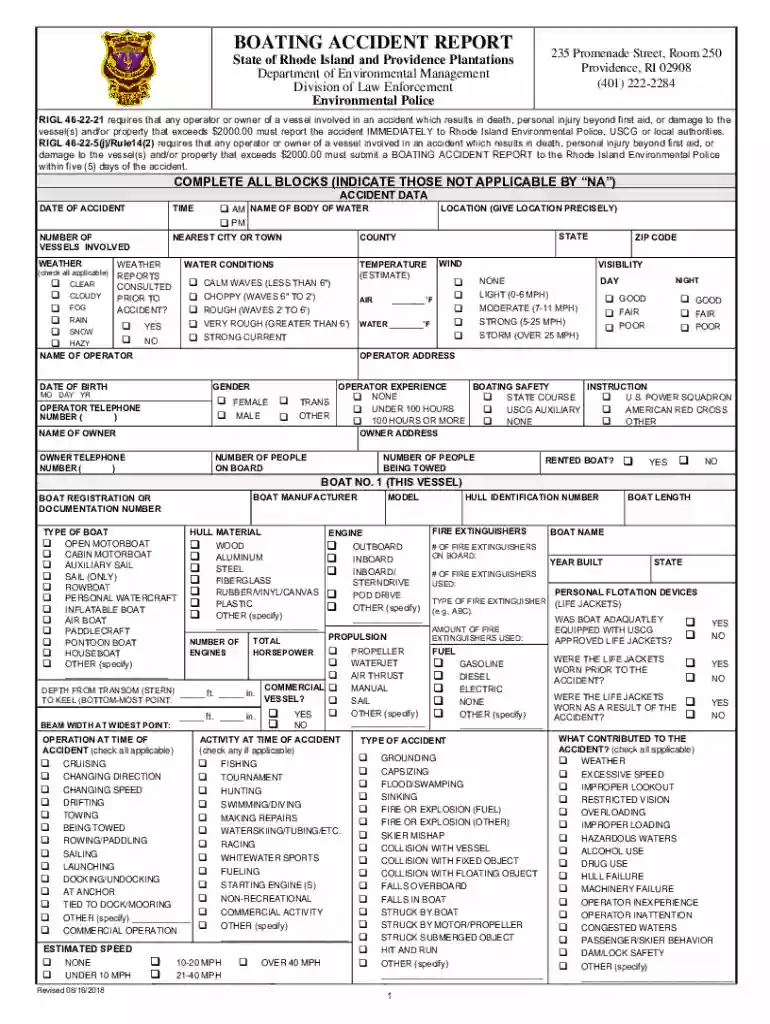
Type text, add images, blackout confidential details, add comments, highlights and more.

Draw your signature, type it, upload its image, or use your mobile device as a signature pad.

Send ri boating accident via email, link, or fax. You can also download it, export it or print it out.
The "dem.ri.govnatural-resources-bureaumarine-fisheriesMarine FisheriesRhode Island Department of Environmental" form serves a critical role in managing and documenting marine fisheries activities within the state of Rhode Island. This form is used to track and regulate fishing activities, ensuring compliance with environmental regulations and sustainable fishing practices. It provides a framework for fishermen and related businesses to report relevant data, which assists the Rhode Island Department of Environmental Management (RIDEM) in monitoring fish stock levels, fishing efforts, and environmental impacts.
This form includes various sections that require comprehensive details about fishing operations. Key elements often include:
Understanding these components is crucial for accurate and compliant form completion.
Using the form involves careful entry of detailed information. Here's a streamlined process:
Completing the form requires attention to detail to ensure compliance with regulations:
The form is primarily used by:
These users rely on the form to ensure fishing activities align with state regulations and sustainability goals.


Understanding the terminology associated with this form is crucial for accurate completion:
The form is legally binding as it supports the regulation and oversight by the Rhode Island Department of Environmental Management. Accurate completion is essential to comply with state laws, which aim to prevent overfishing and protect marine habitats. Failure to adhere to these legal requirements may result in penalties or fines.
Non-compliance with form submission or inaccurate reporting can lead to:
It is crucial for fishermen and related entities to complete the form accurately and comply with deadlines to avoid these penalties.
We've got more versions of the rhode island boating accident form. Select the right rhode island boating accident version from the list and start editing it straight away!
At DocHub, your data security is our priority. We follow HIPAA, SOC2, GDPR, and other standards, so you can work on your documents with confidence.


