
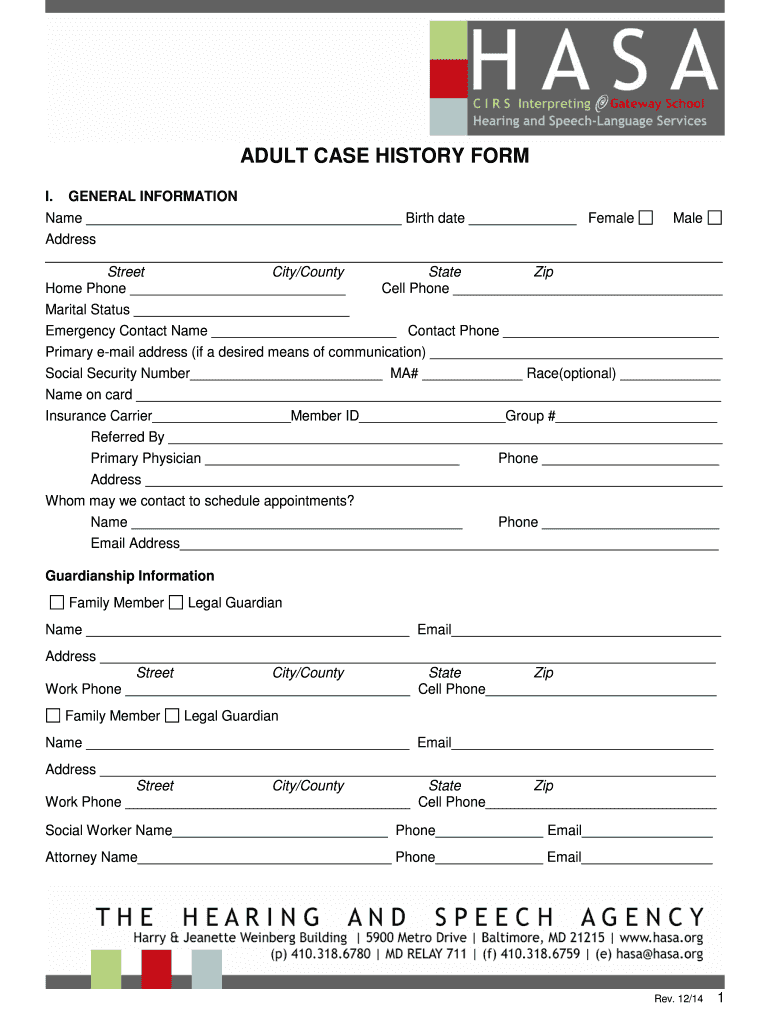







Definition and Purpose of the Adult Case History Form
The Adult Case History Form is a comprehensive document used by professionals, primarily in the field of speech and language services, to gather detailed personal, medical, and educational information from clients. It serves as the backbone for effective evaluation and treatment planning, ensuring that all relevant background details are collected. This form typically includes sections that cover general personal details, employment history, communication abilities, medical history, hearing health, and speech/language development.
Key Components of the Form
- General Information: Collects basic details such as name, contact information, and date of form completion.
- Medical History: Gathers data on past medical conditions, current medications, and overall health status.
- Communication Concerns: Captures specific issues related to speech and language skills.
- Educational and Employment Background: Provides context through academic and job history.
How to Use the Adult Case History Form
Step-by-Step Process
- Obtain the Form: Accessible from healthcare providers or directly through service platforms like DocHub.
- Fill Out Personal Information: Start with basic details such as name, phone number, and address.
- Detail Medical Background: Include any significant medical conditions or ongoing treatments.
- Describe Communication Issues: Clearly explain any concerns with speech or language.
- Supply Educational and Occupational Data: Note previous schooling and employment history.
Adding Required Information
- Ensure all sections are filled accurately to facilitate a comprehensive assessment.
- Highlight any particular areas of concern that require special attention.
Benefits of Using the Adult Case History Form
Rationales for Use
- Comprehensive Data Collection: Facilitates the gathering of information critical for diagnosis and treatment.
- Streamlined Communication with Providers: Enhances understanding between client and specialist by providing a detailed background.
- Informed Treatment Planning: Enables tailored therapeutic strategies based on individual history and needs.
Real-World Scenarios
- A person experiencing new speech difficulties can provide historical context that informs the therapist’s approach.
- An adult with a history of hearing issues can document these for consideration in speech therapy.
Who Typically Uses the Adult Case History Form


Target Users
- Speech and Language Pathologists: Utilize the form to understand clients’ communication challenges.
- Audiologists: Use the data to evaluate auditory processing and potential interventions.
- Educational Specialists: Refer to the information to adapt learning environments for individuals.
Collaborative Use in Team Environments
- Forms can be shared among a team of healthcare specialists working on a client's case to ensure a coordinated treatment approach.
Important Terms Related to the Adult Case History Form
Glossary of Terms
- Anamnesis: Medical history gathering relevant to current health issues.
- Audiometry: The assessment of hearing ability for diagnostic purposes.
- Dysphasia: A condition affecting speech and language skills.
- Otolaryngology: The study of ear, nose, and throat conditions.
Usage for Clarity
- Familiarity with these terms is crucial for completing and interpreting the form's contents accurately.
Legal Use and Compliance with the Adult Case History Form
Legal Considerations
- Consent for Treatment: Ensure clients acknowledge and consent to the proposed care plan.
- Privacy and Information Release: Adhere to legal standards for data confidentiality and sharing, such as HIPAA in the United States.
Security Measures
- Password protection and encrypted storage are often employed to safeguard sensitive client information during electronic handling.
Key Elements of the Adult Case History Form
Essential Components
- Participant Consent: Documents agreement to engage in assessments and interventions.
- Authorization for Information Release: Allows sharing of relevant data with involved professionals.
- Detailed Historical Accounts: Provides insight into lifelong communication patterns and interventions.
Examples of Completing Sections
- Medical History: Listing all allergic reactions and previous surgeries.
- Employment: Summarizing significant communication requirements of previous roles.
Differences in State-Specific Rules
Variations Across States
- Some states may have additional privacy laws that impact how the form is processed.
- Educational and insurance qualifications for coverage may vary, affecting form utilization and submission.
Practical Application
- Providers should be aware of state laws that might influence the form’s contextual use or reporting requirements.
Penalties for Non-Compliance
Consequences
- Failure to obtain proper consent can lead to legal disputes and invalidate treatment planning.
- Incorrect or incomplete form submission may derail diagnostics and result in inadequate client care.
Preventive Actions
- Regular audits and legal consultations can help ensure form adherence to necessary regulatory frameworks.




