







Definition & Meaning
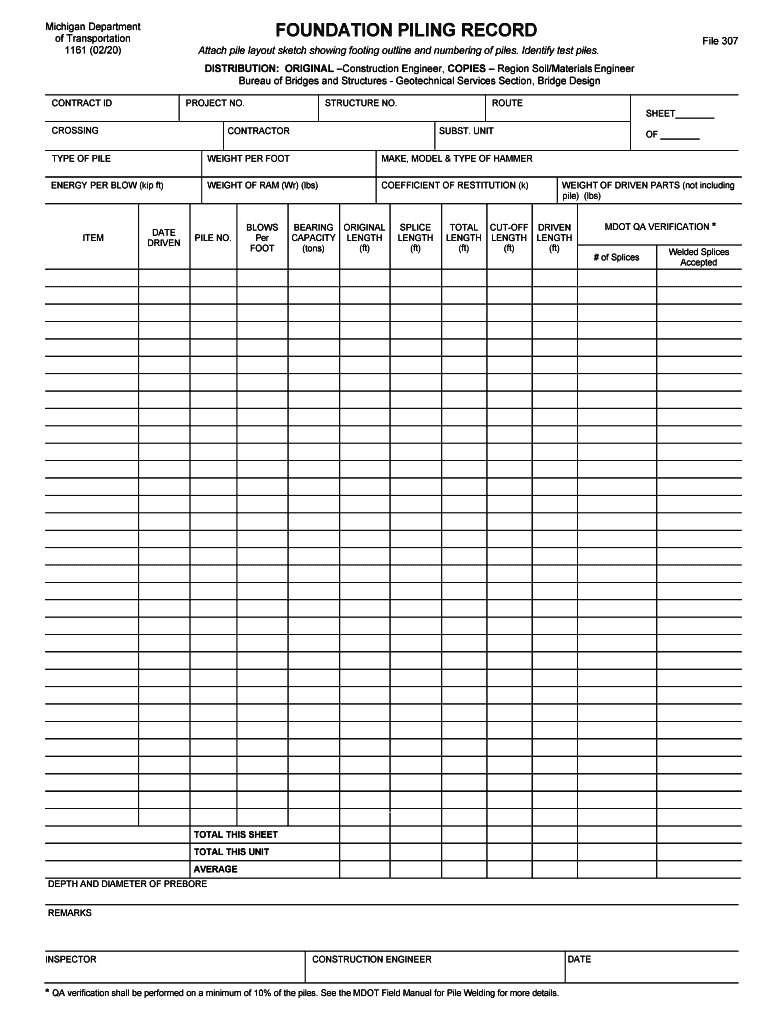
The Foundation Piling Record is a crucial document used in construction projects to record specifications and data related to pile driving. Pile driving is a technique used to provide foundational support to structures by driving piles into the ground. This document typically includes comprehensive details like project information, specifications of materials, and results of inspections to ensure quality assurance. It is particularly utilized by entities such as the Michigan Department of Transportation, playing a pivotal role in infrastructure projects.
Key Elements of the Foundation Piling Record
The Foundation Piling Record comprises several pertinent sections to capture data accurately:
- Project Information: Details regarding the project scope, location, and timelines.
- Contractor Details: Information about the contractor responsible for the pile driving work, including contact information and credentials.
- Pile Characteristics: Specifications including type, size, material, and length of the piles used in the project.
- Inspection Records: Comprehensive reports of inspections carried out to verify that the pile installations meet required standards and guidelines. These records emphasize quality control through detailed verification processes.
Steps to Complete the Foundation Piling Record
- Gather Project Information: Begin with compiling details about the project: location, timeline, project manager, and other relevant specifications.
- Document Contractor Details: Include comprehensive information of the contractor, including their license number and past projects.
- Detail Pile Characteristics: Specify the types of piles, materials used, dimensions, and any unique attributes tailored to the project.
- Record Inspection Outcomes: Document each inspection conducted throughout the project, noting any challenges or modifications made to meet safety and quality standards.
How to Use the Foundation Piling Record
The proper utilization of a Foundation Piling Record involves the following steps:
- Recording Data: Record all necessary project details meticulously to maintain a complete log for reference and compliance.
- Reviewing for Compliance: Regular reviews should be conducted to ensure the project adheres to legal and safety standards, using records for resolution in disputes.
- Quality Assurance: Use the documented inspections to confirm that the construction meets designated specifications, highlighting any necessary corrective actions.
Important Terms Related to Foundation Piling Record
Understanding key terminology is essential for effective use:
- Pile Driving: The process of installing piles into the ground for structural support.
- Load-Bearing Capacity: The amount of weight a pile can support without failing, a critical factor in determining pile specifications.
- Inspections: Systematic evaluations to ensure each stage of piling meets established criteria and standards.
- Quality Assurance: The procedural checks and documentation ensuring that all aspects of construction meet predefined standards and requirements.
Who Typically Uses the Foundation Piling Record
The users of the Foundation Piling Record are typically construction industry professionals and regulatory bodies:
- Engineers and Architects: Utilize the record to design and evaluate the structural integrity of projects.
- Construction Contractors: Refer to the document for guidance on specifications and compliance matters.
- Regulatory Authorities: Conduct assessments and audits to ensure conformity with legal and safety standards.


Examples of Using the Foundation Piling Record
Real-world scenarios vividly illustrate the usage of the Foundation Piling Record:
- Infrastructure Development: For instance, during the construction of a new highway or bridge by the Michigan Department of Transportation, detailed historical records guide future construction practices and decision-making processes.
- Commercial Construction Projects: In skyscraper developments, these records ensure structural engineers stay on track with project specifications and safety measures.
State-Specific Rules for the Foundation Piling Record
While the Foundation Piling Record serves a universal purpose, state-specific regulations can influence its design and use:
- Michigan Specific Rules: State guidelines require meticulous documentation and adherence to local construction codes.
- Adjustments in Other States: Each state may have variations in compliance requirements, inspection standards, and document submission expectations, necessitating adjustments specific to local laws and conditions.
Legal Use of the Foundation Piling Record
The legal use of this document ensures compliance and minimizes liability in construction projects:
- Compliance Documentation: It serves to demonstrate that the project complies with all applicable building codes and standards.
- Dispute Resolution: Provides a legal reference point in the event of disputes related to construction quality or structural integrity.
Addressing all these aspects ensures comprehensive coverage and maximal utility of the Foundation Piling Record for all stakeholders involved.




