







Definition & Meaning
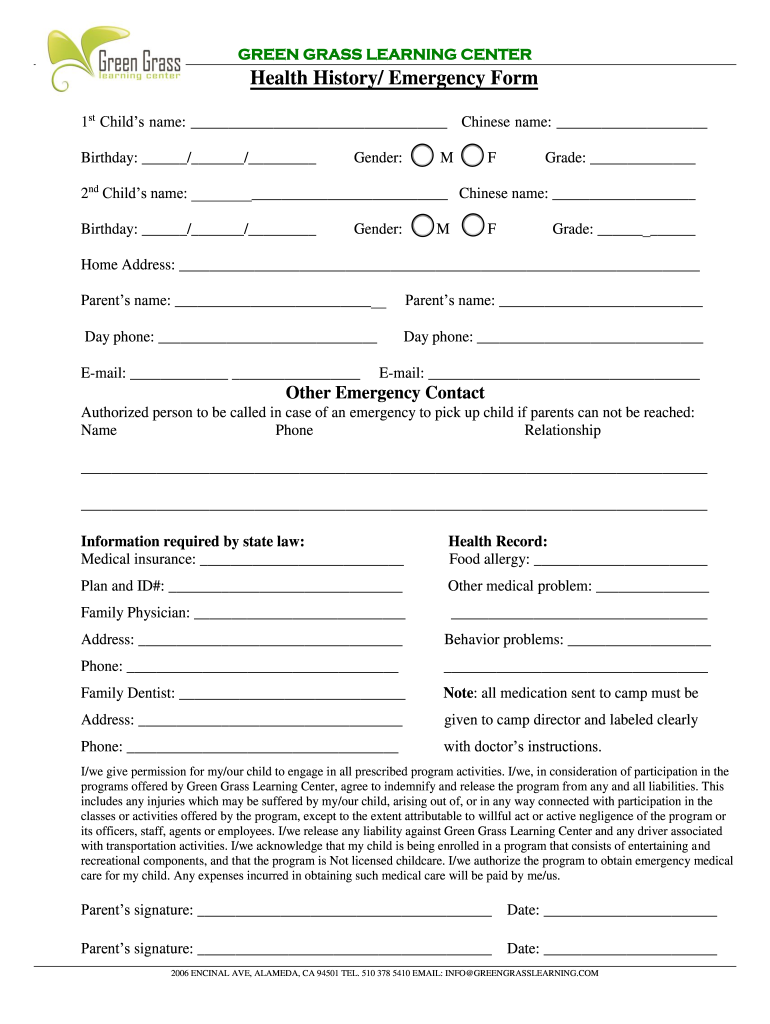
The Green Grass Learning Center Health History and Emergency Form is designed to gather essential information about children enrolled in the center's programs. This form functions as a crucial tool in maintaining the safety and well-being of children by collecting data on personal details, emergency contacts, medical history, and parental consents. Though it's essential for operational purposes, the form distinctly outlines that the program is not a licensed childcare service, emphasizing transparency in its service provision. It includes liability waivers, highlighting responsibilities and legal protections for both the center and the participants' guardians.
Key Elements of the Green Grass Learning Center Form
The form comprises several critical sections that ensure a comprehensive collection of necessary information:
- Personal Details: This section gathers fundamental information such as the child's name, date of birth, and address.
- Emergency Contacts: Lists primary and secondary contacts, ensuring immediate communication with guardians or authorized individuals in case of an emergency.
- Medical History: Includes fields for health conditions, allergies, and current medications, enabling the center to manage health-related incidents effectively.
- Parental Consent: Ensures guardians provide permission for their child's participation in activities and any potential emergency medical care, safeguarding the center from unauthorized decision-making.
Each of these components serves a specific purpose, collectively forming a robust framework to support child safety and effective response planning.
Steps to Complete the Green Grass Learning Center Form
Completing the Green Grass Learning Center form involves several detailed steps to ensure accuracy and completeness:
- Fill in Personal Details: Clearly provide the child's full name, date of birth, and contact information.
- List Emergency Contacts: Enter primary and an alternate contact, including phone numbers and relationship to the child.
- Complete Medical History Section: Detail any known health issues, list allergies, and include current medication prescriptions.
- Provide Activity Consent: Sign the parental consent section, authorizing the child's participation and granting permission for medical care, if necessary.
- Review Entries: Double-check all fields for accuracy before submitting to the center.
These steps ensure that the form is both complete and aligned with the center's requirements, minimizing misunderstandings or errors.
Who Typically Uses the Green Grass Learning Center Form
The primary users of the Green Grass Learning Center form are parents or guardians of children enrolled in the center's programs. These individuals are responsible for providing accurate and current information to facilitate the safe participation of their child in the learning center's activities. Additionally, administrative staff at the center use this form to maintain records, prepare for emergency situations, and ensure compliance with organizational policies.


Why Should You Use the Green Grass Learning Center Form
Utilizing the Green Grass Learning Center form is vital for several reasons:
- Safety Assurance: It ensures that the center has essential information to protect the health and safety of children in its care.
- Efficient Response: By having detailed contact and medical information, staff can promptly and effectively address emergencies.
- Legal Protection: Signed consents and waivers protect both the center and the parents by clearly outlining responsibilities and permissions.
This structured approach helps maintain a secure environment conducive to learning and development.
Legal Use of the Green Grass Learning Center Form
The form serves a legal function in that it includes liability waivers and parental consent agreements. These elements are integral to protecting the center legally by ensuring that parents are informed and agree to terms relating to their child's participation and emergency medical care. The form aligns with U.S. legal standards surrounding educational programs and non-licensed childcare services, emphasizing compliance with applicable regulations.
Important Terms Related to Green Grass Learning Center
Understanding specific terminology is crucial when completing the form:
- Liability Waiver: A legal statement that releases the center from certain responsibilities should incidents occur during program activities.
- Parental Consent: Permission given by parents, allowing their child to participate and authorizing emergency medical interventions if necessary.
- Emergency Contact: Individuals who can be reached immediately in case of an incident involving the child.
Familiarity with these terms ensures clarity and appropriate completion of the form.
Required Documents for the Green Grass Learning Center Form
When filling out the form, certain documents may be necessary to confirm the provided information:
- Medical Records: Pertaining to the child's health condition and medication history.
- Identification Proof: Such as a birth certificate or ID to verify the child's personal details.
These documents substantiate the entries on the form, providing an official basis for the listed information and helping streamline the verification process.
Examples of Using the Green Grass Learning Center Form
Real-world scenarios of using this form include:
- During Initial Enrollment: Parents complete the form as part of the registration process, ensuring the center has all necessary data.
- Annual Updates: Parents might be asked to review and update the form annually to reflect any changes in medical conditions or contact information.
Examples underscore the form's dynamic role in maintaining up-to-date records, essential for ongoing child safety management.




