







Definition & Meaning
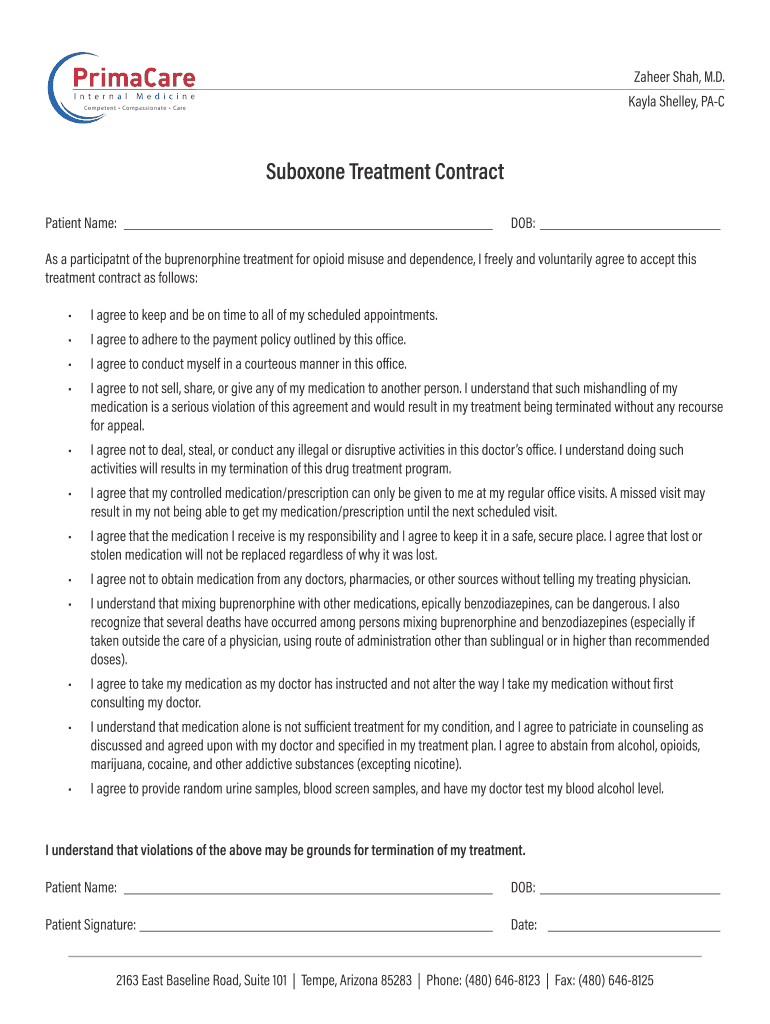
The PrimaCare Suboxon Treatment Contract is an agreement specifically designed for those participating in PrimaCare's Suboxone treatment program for opioid misuse and dependence. This form outlines the responsibilities, commitments, and terms under which both the healthcare provider and the patient agree to proceed with treatment. It serves to formalize the patient's consent and understanding of the program, ensuring all parties are aligned in their expectations and responsibilities for effective treatment outcomes.
Key Components of the Agreement
- Participant Commitment: The patient agrees to follow the treatment plan, attend scheduled appointments, and comply with drug testing requirements.
- Provider Obligations: The healthcare provider commits to delivering professional and supportive care, adjusting treatment as needed.
- Confidentiality: Both parties agree to maintain the confidentiality of the patient's health information, in line with legal standards like HIPAA.
How to Use the PrimaCare Suboxon Treatment Contract
Utilizing this contract involves a few critical steps that ensure all parties fully comprehend their roles and responsibilities. Here's a detailed guide:
- Review the Contract: Carefully read the entire document to understand every section, including the treatment guidelines and consequences for non-compliance.
- Discuss with a Provider: Meet with your healthcare provider to clarify any unclear terms, ensuring mutual understanding.
- Sign the Contract: Both patient and provider must sign the document to confirm agreement to the outlined terms, marking the start of the treatment.
Enhanced Understanding
- Legal Considerations: Patients should be made aware that signing this contract is legally binding and represents a serious commitment to adhere to the treatment.
- Follow-up Discussions: Regular check-ins with the provider are essential to address any challenges or required adjustments.
How to Obtain the PrimaCare Suboxon Treatment Contract
Obtaining this specific contract involves interacting with PrimaCare or affiliated healthcare providers. Here are the primary methods:
- Directly from PrimaCare: Contact PrimaCare via their official website or clinic to request the contract.
- Healthcare Provider: Many providers offer this contract during initial consultations for opioid treatment programs.
Supporting Documents Required
- ID Verification: A government-issued identification to verify the patient's identity.
- Insurance Information: If applicable, provide details of your health insurance for coverage validation.
Steps to Complete the PrimaCare Suboxon Treatment Contract
Completing this form requires careful and collaborative effort between the patient and the healthcare provider. Here is a sequence of steps:
- Personal Information: Fill in your full legal name, date of birth, and contact details.
- Review Treatment Terms: Go through each section detailing the treatment process, rules, and patient expectations.
- Sign and Date: Sign and date the contract to finalize the agreement.
Important Considerations
- Ensure Accuracy: Verify that all personal details and treatment terms are correct.
- Consult for Changes: If your situation changes, consult with your provider to amend the contract accordingly.
Who Typically Uses the PrimaCare Suboxon Treatment Contract
Typically, this form is used by individuals participating in a structured opioid dependency treatment program. Here are common user groups:
- Patients with Opioid Dependence: Individuals who seek to manage addiction through a medically supervised treatment.
- Health Practitioners: Doctors, nurses, and therapists involved in addiction therapy programs.


Institutional Use
- Treatment Centers: Organizations specializing in addiction recovery often incorporate this contract into their patient intake process.
Key Elements of the PrimaCare Suboxon Treatment Contract
The contract includes several critical elements that define the treatment partnership:
- Patient Responsibilities: Committing to attend regular therapy sessions and adhere to medication regimens.
- Monitoring and Testing: Agreement to undergo periodic drug testing to ensure compliance.
- Termination Clause: Conditions under which the contract and treatment might be terminated due to non-compliance.
Detailed Coverage
- Patient Education: Detailed information is provided to the patient regarding Suboxone, its effects, and expectations for recovery.
State-Specific Rules for the PrimaCare Suboxon Treatment Contract
Regulations and implementation of the PrimaCare Suboxon Treatment Contract can vary by state due to differing legal requirements surrounding opioid treatment.
- State Licensing Requirements: Some states might require additional licenses for facilities administering Suboxone treatments.
- Regional Health Regulations: Consideration of state-specific patient privacy laws and treatment guidelines.
Example of Variability
In states with higher regulatory scrutiny, such as New York or California, additional documentation for treatment efficacy and patient monitoring might be necessary.
Eligibility Criteria
Understanding who qualifies to enter into this agreement is paramount for both providers and potential patients.
- Opioid Dependency Diagnosis: Verified diagnosis of opioid dependency is typically required.
- Readiness for Treatment: The patient must demonstrate a psychological and physical readiness to begin treatment.

Case Study Illustration
An individual with a long-term history of opioid use and a demonstrated commitment to sobriety may be an ideal candidate for this treatment contract, highlighting the importance of personalized treatment pathways.
Penalties for Non-Compliance
Non-compliance with the PrimaCare Suboxon Treatment Contract can lead to serious consequences for the patient:
- Termination of Treatment: Repeated failure to comply with contract terms can result in the discontinuation of care.
- Legal Consequences: Potential legal ramifications if non-compliance involves illegal activities.
Consideration for Providers
Providers need to document instances of non-compliance carefully, ensuring a comprehensive understanding of each case's context to make informed decisions.




