




01. Edit your form online
Type text, add images, blackout confidential details, add comments, highlights and more.

Type text, add images, blackout confidential details, add comments, highlights and more.

Draw your signature, type it, upload its image, or use your mobile device as a signature pad.

Send it via email, link, or fax. You can also download it, export it or print it out.
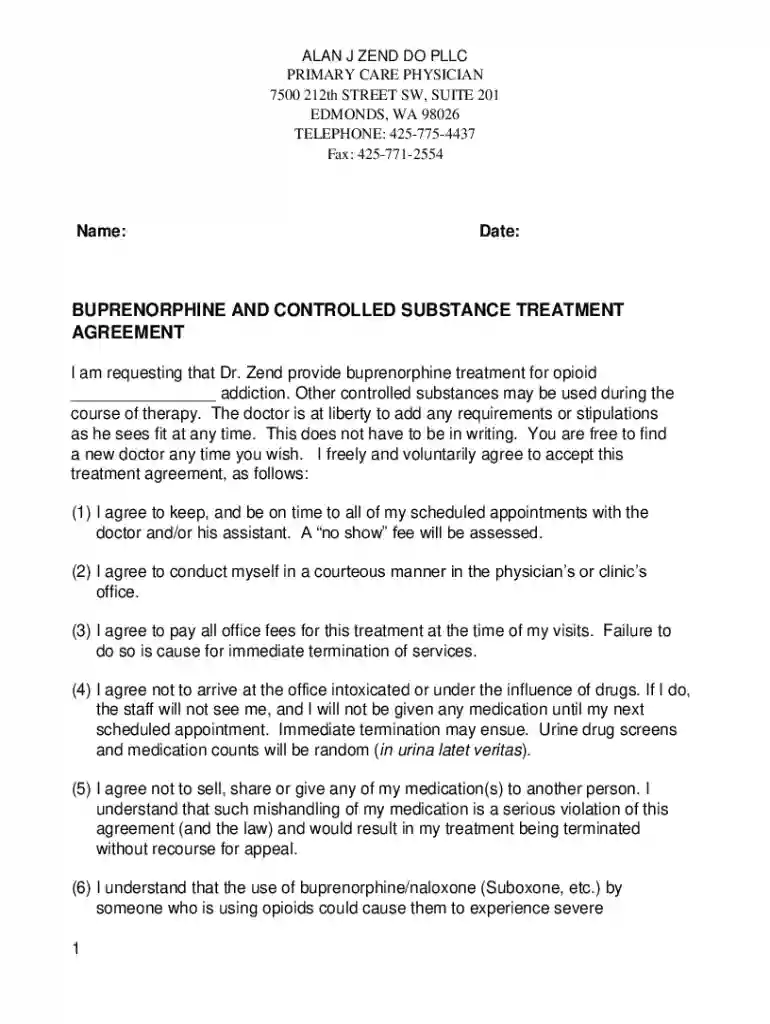
This dual-purpose agreement is crucial for regulated treatments, ensuring that patients understand the responsibilities tied to controlled substances managed by Alan J Zend DO PLLC. The agreement outlines the conditions under which these substances are prescribed, emphasizing adherence to medical guidance to mitigate misuse risks. Patients acknowledge the need for regular monitoring, and compliance with the outlined terms is mandatory for continued treatment. Such an agreement not only protects the practice legally but also enhances patient accountability, fostering a transparent care approach.
The agreement comprises several critical components designed to safeguard both patient and provider. Essential elements typically include specific patient responsibilities, such as adherence to dosage guidelines and restrictions on sharing medications with others. The agreement often covers the type and frequency of required drug screenings to ensure compliance, along with stipulations regarding the use of a single pharmacy for all prescriptions. These provisions help maintain a controlled treatment environment, ensuring that all parties are aligned in their commitment to safe, effective care.
Using the Alan J Zend DO PLLC controlled substance treatment agreement involves a systematic review with the patient. The document is presented during a consultation, where its terms are explained thoroughly. Patients are encouraged to ask questions to clarify any uncertainties about their obligations and the rationale behind specific stipulations. Once all points are understood and questions addressed, both the patient and healthcare provider sign the document. This agreement is then documented in the patient's medical record, serving as a reference throughout the treatment period.
Patients who require controlled substances for chronic pain management or specific medical conditions are the primary users of this agreement. It's vital for individuals dealing with conditions like severe anxiety, ADHD, chronic pain, or certain neurological disorders that necessitate the use of regulated medications. The agreement typically involves collaboration between the patient, prescribing physician, and the pharmacy, ensuring each party understands their role in maintaining a secure treatment environment.


The agreement plays a fundamental role in legal compliance for both healthcare providers and patients. It sets forth the legal framework within which controlled substances can be prescribed and used. By signing, patients consent to follow stipulated rules, such as submitting to random drug tests or using a designated pharmacy. This legal acknowledgment helps protect the practice by demonstrating due diligence in prescribing controlled medications, thereby reducing liability risks.
Regulations governing the prescribing and administration of controlled substances vary significantly across states. The agreement has to be tailored to align with Washington-specific laws, where Alan J Zend DO PLLC operates. Washington laws may dictate specifics regarding prescription monitoring programs, the frequency of patient evaluations, and limits on prescription quantities. Patients and providers alike must be aware of and comply with these state-specific requirements to ensure legal adherence.
Consider a patient dealing with chronic back pain. Using the agreement, they gain access to necessary medication under structured guidelines. The document informs them about regular health checks and restrictions like not sharing medication. Another example might involve a patient using anxiety medication. The agreement would require that they report any additional prescriptions from other providers to prevent harmful interactions. These examples highlight the agreement’s role in ensuring safe and effective treatment.
These topics provide a comprehensive understanding of the "controlled substance treatment agreement" with Alan J Zend DO PLLC, ensuring clarity, compliance, and effective medical care for individuals requiring controlled substances.
We've got more versions of the and controlled substance ... - Alan J Zend DO PLLC form. Select the right and controlled substance ... - Alan J Zend DO PLLC version from the list and start editing it straight away!
Microsoft Word doesn’t have signing tools to generate legitimate eSignatures and enforceable paperwork. Fortunately, DocHub is an online eSignature-compliant editor that supports different file formats, including .doc files. Log in to your account and add the Word version of your and controlled substance ... - Alan J Zend DO PLLC from your device and cloud, or URL - our editor will automatically convert it into an editable PDF. Make all essential modifications in your document and click Sign to generate your own legally-binding eSignature. There are four signing methods from which to choose.
If you edit your and controlled substance ... - Alan J Zend DO PLLC with DocHub, you merely need a stable internet connection and virtually any browser installed on your device. No need to set up any third-party software or research guides. Just open a tab with DocHub, drag and drop your file, and edit it immediately.
At DocHub, your data security is our priority. We follow HIPAA, SOC2, GDPR, and other standards, so you can work on your documents with confidence.


