
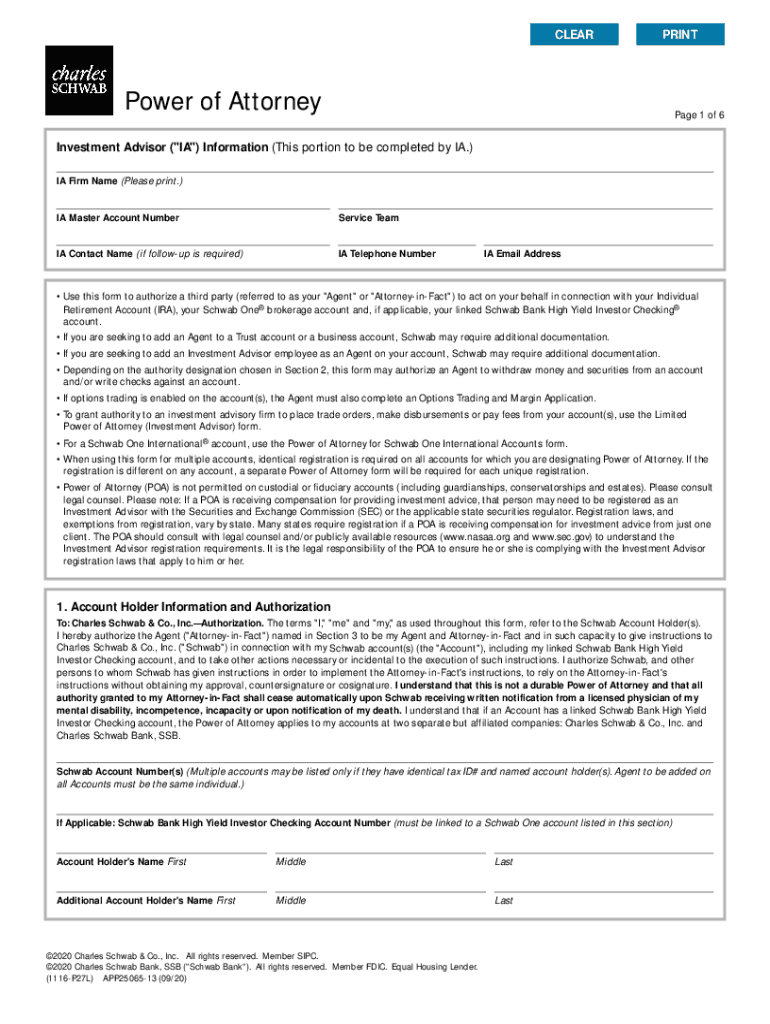







Introduction to Power of Attorney. APP25065-13
The "Power of Attorney. APP25065-13" is a legal document used specifically by Charles Schwab & Co., Inc. account holders. It grants a third party the authority to manage brokerage and bank accounts on behalf of the account owner. This document outlines the powers available to the agent, setting the framework for their responsibilities and limitations.
How to Use the Power of Attorney. APP25065-13
When utilizing the Power of Attorney. APP25065-13, the account holder, referred to as the Principal, must understand the extent of authority delegated to the Agent. The form can specify either limited or full control, depending on the needs of the Principal. It is important for the Principal to consider which transactions the Agent can initiate, such as trading securities or managing account funds.
Examples of Use
- Limited Authority: The Agent might only be allowed to view account balances and execute specific transactions approved by the Principal.
- Full Authority: The Agent could handle all account activities, including withdrawing funds, trading stocks, and closing accounts.
How to Obtain the Power of Attorney. APP25065-13
The form can be secured by contacting Charles Schwab & Co., Inc. directly. It is essential to follow the institution's procedure to ensure validity and compliance.
Steps to Acquire
- Contact Charles Schwab & Co., Inc.: Request the Power of Attorney form through their customer service or online platform.
- Complete the Form: Fill out the necessary information, designating the Agent and clarifying the powers granted.
- Submit for Approval: Return the completed form per the company's guidelines, typically via mail or in-person submission.
Steps to Complete the Power of Attorney. APP25065-13
Completing the document correctly ensures authentic and legal authorization. The process involves several detailed steps:
- Enter Personal Information: Provide the Principal's and Agent's details.
- Specify Powers: Outline the specific powers the Agent will have.
- Sign and Date the Form: Both the Principal and the Agent must sign the document in the presence of witnessed parties, such as a notary.
- Submit the Document: Follow submission methods specified by Charles Schwab & Co., Inc.
Key Elements of Power of Attorney. APP25065-13
The document contains several essential sections necessary for its effectiveness.
Main Components
- Principal and Agent Information: Identifies the individuals involved.
- Scope of Authority: Details the rights and powers granted.
- Effective Date and Termination: Specifies when the authority begins and ends.
- Indemnification and Arbitration: Includes clauses that protect the Principal from the Agent's actions and outlines dispute resolutions.
Who Typically Uses the Power of Attorney. APP25065-13
Typically, Charles Schwab & Co., Inc. account holders who require assistance in managing their financial affairs utilize this form.


Common Users
- Elderly Individuals: Those needing help due to declining personal capacity.
- Frequent Travelers: Individuals who spend significant time overseas and need someone to manage their accounts.
- Business Professionals: Account holders with complex investment portfolios requiring dedicated management.

Legal Use of the Power of Attorney. APP25065-13
The form must be used legally and ethically to manage accounts. It adheres to state-specific laws and regulations that govern financial transactions and fiduciary responsibilities.
Compliance Requirements
- Adherence to Local Laws: Follow state-specific rules for POAs.
- Authenticity Verification: Ensure all signatures are notarized to confirm identity and consent.
State-Specific Rules for Power of Attorney. APP25065-13
State laws may influence how a Power of Attorney form operates. These laws might affect the legal authority granted to the Agent and the requirements for notarization or witnessing.
Examples of Variations
- California: May require additional documentation for property transactions.
- New York: Might impose specific conditions for financial account management.
Important Terms Related to Power of Attorney. APP25065-13
Understanding essential terms aids in the proper execution and use of the document.
Glossary
- Principal: The individual granting authority.
- Agent: The person receiving the power to act.
- Durable Power of Attorney: A type of POA that remains effective if the Principal becomes incapacitated.
Penalties for Non-Compliance
Failure to comply with the stipulations of Power of Attorney. APP25065-13 can lead to several consequences.
Potential Consequences
- Legal Action: The Principal may pursue legal ramifications if the Agent acts beyond their granted authority.
- Financial Penalties: Agents may be liable for financial losses incurred due to unauthorized actions.
By following detailed instructions and understanding the form's provisions, users can effectively employ the Power of Attorney to manage their financial needs securely and legally.




