
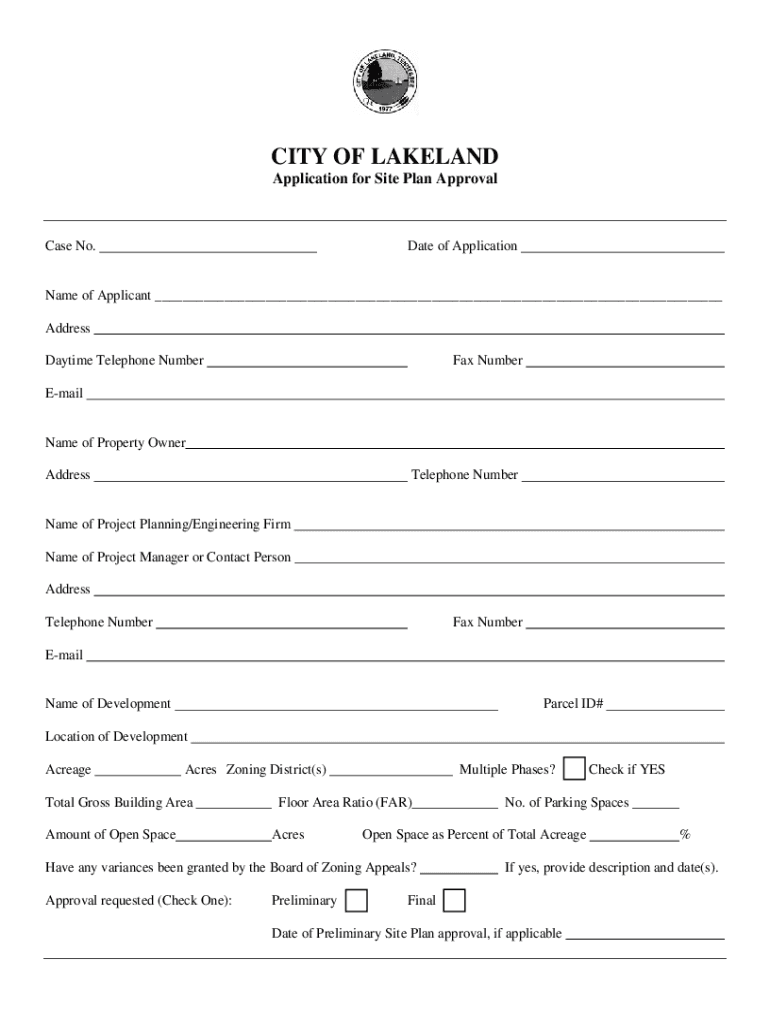







Definition & Purpose of Planning Department in Lakeland, TN
The Planning Department of Lakeland, TN, plays an essential role in urban development and land use management. It ensures that all constructions and developments align with the city’s strategic plan, encouraging organized growth while maintaining environmental and community standards. This department is responsible for site plan reviews, zoning applications, and the issuance of permits, ensuring compliance with local regulations. The department also collaborates with other city agencies, providing a cohesive approach to city planning and redevelopment initiatives.
How to Use the Planning Department Resources
Utilizing the resources provided by the Planning Department involves several key steps. First, applicants should visit the official city website to access forms and guidelines related to their development project. The site offers a wealth of information, including zoning maps, fee schedules, and procedures for submitting site plans. Residents can also attend public meetings or schedule consultations with department officials to gain insights and clarify requirements for their specific projects. Additionally, community members can participate in workshops and public hearings to stay informed on new developments and policy changes.
Obtaining Necessary Permits in Lakeland
To secure the necessary permits from the Planning Department in Lakeland, TN, applicants should follow a detailed process. This typically begins with the submission of a comprehensive application form that outlines the scope and nature of the proposed development. Required documentation may include site plans, elevation drawings, and environmental assessments. After submission, the department will review the application for compliance with zoning laws and building codes. Applicants may need to make presentations before city commissions or obtain approvals from various agencies depending on the project’s complexity.
Steps to Complete Permit Applications
- Research and Gather Information: Begin by understanding the specific permit requirements for your type of development. Gather all necessary documentation, such as land surveys and building plans.
- Complete the Application Form: Fill out the detailed application form using accurate and precise information.
- Submit Required Documentation: Ensure all supplementary materials, like environmental assessments and design plans, are complete and attached.
- Pay the Required Fees: Review the fee schedule and make sure all associated costs are covered at submission.
- Await Review and Approval: The Planning Department will review the application, which may include site visits or public hearings.
- Make Necessary Adjustments: If asked for revisions, promptly amend your plans to comply with city requirements.
- Receive and Display Permits: Once approved, ensure permits are appropriately displayed at the work site.
Importance of Planning Department Permits
Obtaining permits from the Planning Department in Lakeland is not only a legal requirement but also ensures the safety and sustainability of the development projects. Permits help regulate land use, maintain the character of neighborhoods, and protect natural resources. They provide a legal framework that prevents haphazard constructions and encourages responsible urban growth. Compliance with permit requirements also mitigates potential legal challenges and enhances community confidence in development projects.
Typical Users of Planning Department Services
The services and resources provided by the Planning Department are utilized by a diverse group of stakeholders. These include real estate developers, architects, civil engineers, and general contractors involved in construction and urban development projects. Homeowners planning renovations or extensions also interact with the department to obtain necessary approvals. Additionally, city planners and policymakers use the department’s data and insights to draft policies that shape urban growth.
Key Elements of Permit Applications
Permit applications submitted to the Lakeland Planning Department must include several critical components:
- Detailed Project Description: Clear outline of the intended project, including its scale, purpose, and envisaged impact on the local environment.
- Supporting Documentation: Comprehensive set of plans, including architectural designs, site layouts, and environmental studies.
- Compliance Statements: Declarations indicating conformance to zoning laws, city ordinances, and environmental regulations.
- Stakeholder Information: Details about the project owner, developers, and responsible contractors, ensuring accountability.
State-Specific Rules for Permit Applications
In Tennessee, specific state regulations influence the processing of permit applications in cities like Lakeland. Compliance with state environmental policies, energy efficiency standards, and building codes is essential. Projects must align with the state’s broader objectives for sustainable development and infrastructure resilience. Additionally, adherence to statewide safety regulations and consideration of cultural preservation in heritage zones may be required.
Examples of Planning Department Use Cases
Numerous real-world scenarios showcase the vital role of the Lakeland Planning Department:
- Residential Developments: Architects designing new residential complexes must obtain zoning permits and undergo site plan reviews to ensure alignment with city density policies.
- Commercial Renovations: Business owners wishing to renovate older commercial spaces need guidance on achieving energy efficiency and modern safety standards.
- Public Infrastructure Projects: Collaboration with the department ensures that public projects, like roads and parks, meet environmental sustainability goals and integrate smoothly with existing urban infrastructure.
By understanding and adhering to the processes and requirements outlined by the Lakeland Planning Department, stakeholders can facilitate successful project completion while contributing to the city's balanced and sustainable growth.




