




01. Edit your form online
Type text, add images, blackout confidential details, add comments, highlights and more.

Type text, add images, blackout confidential details, add comments, highlights and more.

Draw your signature, type it, upload its image, or use your mobile device as a signature pad.

Send it via email, link, or fax. You can also download it, export it or print it out.
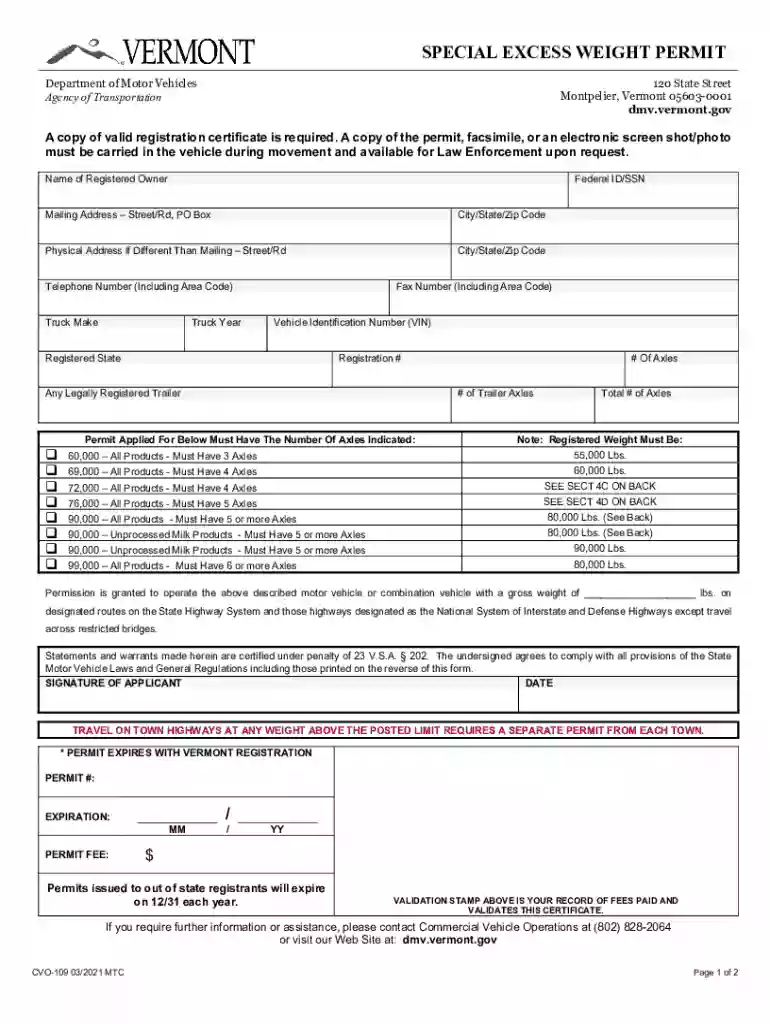
The Vermont Special Excess Weight Permit is a legal document issued by the Vermont Department of Motor Vehicles (DMV) that allows vehicles to operate above standard weight limits on designated routes. This permit is essential for businesses and individuals who need to transport heavy loads across Vermont's state highways. By obtaining this permit, you can ensure compliance with state regulations, avoid fines, and maintain safety on the roads. The document is carried in the vehicle and must be presented to law enforcement officers upon request. The permit outlines specific conditions based on vehicle configurations and weight allowances, ensuring that the transport of excess weight does not damage infrastructure or compromise safety.
To obtain the VT Special Excess Weight Permit, applicants must follow a specific process that involves submitting required documentation and paying applicable fees. The first step is to complete the application form, which requires detailed information about the vehicle, proposed routes, and load specifications. Applicants must also provide proof of insurance and compliance with Vermont's vehicle regulations. Fees for the permit are typically based on the weight of the vehicle and the duration of the permit. After submission, the Vermont DMV reviews the application to ensure all criteria are met before granting approval. The permit's processing time can vary, so early application is advisable to prevent delays in transport operations.
When applying for the VT Special Excess Weight Permit, several critical documents are necessary to facilitate a smooth application process. These include:
Ensuring all documents are prepared in advance helps avoid processing delays and potential rejection due to incomplete submissions.
Completing the VT Special Excess Weight Permit form involves several detailed steps to ensure compliance and accuracy:
Following these steps meticulously ensures that applicants meet all requirements for the permit.
Once obtained, the VT Special Excess Weight Permit must be used in accordance with Vermont’s legal requirements. Permit holders are responsible for adhering to specified routings and load limitations as outlined in the permit. The document must be kept in the vehicle at all times and shown to law enforcement officers when requested. Failure to comply with the conditions of the permit can lead to legal penalties, fines, or revocation of the permit. Maintaining compliance not only avoids punitive measures but also contributes to the safety and maintenance of Vermont's infrastructure.
The VT Special Excess Weight Permit is crucial for those needing to transport loads that exceed standard legal weight limits. It benefits:
Utilizing this permit allows businesses to operate efficiently while adhering to state laws and contributing to road maintenance efforts.
The VT Special Excess Weight Permit is subject to Vermont-specific regulations that may differ from those in other states. Key elements include:
Understanding these state-specific prerequisites ensures complete adherence to local rules, reducing the risk of permit infractions.
Real-world examples illustrate how the VT Special Excess Weight Permit is beneficial:
In each scenario, the permit facilitates legal and efficient movement, underscoring its importance for business operations and compliance.
We've got more versions of the vt special excess weight permit form. Select the right vt special excess weight permit version from the list and start editing it straight away!
At DocHub, your data security is our priority. We follow HIPAA, SOC2, GDPR, and other standards, so you can work on your documents with confidence.
Appendix C contains examples of ways states can permit and/or implement ISCO as a soil and groundwater remediation technology. The six regulatory examples fromRead more
To qualify for a Special Excess Weight Permit a vehicle registered in another state must meet all weight and size requirements of this state and beRead more


