







Definition & Meaning
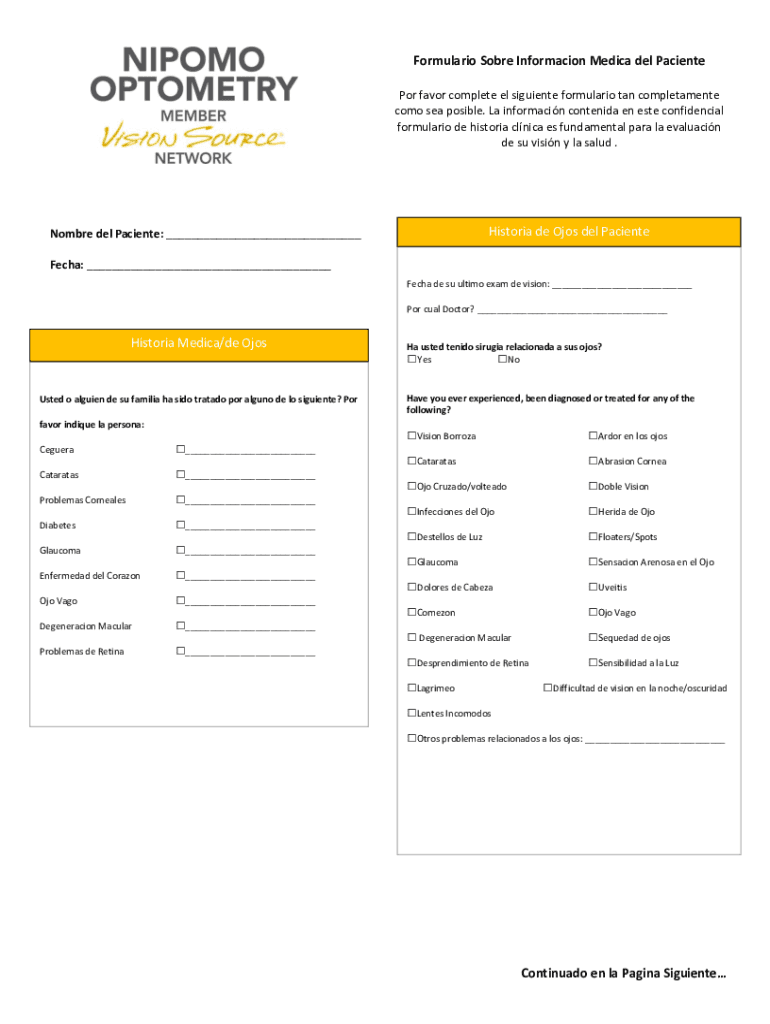
The "Formulario Sobre Informacion Medica del Paciente" is a crucial document used in the healthcare industry to collect detailed medical information from patients. This form aims to gather comprehensive data regarding a patient’s health status, focusing particularly on their medical history and current medical conditions. It helps healthcare providers understand patient needs, ensuring appropriate medical care and treatment. The form typically includes sections for personal information, medical history, lifestyle habits, medications, and family history, all contributing to a well-rounded medical profile.
How to Use the Formulario Sobre Informacion Medica del Paciente
Utilizing the "Formulario Sobre Informacion Medica del Paciente" effectively involves several key steps to ensure accurate and complete data capture. First, patients should carefully read each section to understand what information is needed. This includes details about past medical conditions, ongoing treatments, and any medications currently being taken. Once all relevant information is gathered, it should be entered with precision to avoid any errors that may lead to incorrect medical assessments. After completing the form, patients should review the information for accuracy before submission, ensuring all fields are filled and no critical details are omitted.
Steps to Complete the Formulario Sobre Informacion Medica del Paciente
- Personal Information: Start by entering your name, address, phone number, and email. Verification of this information is crucial for communication purposes.
- Medical History: List all previous medical conditions, surgeries, and any significant health events. Include dates and any recurring issues.
- Current Medications: Record all medications being taken, including dosage and frequency. This helps in identifying potential drug interactions.
- Family Medical History: Provide information about genetic conditions or medical issues prevalent in your family, which may affect your health.
- Lifestyle Habits: Detail habits such as smoking, alcohol consumption, exercise, and diet, as these are significant health indicators.
- Review and Sign: Before submitting, review all entries for accuracy and completeness. Sign the form to confirm the information is correct to the best of your knowledge.
Key Elements of the Formulario Sobre Informacion Medica del Paciente
- Personal Identification: Includes name, date of birth, and contact information, facilitating correct patient identification.
- Medical History: Requires in-depth detail of previous illnesses, surgeries, or chronic conditions.
- Family History: Observes patterns of illness that can indicate genetic health risks.
- Current Health Status: Focuses on present conditions and ongoing treatments.
- Lifestyle and Habits: Covers aspects like diet, physical activity, and substance use that influence health.
- Significant Allergies: Alerts to any allergenic medicines or substances that could cause adverse reactions.
Important Terms Related to Formulario Sobre Informacion Medica del Paciente
- Chronic Conditions: Long-term diseases such as diabetes or hypertension that require ongoing management.
- Medication Reconciliation: The process of ensuring that the patient's medication lists are accurate and up-to-date.
- Genetic Predisposition: The likelihood of developing diseases based on family history.
- Baseline Data: Initial patient data used to track changes over time in medical conditions.
- Confidentiality: Ensures that all patient information is securely maintained in accordance with privacy standards.
Legal Use of the Formulario Sobre Informacion Medica del Paciente
In the United States, the "Formulario Sobre Informacion Medica del Paciente" must comply with regulations such as HIPAA, which safeguards personal health information privacy. The legal use of this form involves collecting, storing, and managing patient information securely. Healthcare providers are required to obtain informed consent from patients before collecting detailed medical data, and the data collected should only be used for intended medical purposes. Unauthorized access or misuse of the form may result in legal penalties under patient privacy laws.
Digital vs. Paper Version
The digital version of the "Formulario Sobre Informacion Medica del Paciente" offers notable advantages over its paper counterpart. It allows for easier distribution, quicker data entry, and more efficient storage and retrieval of patient information. Patients can fill out the digital form at their convenience and send it instantly to healthcare providers. Digital forms also minimize errors through validation checks and can be integrated with electronic health records (EHR) for seamless updates. However, the paper version might still be preferred in areas with limited internet access or for patients uncomfortable with digital technology.
Examples of Using the Formulario Sobre Informacion Medica del Paciente
A practical example of using this form is during a routine eye examination. An ophthalmologist might require a patient to fill out the "Formulario Sobre Informacion Medica del Paciente" to assess any underlying conditions that could affect eyesight. Similarly, an individual's family history of diabetes might prompt a healthcare provider to pay closer attention to certain health metrics. This form becomes particularly useful in emergency situations, where a quick understanding of the patient’s medical background is crucial for delivering appropriate care.




