







Definition and Meaning
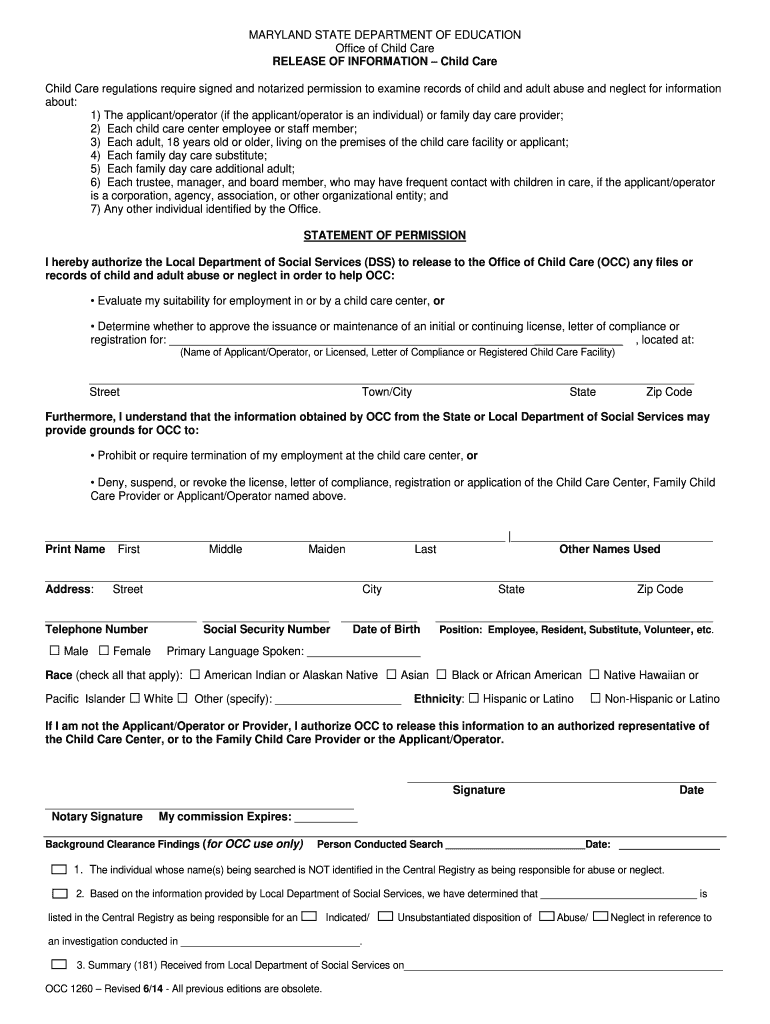
The "Release of Information - Maryland State Department of Education" is a crucial document used to obtain permission to access records related to child and adult abuse and neglect for individuals involved in child care settings within Maryland. This form facilitates the sharing of sensitive information to assess the suitability of applicants, employees, residents, and board members for child care facilities. By signing this document, individuals grant the necessary legal authority to inspect these records in the context of employment or licensing decisions.
Steps to Complete the Release of Information Form
-
Download the Form: Obtain the form from the Maryland State Department of Education's website or a licensed document service like DocHub.
-
Personal Information: Enter complete personal data, including your full name, date of birth, and contact details to ensure proper identification.
-
Specify the Records: Clearly outline the types of records to be released, such as child or adult abuse and neglect records relevant to your role in child care settings.
-
Purpose of Release: Indicate the specific reason for requesting this information, which typically involves evaluation for employment or licensing.
-
Sign and Date: Affix your signature and date the document to validate your consent and make the release legal.
-
Submit the Form: Deliver the completed form to the appropriate department or agency as instructed, either by mail, in person, or through verified online platforms.
Key Elements of the Release of Information Form
-
Applicant Details: Essential information about the individual authorizing the data release, such as identification numbers and current addresses.
-
Recipient Information: Details of the entity or individual who will receive and review the released information.
-
Consent Agreement: A formal statement in which the applicant explicitly agrees to the release of information and acknowledges understanding the implications.
-
Duration of Consent: Specifies how long the consent is valid, ensuring the data is accessible only within a certain timeframe.
Who Typically Uses the Release of Information Form
The form is primarily used by:
- Child Care Facility Administrators: To evaluate the suitability of potential employees and volunteers.
- Applicants: Individuals seeking employment or licensing in child care settings who must undergo a background check.
- Regulatory Authorities: Government bodies tasked with the oversight and enforcement of child care regulations.


Legal Use of the Release of Information Form
This form is geared towards ensuring compliance with Maryland's legal requirements for child care operations. By facilitating the authorized sharing of sensitive data, it helps maintain a secure environment for vulnerable populations. The information released through this document is protected under state and federal privacy laws, ensuring it is used solely for its intended purpose of evaluating eligibility for work or licensure in child care facilities.
State-Specific Rules for the Form
Maryland has particular provisions that govern the release of child and adult abuse records. These include:
-
Authorized Signatories: Only those legally recognized or mandated can process and provide access to these records.
-
Confidentiality Protocols: Information obtained must be kept confidential, only to be used as stipulated by state regulations.
-
Penalties: Violating privacy rules linked to this form may lead to legal actions, including fines or revocation of licenses for institutions or individuals who misuse the information.
Examples of Using the Form
Consider the case of a child care facility hiring a new director. The Release of Information form will allow the institution to access the candidate's history concerning child abuse records, ensuring they meet the state's ethical and safety standards. Another example might involve a licensing renewal for an existing employee, where the form serves to verify continued compliance with protective regulations.
Required Documents
When completing the form, applicants may need to provide:
-
Identification: A government-issued ID, such as a driver's license, passport, or state ID card, to confirm the applicant’s identity.
-
Supporting Documents: Additional verification materials may be necessary, such as employment records or prior certifications in child care.
Submission Methods
The form can be submitted through several channels:
-
In-Person or Mail: Traditional submission methods via postal service or in-person at the responsible departments.
-
Online Platforms: Services like DocHub can facilitate a streamlined and secure digital submission, reducing processing times and enhancing logistical efficiencies.




