




01. Edit your how to beat an ime exam online
Type text, add images, blackout confidential details, add comments, highlights and more.

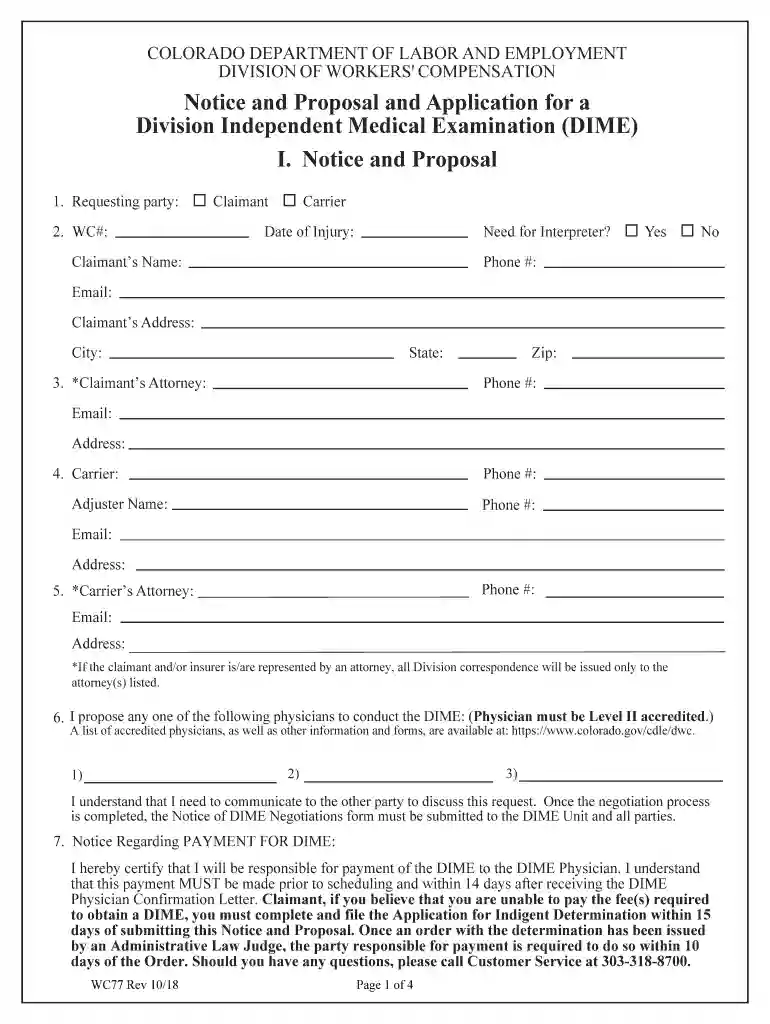
Type text, add images, blackout confidential details, add comments, highlights and more.

Draw your signature, type it, upload its image, or use your mobile device as a signature pad.

Send it via email, link, or fax. You can also download it, export it or print it out.
A Division Independent Medical Examination (DIME) is a critical evaluation conducted under the auspices of the Colorado Department of Labor and Employment's Division of Workers' Compensation. This process is used to address disputes related to workers' compensation claims, specifically concerning Maximum Medical Improvement (MMI) and Permanent Impairment Ratings. DIMEs serve as an impartial assessment mechanism to provide clarity and resolution between claimants and insurance carriers.
Typically, a DIME is requested when there is a disagreement about the extent of an injury, the appropriate impairment rating, or when the MMI status is in contention. An independent medical examiner is tasked with reviewing medical records, examining the claimant, and providing an unbiased opinion to aid in resolving the dispute. The outcome of a DIME can significantly impact the benefits a claimant receives, thus making it a pivotal component of the claims process.
Engaging with the Division Independent Medical Examination involves several strategic steps to ensure its effectiveness. These include understanding the process, preparing necessary documentation, and effectively communicating with all parties involved. To utilize a DIME, follow these procedures:
Request Submission: The party wishing to conduct a DIME must submit a request to the appropriate division within the Workers' Compensation system. This typically involves completing and submitting specific forms, alongside relevant claimant information.
Communication with Stakeholders: Coordination between the injured worker, the insurance company, and sometimes legal representatives is essential. This ensures that all pertinent information is available for review by the independent examiner.
Select an Examiner: Both parties must agree on a neutral medical examiner from a list provided by the division. The selected professional is responsible for conducting a fair evaluation of the claimant's condition.
Prepare Necessary Documentation: Compile all related medical records, previous examination reports, and any other relevant documents that might aid the examiner in making an informed assessment.
Undergo Examination: The claimant must attend the scheduled medical examination. During this session, the examiner will evaluate the claimant's physical condition and review submitted documentation.
Review the Findings: Upon completion, the examiner will provide a report detailing their findings. Both parties will receive this report to assist in further negotiations or adjustments to the claim as necessary.
Completing a DIME involves a systematic approach to ensure accuracy and thoroughness. Below is a structured guide to navigate this important process:
Initiating the Process:
Appointing an Examiner:
Compiling Documentation:
Scheduling the Examination:
Undergoing the Examination:
Reviewing the Report:
Several critical components define the structure and objectives of a DIME assessment. Understanding these elements enables all stakeholders to manage expectations and responsibilities effectively:
Objective Examination: The examination must be unbiased, providing a neutral third-party assessment of the claimant's medical condition.
Focus on MMI and Impairment Ratings: The primary goal is to evaluate the claimant's health status concerning Maximum Medical Improvement and determine the appropriate Permanent Impairment Rating.
Documentation Review: An in-depth evaluation of all medical documentation is necessary to provide a comprehensive understanding of the claimant’s medical history.
Stakeholder Collaboration: Effective communication between claimants, insurers, and medical professionals is crucial for a productive outcome.
Evaluation Report: A detailed report furnished by the examiner informs both parties of the findings and recommendations, assisting in resolving disputes.
Eligibility for undergoing a Division Independent Medical Examination is typically determined by specific criteria that ensure the validity and necessity of the examination.
Dispute Requirement: There must be a clear dispute regarding MMI status or the impairment rating for a DIME to be requested.
Claimant and Carrier Disagreement: Both the injured party and the insurance carrier must maintain differing opinions on the claimant’s medical status or anticipated compensation.
Completion of Initial Treatment: Generally, the medical treatments and initial assessments by treating physicians should be complete to facilitate a meaningful DIME evaluation.
Approval by Division: The request for a DIME must be approved by the Workers' Compensation Division, confirming that all prerequisites and procedural steps have been fulfilled.


In the state of Colorado, the Division Independent Medical Examination is overseen and issued by the Colorado Department of Labor and Employment’s Division of Workers' Compensation.
Administration: This government body administers and regulates all aspects of the DIME process, from examiner selection to report dissemination.
Compliance Monitoring: They ensure that all DIMEs adhere to stringent fairness and neutrality standards to preserve their integrity and efficacy.
Support and Coordination: The division aids in coordinating between involved parties, ensuring that all regulatory and procedural guidelines are followed correctly.
The state of Colorado establishes specific guidelines and procedures unique to the Division Independent Medical Examination, reflecting its legal and procedural environment.
Regulatory Oversight: All DIMEs must conform to state legal standards, emphasizing fair practice and unbiased evaluations.
Fee Schedules: The state sets predetermined fees related to the examination to ensure uniformity and compliance.
Time Frames and Deadlines: Colorado laws specify time-sensitive requirements for submitting requests, completing examinations, and distributing reports to facilitate timely resolutions.
Adherence to State Laws: Compliance with Colorado law is mandatory, with varying implications for non-compliance including potential legal repercussions.
Real-world applications of DIMEs can illustrate their essential role in resolving disputes within the realm of workers' compensation:
Case of Disputed MMI: A claimant is deemed to have reached maximum medical improvement, but the insurance carrier disagrees, citing more treatment is needed. A DIME might be requested to settle the discrepancy with an authoritative opinion from a neutral examiner.
Disagreement on Impairment Rating: Disparities between the physician's impairment rating and the insurance provider's assessment may prompt a DIME, ensuring a third party evaluates the claimant in alignment with standardized criteria.
Complex Injury Cases: In cases where multiple injuries differ in severity and treatment outcomes, a DIME can provide clarity by offering an exhaustive evaluation of each injury's impact on the individual’s overall function and compensation eligibility.
These scenarios highlight DIMEs as a vital component in navigating and resolving complex workers' compensation claims, safeguarding fair and equitable outcomes for all parties involved.
We've got more versions of the how to beat an ime exam form. Select the right how to beat an ime exam version from the list and start editing it straight away!
| Versions | Form popularity | Fillable & printable |
|---|---|---|
| 2018 | 4.8 Satisfied (80 Votes) |
At DocHub, your data security is our priority. We follow HIPAA, SOC2, GDPR, and other standards, so you can work on your documents with confidence.
A physician seeking appointment to the DIME panel shall complete the Request for Appointment to the Independent Medical Examination Panel in full, including theRead more
independent examination of this report was carried out in accordance with institutional procedures and that all review comments were carefully consideredRead more


