
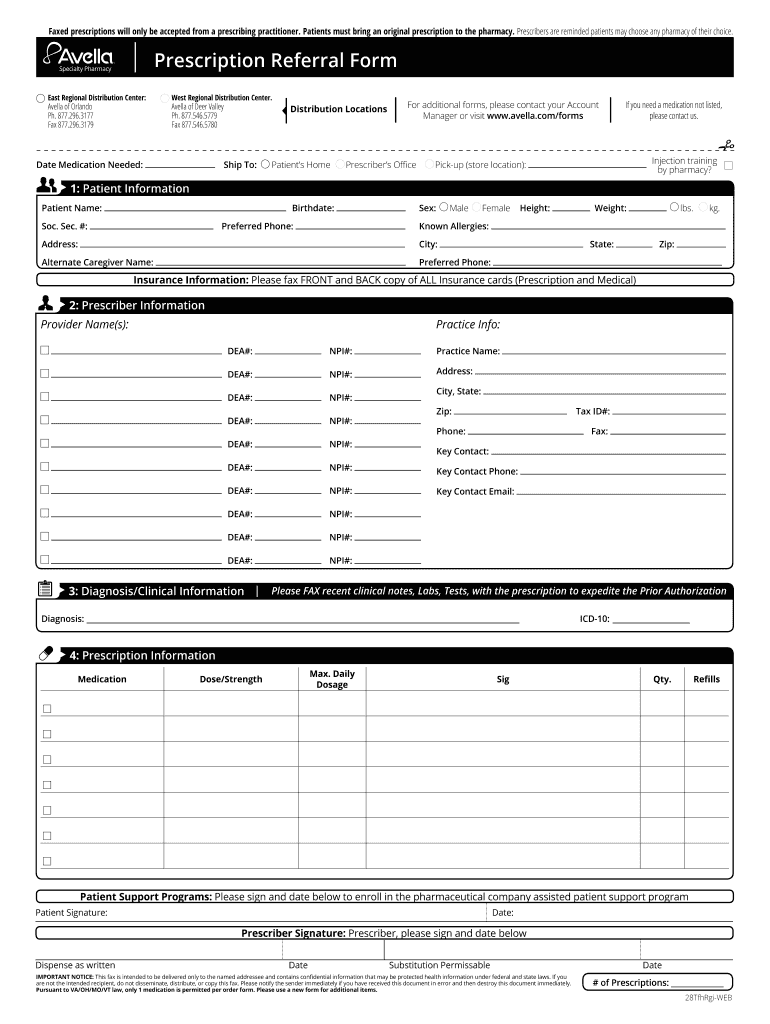







Definition and Purpose of the Prescription Referral Form
The "Prescription Referral Form - blogavellacom" is a specialized document utilized primarily in the healthcare and pharmaceutical sectors. This form serves as a bridge between prescribing practitioners and pharmacies, facilitating the transfer of essential prescription information. It typically contains comprehensive sections to document patient information, the prescriber's details, diagnosis, and prescribed medication. Its primary utility lies in ensuring accuracy in medication dispensation while maintaining a chain of accountability from the prescriber to the pharmacy.
This form is often required in contexts where prescriptions need to be faxed or electronically transferred to a dispensing entity. Given its structured layout, it helps mitigate errors that could arise from manual transcription, thereby safeguarding patient health through accurate and efficient communication.
How to Use the Prescription Referral Form
To effectively utilize the Prescription Referral Form, follow a systematic approach to ensure all necessary information is accurately captured and conveyed. This involves several key steps:
-
Gather Patient Information: Start by documenting the patient's full name, address, contact details, and pertinent medical history that might influence medication dispensation.
-
Record Prescriber Details: Include the prescribing practitioner's full name, medical license number, contact information, and any specific instructions for the pharmacy.
-
Include Diagnosis and Medication: Clearly state the patient's diagnosis, followed by detailed medication information such as drug name, dosage, frequency, and duration of the prescription. This section ensures that the pharmacy has all necessary data to provide the correct medication.
-
Verify Insurance and Support Programs: Add information concerning the patient's insurance details and eligibility for any support programs, if applicable. This can aid in facilitating claims and ensuring the patient receives necessary financial assistance.
Each of these steps ensures the form serves its intended purpose efficiently, minimizing the risk of errors in prescription processing.
Steps to Complete the Prescription Referral Form
Completing the Prescription Referral Form involves several explicit stages to ensure a high degree of accuracy and compliance:
-
Patient Section: Fill in all demographic and contact information accurately, as errors here could lead to misdeliveries or delays in medication dispensation.
-
Prescriber Identification: Ensure all prescriber information is filled out correctly, including their credentials and any special instructions related to medication handling.
-
Medication Specifics: Itemize each prescribed medication with exact details. The inclusion of generic names alongside brand names, where applicable, can prevent dispensing errors.
-
Review and Verify: Once all sections are populated, review the form for completeness and accuracy. Cross-check with the patient's medical records if necessary.
-
Submission: Depending on the requirements, submit the completed form via the designated method—fax, electronic submission, or mail.
With each correctly executed step, the risk of prescription errors is greatly minimized, enhancing patient safety.
Who Typically Uses the Prescription Referral Form
The Prescription Referral Form is commonly used by healthcare providers, including doctors, nurse practitioners, and other licensed prescribers. These professionals are responsible for initiating prescriptions and ensuring they are accurately conveyed to pharmacies.
Pharmacies and pharmacists also rely heavily on these forms to receive prescription details accurately from healthcare providers. Additionally, insurance companies might utilize the information contained in these forms to process claims and confirm prescription coverage for patients.
By understanding the roles of different stakeholders involved, the form's efficacy in facilitating seamless communication and accurate medication delivery is reinforced.


Key Elements of the Prescription Referral Form
Several critical components comprise the Prescription Referral Form, each serving a distinct purpose to ensure comprehensive communication between parties:
-
Patient Details: Includes identification and contact information, necessary for ensuring the prescribed medication is given to the correct individual.
-
Prescriber Information: Features the healthcare provider's details, ensuring accountability and offering a point of contact for any queries or clarifications.
-
Medication Section: Lists prescribed drugs with essential details such as dosage and administration route, minimizing any room for error in dispensation.
-
Insurance Information: Encompasses data necessary for billing and financial assistance, streamlining the claim process and reducing financial burdens on patients.
These key elements collectively ensure the form accomplishes its primary objectives efficiently and reliably.
Legal Use of the Prescription Referral Form
Legal adherence is crucial when using the Prescription Referral Form. Healthcare providers must ensure that all information submitted on the form complies with relevant medical laws and regulations. This includes compliance with patient privacy laws, like the Health Insurance Portability and Accountability Act (HIPAA), which mandates the protection of sensitive patient information.
Moreover, only licensed medical practitioners should fill out and submit these forms to ensure authenticity and legality. Non-compliance with these regulations can lead to serious legal repercussions for practitioners and institutions alike.
State-Specific Considerations for Prescription Referral Forms
While the Prescription Referral Form is generally uniform across the United States, specific state regulations may influence its content and submission process. States might have unique stipulations regarding how prescriptions are transferred, especially concerning controlled substances.
Healthcare professionals should familiarize themselves with these specific requirements to ensure compliance and avoid potential legal issues. This knowledge is vital for maintaining proper legal standing and ensuring uninterrupted service to patients across different regions.
Examples of Using the Prescription Referral Form in Practice
Consider a scenario involving a new patient with a chronic condition requiring consistent medication. The patient's physician will complete the Prescription Referral Form to initiate the prescription through a local pharmacy. The form will carry essential information, enabling the pharmacy to dispense the correct medication without delay.
Suppose the patient changes their primary care provider; the new physician might use this form to transfer prescription details seamlessly to ensure continuity of care. Another example might involve a patient who travels frequently and needs prescription refills in multiple states, requiring accurate and timely form submission to meet varying state laws and fill prescriptions effectively.
These examples underscore the form's practicality in diverse healthcare settings, emphasizing its role in maintaining a cohesive and responsive medication management system.




