
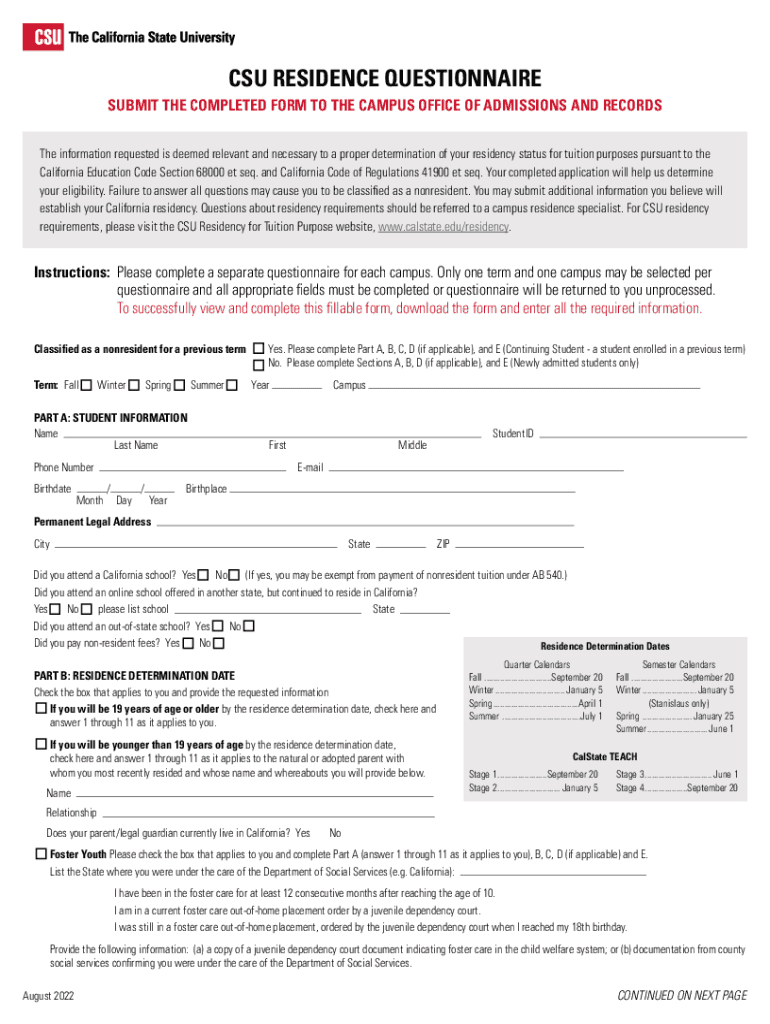







Definition and Purpose of the Residence Questionnaire
The residence questionnaire is a crucial form used by educational institutions, particularly within the California State University (CSU) system, to determine a student's residency status for tuition purposes. This classification process helps differentiate between resident and nonresident tuition fees, based on specific criteria set by state education regulations. Understanding the form's purpose ensures accurate completion, which is essential for benefiting from potential state-provided tuition exemptions or classifications.
How to Use the Residence Questionnaire
Effectively using the residence questionnaire involves understanding its structure and purpose. Primarily, students seeking to establish their residency status for tuition purposes will be required to fill out this form. The questionnaire collects detailed information regarding the applicant's residency history, personal details, and any relevant eligibility criteria that could impact their classification as a resident or nonresident.
Steps to Complete the Residence Questionnaire
-
Gather Necessary Information
- Collect your personal identification details.
- Compile a history of your residency, including dates and addresses.
-
Provide Residency Evidence
- Include documents such as leases, utility bills, or voter registration cards.
-
Submit Documentation
- Attach any supporting documents required for exemptions or unique circumstances.
-
Review and Finalize
- Ensure all sections are accurately completed before submission.
- Double-check for any signature requirements and ensure compliance with submission guidelines.
How to Obtain the Residence Questionnaire
Students can typically access the residence questionnaire through their educational institution's Office of Admissions and Records. Many universities provide the form online for convenience, allowing students to download and complete it digitally or in print.
Key Elements of the Residence Questionnaire
The residence questionnaire encompasses several critical components that applicants need to understand thoroughly. These elements include:
- Personal Information: Such as contact details and social security number.
- Residency History: A comprehensive list of places where the student has lived, with dates.
- Parent or Guardian Information: For dependent students, details of residency from their parents or guardians may be necessary.
- Documents for Verification: Supporting items that substantiate claims, like utility bills or state-issued IDs.
Required Documents for the Residence Questionnaire
When completing the residence questionnaire, applicants must submit various documents that verify their residency. Typical documents might include:
- State Issued Identification: Such as a driver's license indicating the current address.
- Proof of Residency: Lease agreements, mortgage statements, or utility bills in the applicant’s name.
- Voter Registration: A card from the appropriate state.
- Tax Returns: State income tax returns that demonstrate residency claims.
Who Typically Uses the Residence Questionnaire
The residence questionnaire is predominantly used by students aspiring to qualify for in-state tuition rates. This form is particularly relevant for out-of-state students who wish to reclassify their residency status, as well as international students who seek clarity on their eligibility for state-specific tuition benefits.


Legal Use and Compliance of the Residence Questionnaire
The completion and submission of the residence questionnaire are mandated under state education laws. It ensures compliance with legal standards while allowing educational institutions to fairly assess tuition rates based on residency status. Incorrect or fraudulent submissions can lead to disciplinary actions, including denial of resident status and potential financial penalties. Therefore, accuracy and honesty in this process are paramount.
State-Specific Rules for the Residence Questionnaire
Different states may have distinct criteria and rules governing the residence questionnaire. In California, for instance, residency requirements and processes are governed by specific state regulations that impact tuition classification. It’s pivotal for applicants to familiarize themselves with these rules to ensure the submission of comprehensive and compliant information.




