
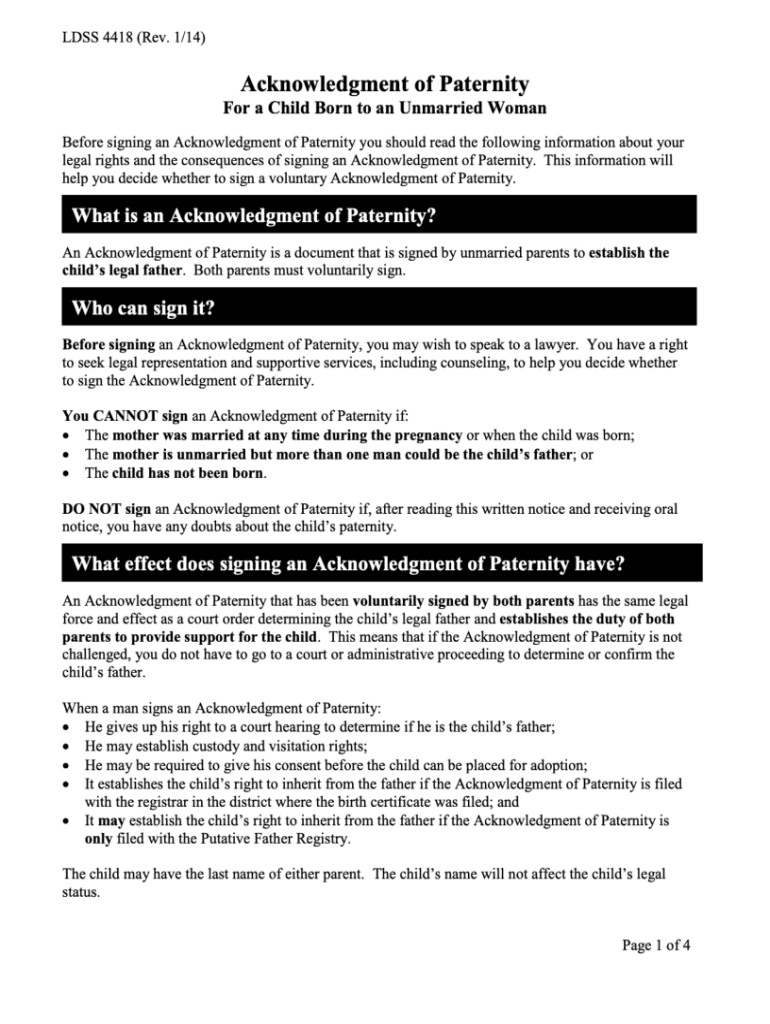







Understanding LDSS-4418
The LDSS-4418 form is a specialized document utilized primarily by family service providers within the United States. It plays a critical role in managing and documenting cases related to child welfare services. This form is part of a series of documents managed by the New York State Office of Children and Family Services and is designed to standardize the intake and assessment process for child protection services.
How to Use LDSS-4418
To effectively use the LDSS-4418 form:
-
Identify the Case Type: Determine the specific child welfare case you are dealing with, as this will dictate how the form should be filled out. It may relate to services such as foster care, adoption, or family preservation.
-
Gather Required Information: Collect all relevant information about the child and family involved. This includes personal identification, case history, and any immediate concerns that require action.
-
Follow Instructions: Each section of the form comes with guidelines that detail what information is required and how it should be documented.
-
Review and Submit: Once completed, review the form for accuracy, ensuring all mandatory fields are filled. Submit the form to the appropriate family services office, either electronically or by mail.
Acquiring the LDSS-4418
Those needing the LDSS-4418 form can obtain it from:
- Online Resources: The New York State Office of Children and Family Services website provides downloadable versions of the form.
- Local Offices: Family services departments at the county or state level often have physical copies available.
- Professional Software: Some case management software solutions used by family services organizations include templates for the LDSS-4418 form.
Steps to Complete the LDSS-4418
-
Header Information: Begin by filling out the form's header with identifying details such as the case number and county.
-
Child's Information: Provide detailed information about the child, including name, age, and identification numbers.
-
Family Assessment: Enter information about the family situation, capturing any factors that influence the child's welfare.
-
Service Plan: Outline the proposed plan for addressing the child's needs, including objectives and timelines.
-
Signatures: The form must be signed by the caseworker and, if applicable, the family members involved.
Importance of the LDSS-4418
The LDSS-4418 form serves a critical purpose in child welfare:
- Standardization: It ensures consistent information gathering across various cases, facilitating better tracking and accountability.
- Decision Making: The structured data provided by the form helps caseworkers make informed decisions regarding service provision.
- Documentation: Maintains a detailed record of all interventions and assessments, which is essential for ongoing case management and audits.
Who Commonly Uses the LDSS-4418
The LDSS-4418 is predominantly utilized by:
- Caseworkers: Professionals responsible for managing and supervising child welfare cases.
- Social Service Agencies: Organizations that provide various family and child support services.
- Legal Practitioners: Attorneys or advocates involved in family law may reference the form for case documentation.
Legal Considerations for LDSS-4418
Completion and submission of the LDSS-4418 must comply with:
- Confidentiality Laws: Sensitive information about children and families must be handled in compliance with privacy regulations.
- Statutory Requirements: Certain legal mandates dictate specific data inclusion and submission timelines.
Key Elements of LDSS-4418
Understanding the form's structure is essential for accurate completion:
- Client Details: Includes demographical and identification details of the child and family.
- Risk Assessment: Documenting potential risks impacting the child's well-being.
- Service Recommendations: Outlined plans for interventions and support services.
Digital vs. Paper Form
Professionals often choose between digital and paper formats based on:
- Accessibility: Digital forms can often be filled and submitted more swiftly, offering easy access to electronic records.
- Preference: Some practitioners may prefer paper forms for fieldwork due to the flexibility of making on-the-spot notes.
Careful adherence to the form's guidance ensures proper documentation and management of child welfare cases, playing a crucial role in maintaining the safety and well-being of children under the care of family services.




