







Definition & Meaning
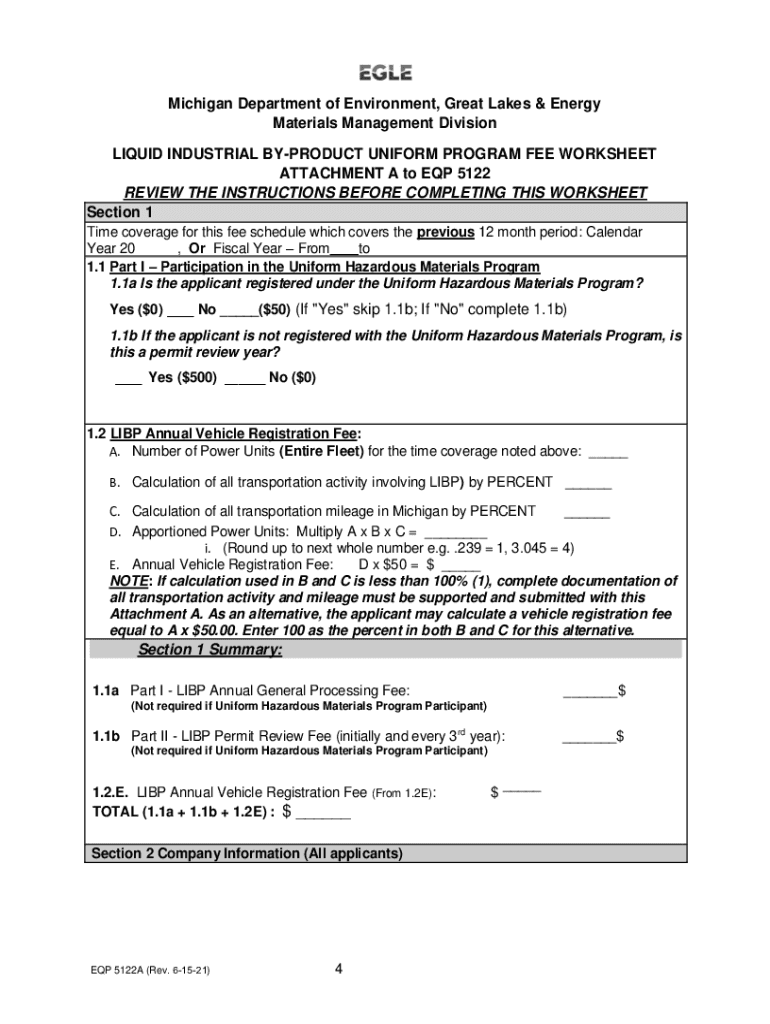
The "Michigan Department of Environment, Great Lakes & Energy Materials" encompasses various resources and documentation required by the Michigan Department of Environment, Great Lakes, and Energy (EGLE) to manage environmental regulations and protect the region's natural resources. These materials include regulatory forms, guidelines, and permits necessary for compliance with state environmental laws.
Key Objectives
- Environmental Protection: The primary goal is to safeguard Michigan's environment, including air, water, and land quality.
- Regulatory Compliance: Ensures adherence to state-specific regulations concerning public health and environmental safety.
- Resource Management: Aids in sustainable resource utilization and conservation efforts across Michigan.
Steps to Complete the Michigan Department of Environment, Great Lakes & Energy Materials
Completing the required materials involves a structured approach to ensure accuracy and compliance.
- Identify Required Documents: Determine which forms or permits are necessary for your specific activity, whether transporting hazardous materials or applying for a discharge permit.
- Gather Information: Collect all information, such as business details, environmental impact assessments, and any prior permits.
- Fill Out Forms: Complete forms with accurate details, paying close attention to required fields to avoid delays.
- Review and Verify: Double-check all entries for accuracy and completeness before submission.
- Submit Forms: Choose the appropriate submission method—online, mail, or in-person—based on form instructions and convenience.
Important Considerations
- Deadlines: Adhere to submission and renewal deadlines to avoid penalties.
- Supporting Documents: Attach necessary documentation that supports your application, such as environmental studies or business licenses.
Important Terms Related to Michigan Department of Environment, Great Lakes & Energy Materials
Understanding specific terminology is crucial for successful compliance and use of the materials.
- Permitting: The formal process of obtaining authorization to conduct activities that may impact the environment.
- Compliance: Adhering to environmental laws and regulations.
- Environmental Impact: The effect of projects or activities on natural resources.
Examples of Terms in Use
- "Permitting ensures that all environmental safeguards are in place before a project commences."
- "Compliance with state regulations is mandatory to avoid sanctions."
State-Specific Rules for the Michigan Department of Environment, Great Lakes & Energy Materials
Michigan-specific regulations dictate the usage of these materials in environmental management and hazard prevention.
- Hazardous Material Transportation: Special permits are required for transporting hazardous materials, with stringent guidelines on vehicle and route usage.
- Water Use Permits: Permits are mandatory for significant water withdrawals or modifications to water bodies like the Great Lakes.
- Air Quality Regulations: Industries must adhere to state air quality standards, requiring regular emissions reporting.
Examples of State Regulations
- "Businesses must secure an air quality permit before installing industrial equipment that emits pollutants."
- "Entities withdrawing large water volumes require specific withdrawal permits to maintain ecological balance."
Examples of Using the Michigan Department of Environment, Great Lakes & Energy Materials
Various scenarios demonstrate how businesses and individuals interact with these materials in real-world applications.
- Industrial Waste Management: Companies use materials to comply with waste disposal regulations, avoiding environmental harm and legal repercussions.
- Construction Projects: Developers apply for environmental permits to assess and minimize projects' impacts on local ecosystems.
- Resource Conservation: Environmental groups use guidelines to advocate for sustainable resource usage practices.
Practical Scenarios
- "A manufacturing plant submits its air emission reports and obtains emission permits to operate legally."
- "A construction firm consults EGLE materials for habitat protection strategies during development projects."
Form Submission Methods
There are several methods available for submitting Michigan Department of Environment, Great Lakes & Energy Materials, accommodating different preferences and technological capabilities.
- Online Submission: Efficient and quickly processed, allowing immediate confirmation of receipt.
- Mail Submission: Suitable for those preferring paper submissions or without internet access.
- In-Person Submission: Provides a direct method for delivering forms, often necessary for critical applications or when original signatures are required.
Advantages and Disadvantages
- Online: Fast and convenient but may require technological literacy.
- Mail: Traditional; delays in transit may occur.
- In-Person: Immediate feedback on submission quality but can be time-consuming.
Legal Use of the Michigan Department of Environment, Great Lakes & Energy Materials
Ensuring the legal use of these materials is essential for adherence to Michigan's environmental regulations.
- Certification: Some materials may require official certification or notarization to be valid.
- Usage Compliance: Correct and lawful use of permits and forms is mandatory to avoid legal penalties.
- Audit Trails: Document submissions and communications are often logged, maintaining a record for transparency and accountability.
Compliance Example
- "Misuse of water withdrawal permits can lead to legal action and significant fines."
- "Failure to comply with air quality reporting requirements might result in steep penalties and operational shutdowns."
Key Elements of the Michigan Department of Environment, Great Lakes & Energy Materials
A comprehensive understanding of the key components involved will ensure successful navigation of Michigan's environmental regulations.
- Forms and Applications: Essential for initiating compliance procedures or obtaining required permits.
- Guidelines and Instructions: Offer detailed instructions on how to complete forms correctly and provide requisite information.
- Checklists: Aid in verifying that all necessary steps and documentation have been completed before submission.
Elements Breakdown
- Commonly Used Forms: Include discharge permits, emissions reports, and hazardous material transport permits.
- Instructional Guides: Provide detailed explanations of steps and requirements for compliance.
- Checklists: Ensure all processes are complete, minimizing the likelihood of incomplete applications.




