






Definition and Purpose of the PC 1120
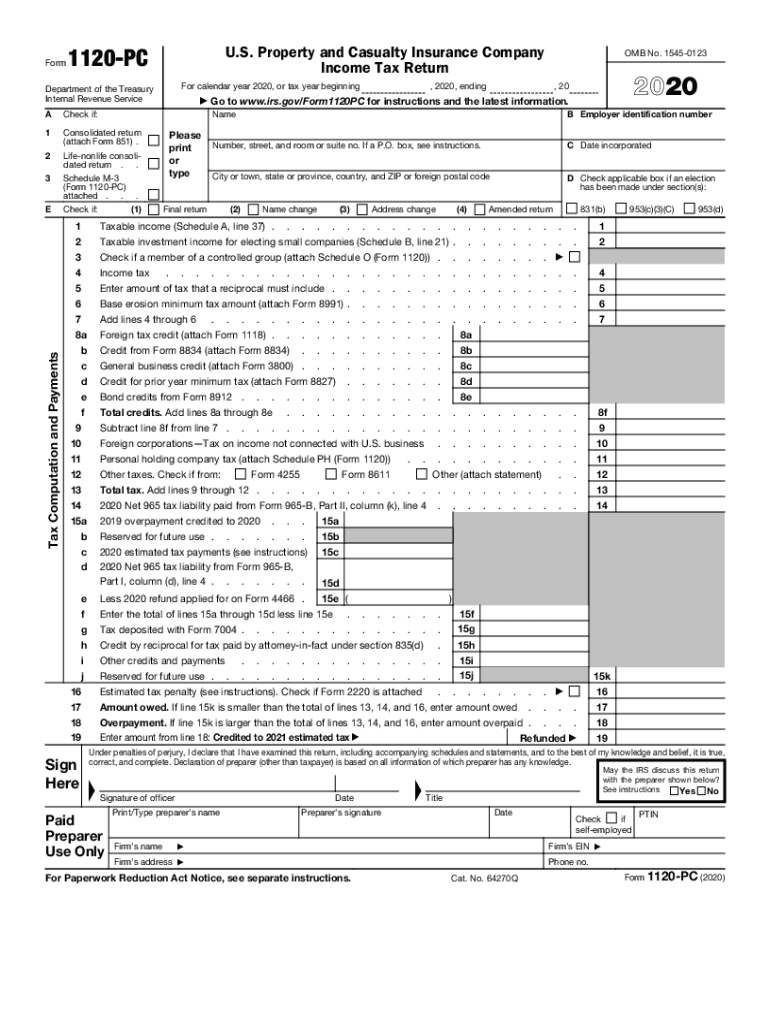
The form 1120-PC, or Property and Casualty Insurance Company's Income Tax Return, is essential for companies operating within the insurance sector in the United States. This specialized form caters to the unique tax reporting needs of property and casualty insurance entities. Its purpose is to help these companies report taxable income, deductions, tax credits, and liabilities in a way that acknowledges the specific financial activities related to their operations.
Key Elements of the PC 1120
- Taxable Income Reporting: This section details the company's total income generated from premiums, investments, and other operational activities. Accurate reporting ensures compliance with IRS regulations.
- Deductions and Credits: Companies can deduct specific operational expenses and claim credits. These include losses from underwriting activities and certain actuarial liabilities.
- Tax Liability Computation: Final calculations help determine the amount of tax owed after applying all possible deductions and credits.
How to Use the PC 1120
Understanding the usage of form 1120-PC is vital for accurate filing. Follow these guidelines to ensure compliance:
- Gather Financial Records: Assemble all relevant financial documents, including ledgers, earnings reports, and transaction summaries.
- Complete Necessary Schedules: Schedules provide a breakdown of different financial aspects, such as Schedule A for deductions and Schedule B for tax credits.
- Ensure Accuracy: Validate all entered information to prevent discrepancies that may trigger audits.
Important Terms Related to the PC 1120
- Premiums: Payments received by an insurance company from policyholders.
- Incurred Losses: Total losses sustained by the company during the tax year, usually through claims paid out.
- Underwriting Income: Income derived from insurance contracts' premium payments, minus losses and expenses.
Steps to Complete the PC 1120
The completion of this form requires attention to detail and precise calculations:
- Download the Form: Obtain the latest version from the IRS website or authorized tax software platforms.
- Fill Personal and Business Information: Include the company's name, address, and unique tax identification number.
- Input Financial Data: Log detailed income and expense figures into designated sections.
- Calculate Tax Owed: After compiling all relevant deductions and credits, derive the total tax due.
Common Mistakes to Avoid
- Misreporting income or expenses
- Failing to attach necessary schedules
- Overlooking recent tax law updates affecting the insurance industry
Who Typically Uses the PC 1120
This form is used predominantly by entities classified as property and casualty insurance companies. Such businesses are involved in providing insurance coverage that protects against property losses and liability arising from accidental incidents.


Examples:
- Automobile Insurance Companies: Firms providing vehicle insurance coverage.
- Homeowners Insurance Providers: Companies that protect against home damage and liability.
Legal Use of the PC 1120
Adherence to legal obligations when using form 1120-PC is non-negotiable. Filing this form appropriately ensures that the organization remains compliant with federal tax laws.
IRS Guidelines
The IRS offers specific guidelines to ensure correct filing practices. Key points include deadlines, required documentation, and submission options. Stay informed of any changes to these directives to avoid penalties.
Filing Deadlines and Important Dates
For corporate entities, including insurance companies using form 1120-PC, the typical filing deadline is the 15th day of the fourth month after the end of the tax year (generally April 15 for calendar year filers).
Extensions and Penalties
- Extensions: Acquire an extension by filing Form 7004, granted when more preparation time is needed.
- Penalties: Failure to file or inaccuracies can lead to significant financial penalties.
Required Documents for Submission
Accuracy in documentation assures a smooth submission process:
- Official financial statements
- Previous year's tax returns
- Supporting documents for reported deductions and credits
Submission Methods
Entities can file the form either electronically or via mail. Electronic filing is preferred for accuracy and expedited processing. When mailing, ensure that all documents are correctly filled and sent to the appropriate IRS address.
State-Specific Rules for the PC 1120
While the 1120-PC is a federal form, some states may have unique requirements or additional forms that need completion. Always verify any state-specific mandates that impact insurance tax obligations.