
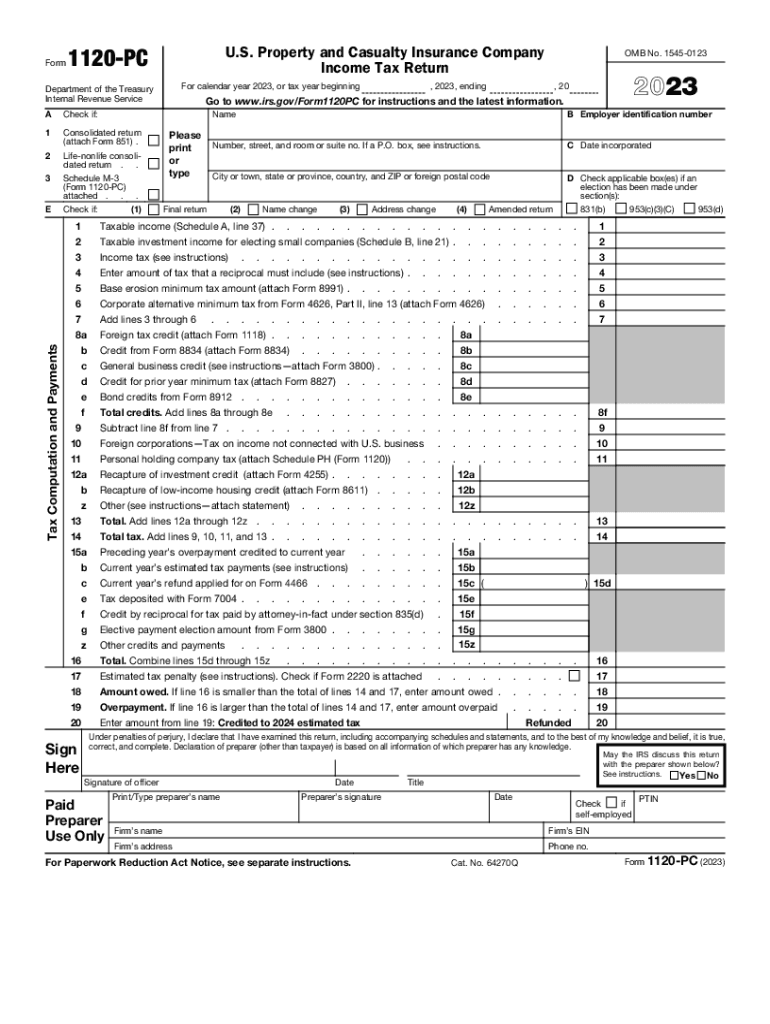







Definition and Purpose of Form 1120-PC
Form 1120-PC is an income tax return designed specifically for U.S. Property and Casualty Insurance Companies. Unlike general corporate tax forms, this specialized form addresses the unique financial and operational circumstances of these insurance entities. The form incorporates sections to report taxable income, deductions, credits, and other fiscal data essential for the IRS. This comprehensive reporting is vital for ensuring proper tax liability is calculated and providing the IRS with financial insights into the company's operations.
Key Components of the Form
- Taxable Income: Insurance companies must accurately declare their total income, including premiums earned and other revenue sources like investment income.
- Deductions and Credits: Various sections allow for the reporting of deductible expenses and applicable tax credits which can lower the taxable income.
- Annual Reconciliation: A detailed section to reconcile financial differences between book income and taxable income to maintain transparency.
Who Typically Uses Form 1120-PC
Form 1120-PC is tailored for entities classified as property and casualty insurance companies in the United States. These can include corporations primarily engaged in providing insurance against business interruptions, vehicle damage, bodily injury caused by accidents, and property damages. Companies that must complete this form fall under specific IRS categories and are often involved in multi-state operations due to their broad insurance coverage offerings.
Ideal Candidates for the Form
- Companies offering liability and theft insurance
- Corporations insuring against fire and natural disasters
- Businesses providing workers' compensation insurance policies
Steps to Complete Form 1120-PC
Completing Form 1120-PC necessitates a detailed and methodical approach to ensure accuracy and compliance. Companies must gather a wide range of financial information regarding their incomes, deductions, and credits.
- Gather Financial Documentation: Compile records of all premiums earned, deductible expenses, and investment incomes.
- Calculate Deductions: Accurately compute eligible deductions to reduce the taxable income legally.
- Input Financial Data: Carefully enter all financial figures into the appropriate sections of the form to ensure consistency with supporting documents.
- Reconciliation: Perform an in-depth reconciliation of the income on corporate books with what’s reported on the tax form.
- Review and Submit: Double-check all entries for accuracy before submission to prevent penalties.
Important Terms Related to Form 1120-PC
Understanding the specific terms associated with Form 1120-PC can significantly enhance the accuracy and compliance of the completed form.
- Premiums Earned: The total income received from insurance policyholders within the fiscal year, which must be reported.
- Losses Incurred: All payments made to settle claims and related expenses, which can be deducted.
- Reinsurance Costs: Payments to or recoveries from other insurers, which might need detailed reporting.
IRS Guidelines for Form 1120-PC
The IRS outlines clear guidelines to ensure property and casualty insurance companies are compliant when filing Form 1120-PC.
Reporting Requirements
- Detailed Premiums Reporting: Ensure that premiums are itemized appropriately to provide transparency.
- Accurate Deduction Listings: Only include IRS-acceptable deductions to diminish taxable income correctly.
- Filing Deadlines: Usually, the deadline is the 15th day of the third month after the end of the tax year.
Filing Deadlines and Important Dates
Meeting filing deadlines is crucial for companies using Form 1120-PC to avoid late penalties. The IRS typically stipulates that these forms be filed by the 15th day of the third month after the end of the fiscal year.
Consequences of Missing Deadlines
- Penalties: Monetary fines may apply for late submissions or failure to file.
- Interest on Unpaid Taxes: Additional financial burdens can accrue if taxes are not paid on time.
Form Submission Methods
There are three primary pathways for submitting Form 1120-PC to the IRS:
Online Filing
- E-filing Platforms: Utilizing IRS-approved software that facilitates online submission, providing a quicker response and confirmation of receipt.
Mailing the Form
- Traditional Postal Tracking: For those preferring tangible confirmation, mailing with tracking services offers additional security and proof of submission.
In-Person Submissions
- Visiting IRS Offices: Although less common, some entities may choose to deliver forms in person to ensure direct hand-off and immediate queries response.


