
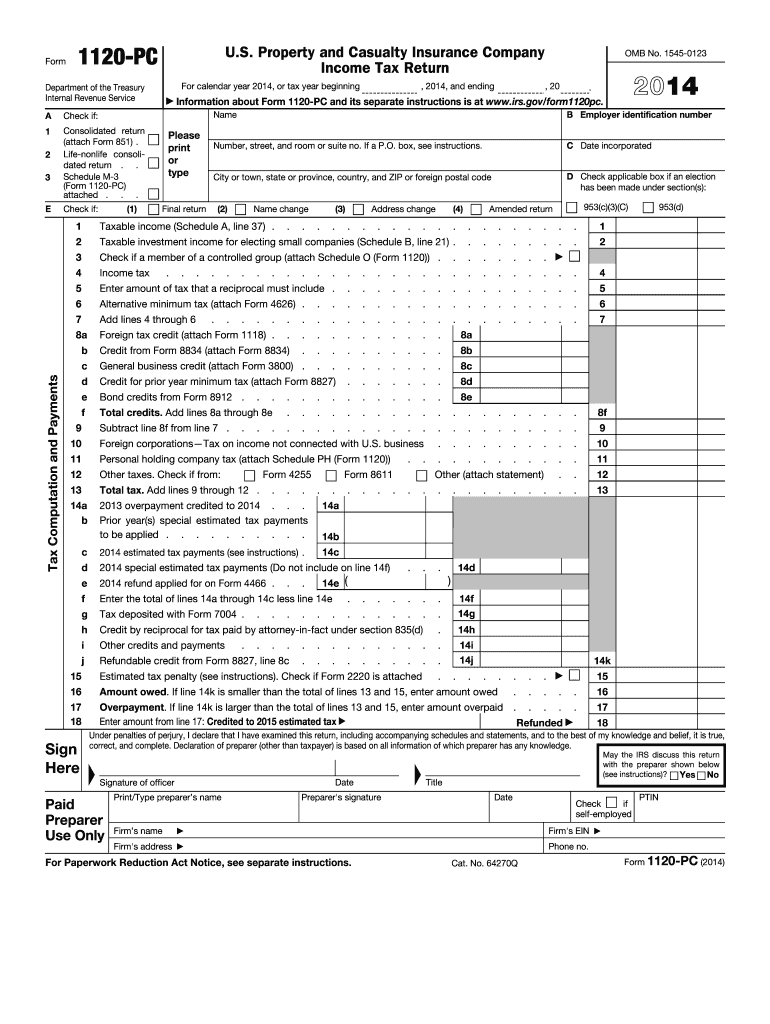







Definition and Meaning of Form 1120-PC
Form 1120-PC, known as the U.S. Property and Casualty Insurance Company's Income Tax Return, is a specialized tax return for reporting taxable income, deductions, credits, and other financial details specific to property and casualty insurance companies for the calendar year 2014. The form requires companies to disclose detailed information about premiums earned, losses incurred, and dividends received. These specifics help in accurately assessing the tax obligations of the insurance firms.
Key Features
- Tax Liability Calculation: It details how the taxable income is calculated for property and casualty insurance companies.
- Financial Disclosure: Companies report the critical financials such as earned premiums, incurred losses, and dividends.
- Regulatory Compliance: Ensures that insurance firms adhere to IRS requirements for appropriate fiscal management.
How to Use the 1120-PC 2014 Form
Businesses should follow specific steps while using the Form 1120-PC to ensure accuracy and compliance with federal tax laws.
Step-by-Step Process
- Collect Required Financial Data: Gather all relevant data, including earned premiums, losses, reserves, taxes, and allocated dividends.
- Complete Income Section: Fill out the sections detailing income derived from various insurance operations and any other revenue streams.
- Detail Deductions: Outline all applicable deductions, including incurred losses and necessary business expenses.
- Check Compliance with Rules: Ensure that the income and deductions align with IRS guidelines for the 2014 fiscal year.
How to Obtain the 1120-PC 2014 Form
Acquiring the 1120-PC form requires understanding the appropriate channels and methods.
Methods of Acquisition
- Direct from IRS: Visit the IRS website to download the form directly.
- Through Tax Software: Utilize tax preparation software, which often includes the form as part of its package.
- Request by Mail: Request a physical copy from the IRS by mail if digital means are not accessible.
Steps to Complete the 1120-PC 2014 Form
When completing the form, attention to detail in every section is crucial for compliance.
Key Steps
- Personal Information: Begin with the basic information about the entity, including name, address, and Employer Identification Number (EIN).
- Taxable Income Calculation: Deduct allowable expenses from total income to calculate taxable income.
- Schedule F & G: These schedules focus on balance sheets and reconciliation of income per books with income per return.
- Final Review: Double-check calculations and ensure all required fields are populated accurately.
Why You Should Use the 1120-PC 2014 Form
Using the correct form avoids potential penalties and ensures compliance with federal regulations.
Benefits
- Accurate Tax Reporting: Helps accurately report taxable business income and deductions.
- Compliance Assurance: Ensures that property and casualty insurance companies are meeting all IRS filing requirements.
- Avoidance of Penalties: Mitigates risks associated with misreporting by providing a comprehensive structure for detailed financial reporting.
Who Typically Uses the 1120-PC 2014 Form
The 1120-PC form is specifically intended for a particular subset of businesses.


Target Audience
- Property & Casualty Insurance Companies: These businesses are the primary users, requiring detailed disclosures about premiums and losses.
- Corporations: Only those structured as corporations with obligations in the P&C insurance sector.
- U.S. Based Entities: The form focuses on companies operating under U.S. jurisdiction and taxation laws.
Key Elements of the 1120-PC 2014 Form
Grasping the key elements assists in the efficient completion and processing of the form.
Components
- Income and Expense Reporting Sections: Details how companies should handle and report various types of income and deductible expenses.
- Balance Sheets: Essential for reflecting the company’s financial standing at the beginning and end of the tax period.
- Schedules: Multiple schedules specific to the diverse financial aspects of insurance operations must be completed accurately.
IRS Guidelines for Form 1120-PC
Adhering to IRS guidelines is crucial for filing the form correctly.
Compliance Measures
- Review IRS Publications: Publications provide detailed instructions about how to proceed with filling out and filing Form 1120-PC.
- Filing Accuracy: Follow instructions precisely to avoid errors and ensure that all financial reporting accurately reflects your company's fiscal activities.
- Timeliness: Submit the completed form by the IRS-imposed deadline to avoid late filing penalties.


