







Definition and Meaning
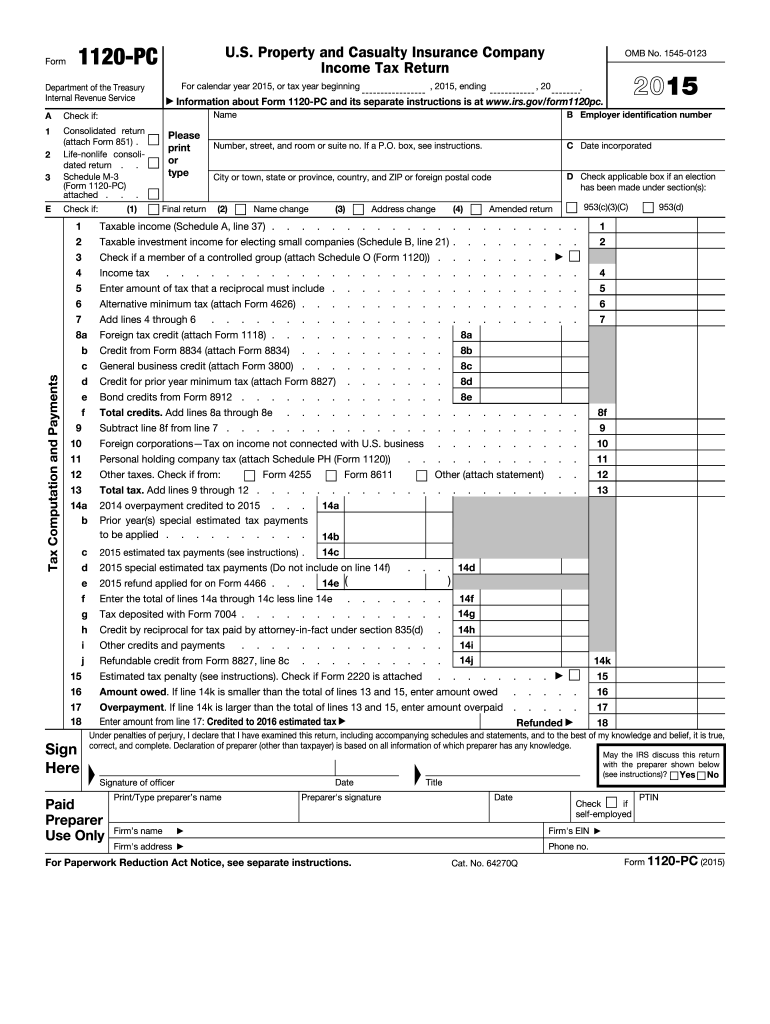
The IRS Form 1120-PC is specifically designed for U.S. property and casualty insurance companies to report their income, deductions, and other essential financial details for the 2015 tax year. This form encompasses comprehensive sections to address the unique financial structure of these companies, focusing on their taxable income and related tax obligations. Form 1120-PC requires detailed reporting to ensure compliance with federal tax regulations, making it a critical document for companies in this sector. Understanding the purpose and components of Form 1120-PC is crucial for effective financial management and tax planning.
- Property and Casualty Insurance: These are companies that provide coverage protecting against the financial loss due to property damage and other liabilities.
- Scope of the Form: It covers income derived from premiums, investments, and other sources which need to be meticulously documented for IRS reporting.
Steps to Complete the IRS Form 1120-PC
Completing Form 1120-PC requires a structured approach to ensure accuracy and compliance. Here is a step-by-step guide:
-
Gather Required Documents: Collect financial statements, policyholder information, and previous tax returns. Ensure that all premium income, deductions, and credits are accurately accounted for.
-
Calculate Gross Income: Total the revenue from premiums, investments, and other sources. Ensure that this calculation reflects all income streams to avoid discrepancies.
-
Determine Deductions: Identify qualified business expenses that can be deducted, such as losses, administrative expenses, and dividends to policyholders.
-
Complete the Form Sections: Fill in each section with the relevant financial data. This includes entering income figures, calculating the total deductions, and determining the taxable income.
-
Review and Submit: Double-check all entries for accuracy. Ensure that all necessary schedules and attachments are included before submitting electronically or via mail.
Key Elements of the IRS Form 1120-PC
Form 1120-PC consists of several critical components essential for accurate tax reporting:
- Income Declaration: This section includes all types of income, ranging from premiums to investments, and serves as the backbone of the company's tax liabilities.
- Deductions and Credits: Companies must thoroughly document allowable deductions to minimize taxable income effectively.
- Schedule M-3: This component is imperative for companies with assets over a certain threshold, providing detailed reconciliations of income and expenses between accounting records and tax reporting.
Who Typically Uses the IRS Form 1120-PC
The primary users of Form 1120-PC are property and casualty insurance companies operating within the United States. These entities range from small regional insurers to large, multi-state insurance providers. By addressing their specific financial activities, Form 1120-PC helps ensure a standardized approach to tax reporting for these organizations.
- Small and Medium Insurance Firms: These companies may find this form crucial for aligning their tax reporting with their unique business model.
- Large National Insurers: Larger firms require meticulous reporting systems to handle the broad scope of their financial activities efficiently.

Important Terms Related to IRS Form 1120-PC
Understanding the key terminology related to Form 1120-PC is vital for completing it accurately:
- Taxable Income: The portion of total income subject to IRS taxation after deductions.
- Dividends Received Deduction (DRD): Allows for deductions on dividends received, reducing taxable income.
- Losses Incurred: Refers to the payments made for claims and obligations, which can be deducted.
Filing Deadlines and Important Dates
Adherence to filing deadlines is crucial for avoiding late penalties and ensuring compliance with tax obligations. The filing deadline for the 2015 tax year was generally March 15, 2016, unless extended. Timely filing is essential to avoid penalties and maintain good standing with the IRS:
- Original Deadline: Typically March 15 for calendar-year filers.
- Extensions: Companies could request a 6-month extension; however, the tax payment was still due by the original deadline.
Required Documents for Filing
To complete Form 1120-PC, companies must compile various financial documents, ensuring accuracy and compliance:
- Financial Statements: Profit and loss statements, balance sheets, and cash flow statements.
- Policy Documents: Detailed information on premiums, claims paid, and underwriting performance.
- Previous Tax Returns: Prior year's tax returns for comparison and accuracy check.
Penalties for Non-Compliance
Non-compliance with Form 1120-PC requirements can lead to severe penalties, emphasizing the importance of accurate and timely filing:
- Late Filing Fees: Significant fines per month, based on total assets, for missing the deadline.
- Accuracy-Related Penalties: Additional penalties may apply for substantial errors or inaccuracies in reported figures.
Taking proactive steps to ensure compliance with the IRS regulations as detailed in Form 1120-PC is crucial for property and casualty insurance firms seeking to maintain financial and legal health.




