




Here's how it works

01. Edit your form online
Type text, add images, blackout confidential details, add comments, highlights and more.

02. Sign it in a few clicks
Draw your signature, type it, upload its image, or use your mobile device as a signature pad.

03. Share your form with others
Send it via email, link, or fax. You can also download it, export it or print it out.
How to use or fill out District Court County, Colorado Court Address: Plaintiff(s): v. Defendant(s): Attorney with our platform

- Click ‘Get Form’ to open the document in the editor.
- Begin by entering the court address at the top of the form. This is essential for proper identification of the court handling your case.
- Fill in the names of the Plaintiff(s) and Defendant(s) in their respective fields. Ensure accuracy as this information is crucial for legal proceedings.
- Provide your attorney's name and address if applicable, or indicate 'Party Without Attorney' if you are representing yourself.
- In the 'COURT USE ONLY' section, enter the case number and your contact details including phone number and email address.
- Complete the 'VERIFIED RESPONSE TO A RULE 120 NOTICE' section by providing information about the defendant, including their current mailing address and contact numbers.
- State your request and reasons clearly in the designated fields to ensure your intentions are understood.
- Sign and date where indicated, ensuring that all statements are true to your knowledge. If required, have a notary public acknowledge your signature.
- Finally, complete the 'CERTIFICATE OF SERVICE' section by indicating how you served a copy of this response to the other party.
Start using our platform today to streamline your document editing process for free!
Fill out District CourtCounty, ColoradoCourt Address:Plaintiff(s):v.Defendant(s):Attorney online
It's free
It's free
See more District CourtCounty, ColoradoCourt Address:Plaintiff(s):v.Defendant(s):Attorney versions
We've got more versions of the District CourtCounty, ColoradoCourt Address:Plaintiff(s):v.Defendant(s):Attorney form. Select the right District CourtCounty, ColoradoCourt Address:Plaintiff(s):v.Defendant(s):Attorney version from the list and start editing it straight away!
Security and compliance
At DocHub, your data security is our priority. We follow HIPAA, SOC2, GDPR, and other standards, so you can work on your documents with confidence.
Learn more


Related forms

DL-5 - Texas Residency Affidavit
The document outlines the requirements and procedures for establishing residency in Texas for applicants seeking a drive ...

Form 103
The document is Form 103, a Medical Summary Report for candidates seeking ministry in The United Methodist Church. It in ...

Registration of Constructors and Employers Engaged in Construction
The document outlines the registration process for constructors and employers engaged in construction projects as mandat ...

Community Services Card Application CSC1
The document outlines the application process for the Community Services Card, which assists low-income individuals and ...

Transient Occupancy Tax Registration Application
The document is an application form for a Transient Occupancy Tax (TOT) Registration Certificate from the County of Los ...
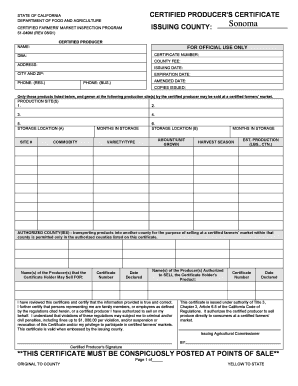
Certified Producer's Certificate - Sonoma County - sonoma-county
The document is a Certified Producer's Certificate issued by the State of California's Department of Food and Agricultur ...
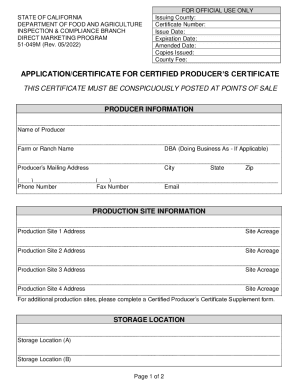
Certified Producer's Certificate Application - California Department
The document is an application and certificate form for Certified Producer's Certificate issued by the California Depart ...

Louisiana Department of Transportation and Developments
The document outlines the Title VI/Americans with Disabilities Act (ADA) Complaint Procedure for the Louisiana Departmen ...


