







Definition and Purpose of the Shared Shelter Form NH
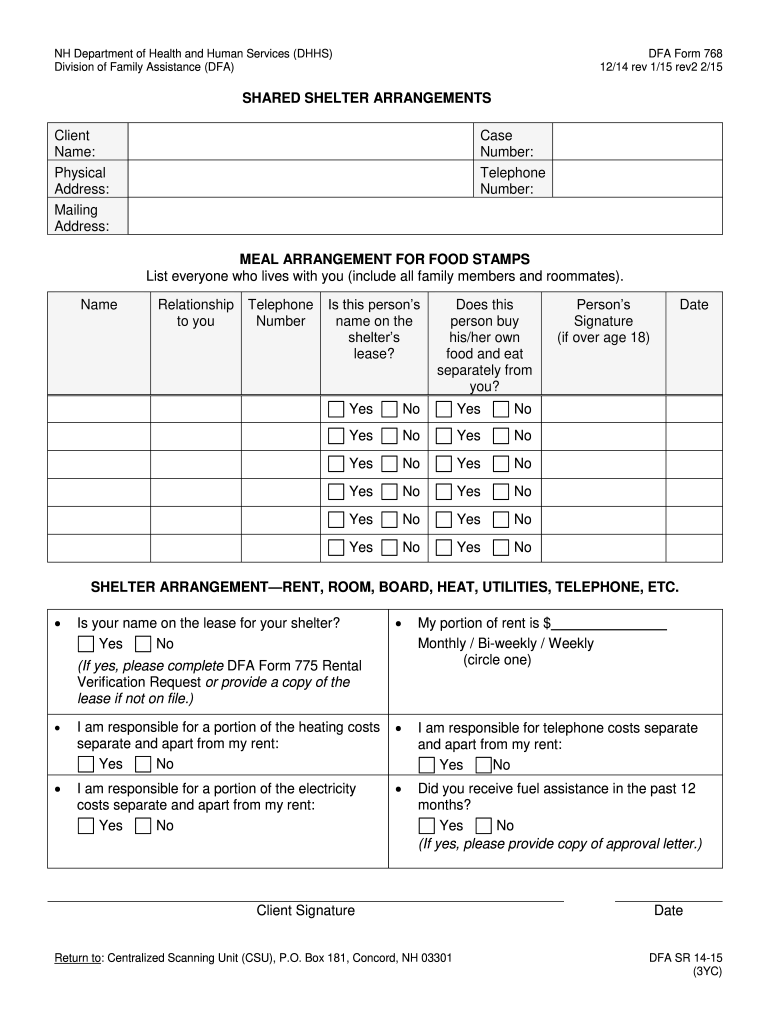
The shared shelter form NH, also known as the BFA Form 768, is a document used by clients of the New Hampshire Department of Health and Human Services. It specifically facilitates the reporting of shared shelter arrangements for individuals who receive food assistance benefits. The form is intended to gather essential information about the living situation of clients, including:
- Household composition: Identifying members of the household and their relationship to the primary client.
- Shelter lease details: Clarification on rental agreements, including who is financially responsible for the rent.
- Utility expenses: Reporting monthly costs associated with utilities that the clients pay for shared or personal use.
Completing this form accurately is critical for clients seeking food stamps, as it helps determine eligibility and benefit amounts based on shared living situations.
Steps to Complete the Shared Shelter Form NH
Completing the shared shelter form NH involves several essential steps to ensure accurate information collection.
-
Gather Required Information:
- Names and relationships of all household members.
- Lease details of the shelter, such as the landlord's name and contact information.
- Monthly rent and the portion each household member contributes.
- Utility costs, specifying who pays what portion.
-
Fill Out the Form:
- Start with the client’s personal information, including contact details and case number.
- List all household members and their respective roles in the living arrangement.
- Provide clear responses about the shelter's lease and payment responsibilities.
- Include utility costs and specify any shared arrangements.
-
Review and Sign:
- Check the filled-out form for accuracy and completeness.
- Ensure all required signatures are provided, including those from all adult household members if necessary.
-
Submit the Form:
- Follow submission methods as specified. It can typically be submitted online, by mail, or in person at local DHHS offices.
Accurate completion is imperative to prevent delays in benefits and compliance with state requirements.
Important Terms Related to the Shared Shelter Form NH
Understanding key terms related to the shared shelter form NH can clarify its usage and importance:
- Household Member: Anyone living with the client who contributes to and shares in the household expenses.
- Lease Agreement: A contract between the homeowner and the tenant detailing rental terms.
- Food Assistance Program: Programs, like the Supplemental Nutrition Assistance Program (SNAP), that provide food-related financial assistance to eligible households.
- Shared Shelter Statement: An explanation detailing how costs are split among household members.
- Monthly Utilities: Ongoing expenses required for living situations, including electricity, water, heating, etc.
Familiarity with these terms helps clients better understand the requirements and implications of the shared shelter form NH.
Legal Use of the Shared Shelter Form NH
Using the shared shelter form NH legally is crucial for clients receiving nutritional assistance benefits. Key legal aspects include:
- Compliance with the ESIGN Act: E-signatures utilized on the shared shelter form must comply with electronic signature laws, ensuring authentication and consent.
- Confidentiality: Client information submitted remains confidential, protected under privacy regulations related to government assistance programs.
- Accuracy: Providing truthful information is vital. Misrepresentation or falsification may result in penalties, including loss of benefits or legal consequences.
Understanding these legal components reinforces the importance of completing the form thoroughly and honestly.
Who Typically Uses the Shared Shelter Form NH
The shared shelter form NH serves specific demographics, primarily including:
- Low-income households: Individuals or families who share living expenses, making them eligible for food assistance programs.
- Roommates or family members: Persons living together who split costs and need to report their shared situation to the DHHS.
- Clients applying for or currently receiving SNAP benefits: Those who must report any changes in their living arrangements to ensure accurate benefit allocation.
This form addresses situations where multiple individuals share financial responsibilities and helps ascertain their combined eligibility for food assistance.


Examples of Using the Shared Shelter Form NH
Real-world examples of using the shared shelter form NH demonstrate its applicability:
-
Example 1: John lives with his brother and sister-in-law in a rented apartment. Each contributes differently to the rent and shared utility bills. Completing the shared shelter form NH helps document their contributions and confirms their eligibility for SNAP benefits.
-
Example 2: A single mother residing with her parents can report the shared living situation. By accurately filling out the form, she ensures that her share of household expenses is calculated into the support she receives from state assistance.
These examples illustrate the functionality and necessity of the shared shelter form for diverse living arrangements.




